







Definition & Meaning
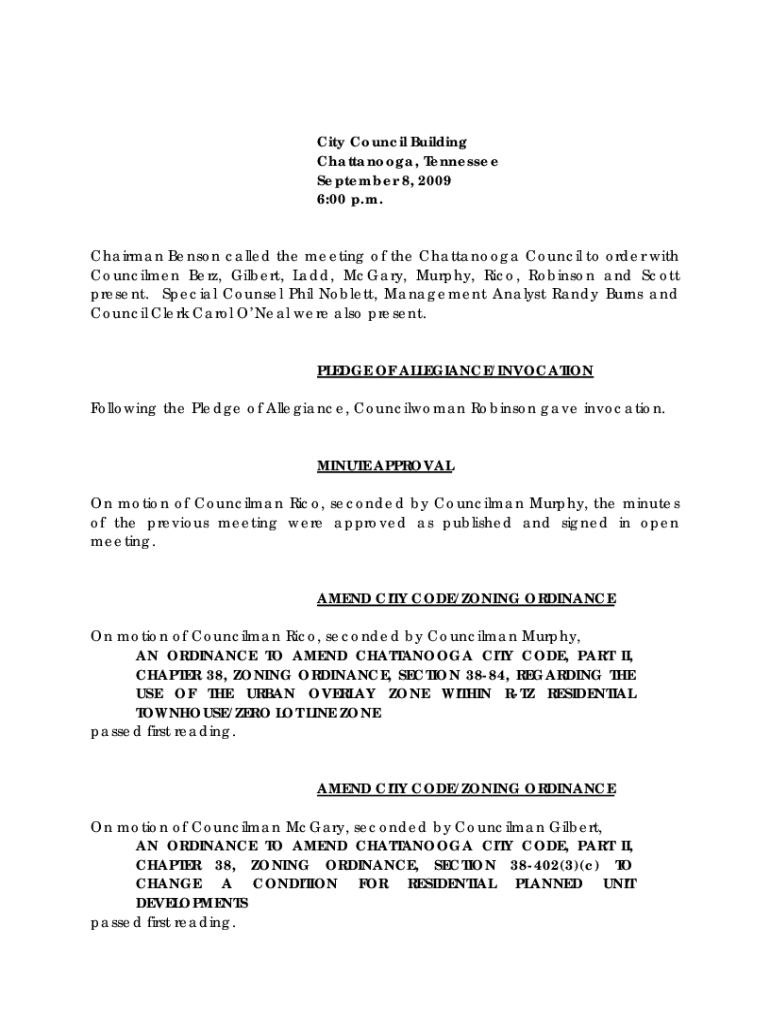
City Council Minutes are official records detailing discussions, decisions, and actions taken during city council meetings. They provide transparency and accountability in local governance, capturing debates on ordinances, budget allocations, policy changes, and other civic matters. These documents ensure that community stakeholders, including residents and local businesses, are informed about council activities and decisions that impact their daily lives.
Purpose of City Council Minutes
- Transparency: Minutes offer public insight into the decision-making process.
- Accountability: They provide a record of council member votes and discussions.
- Reference: Residents and officials can refer back to past minutes for historical context or to verify information.
How to Use the City Council Minutes
Accessing and understanding City Council Minutes involves a straightforward process. These documents are typically utilized by residents, businesses, researchers, and government officials to glean insights into local government operations. The minutes serve as a resource for tracking past legislative actions and anticipating future city council agendas.
Steps to Access Minutes
- Identify the Meeting Date: Know the specific council meeting date to locate the corresponding minutes.
- Visit the City's Official Website: Most municipalities publish minutes on their official site.
- Search for the Document: Use search functions or archives to find specific minutes.
How to Obtain the City Council Minutes
City Council Minutes are usually accessible through multiple channels, ensuring ease of access for all individuals interested in local governance.
Methods to Obtain Minutes
- Online Access: Most cities provide digital archives on their websites.
- Public Libraries: Local libraries often keep physical or digital copies of council minutes.
- City Clerk's Office: Visit or contact the office for assistance in accessing or retrieving specific minutes.
Key Elements of the City Council Minutes
Understanding the components of City Council Minutes is vital for extracting useful information. These elements are consistent across most minutes, ensuring standardized reporting.
Common Components
- Meeting Details: Date, time, and location of the meeting.
- Attendance: List of present and absent council members.
- Agenda Summary: Key topics and issues discussed during the meeting.
- Discussion Points: Insights into the deliberations on each agenda item, including diverse viewpoints.
- Decisions Made: Resolutions adopted, motions passed, and policy decisions finalized.
Important Terms Related to City Council Minutes
Familiarity with specific terms associated with City Council Minutes can greatly aid in comprehending the document.
Terminology
- Ordinance: A law or decree enacted by the city council.
- Resolution: A formal expression of opinion or intention voted on by the council.
- Motion: A proposal put forward for debate or decision.
Legal Use of the City Council Minutes
City Council Minutes have legal importance and can be used in various contexts to support or contest civic issues. They serve as an official record that can influence legal decisions and civic discourse.
Applications in Legal Context
- Evidence in Legal Cases: Minutes can be cited in lawsuits or disputes involving city governance.
- Historical Record: Used to track policy evolution over time for legal studies or documentation.
Who Typically Uses the City Council Minutes
Multiple stakeholders utilize City Council Minutes, each with distinct objectives and reasons for access.

Users Include
- Residents: To stay informed about local governance and developments.
- Journalists: For reporting on civic matters.
- Researchers: Analyzing local government patterns and effectiveness.
- Government Officials: Reviewing legislative history and preparing for future meetings.
Examples of Using the City Council Minutes
City Council Minutes can be an instrumental tool in various real-world situations, facilitating active civic participation and informed decision-making.
Practical Use Cases
- Community Planning: Neighborhood associations use minutes to align local projects with city policies.
- Educational Projects: Schools may integrate minutes into curriculum to teach students about local governance.
- Public Hearings: Residents prepare for public hearings by referencing past discussions on relevant topics.
State-Specific Rules for the City Council Minutes
State laws and regulations can influence how City Council Minutes are recorded and maintained, creating variations that reflect local legislative frameworks.
Factors Influencing State Differences
- Open Meetings Law: Dictates what needs to be included in minutes.
- Public Access Rules: State-specific rules on how public records are accessed and disseminated.
Software Compatibility
With the shift towards digital recordkeeping, City Council Minutes may be compatible with various software solutions, facilitating easy access, annotation, and collaborative review.
Compatible Platforms
- Google Workspace: Offers seamless integration for storing and sharing minutes.
- DocHub: Streamlines editing and collaboration on city council documents.
Selecting the most relevant blocks ensures that readers receive comprehensive, contextually rich information about City Council Minutes, enhancing their understanding and engagement with local governance documentation.




