
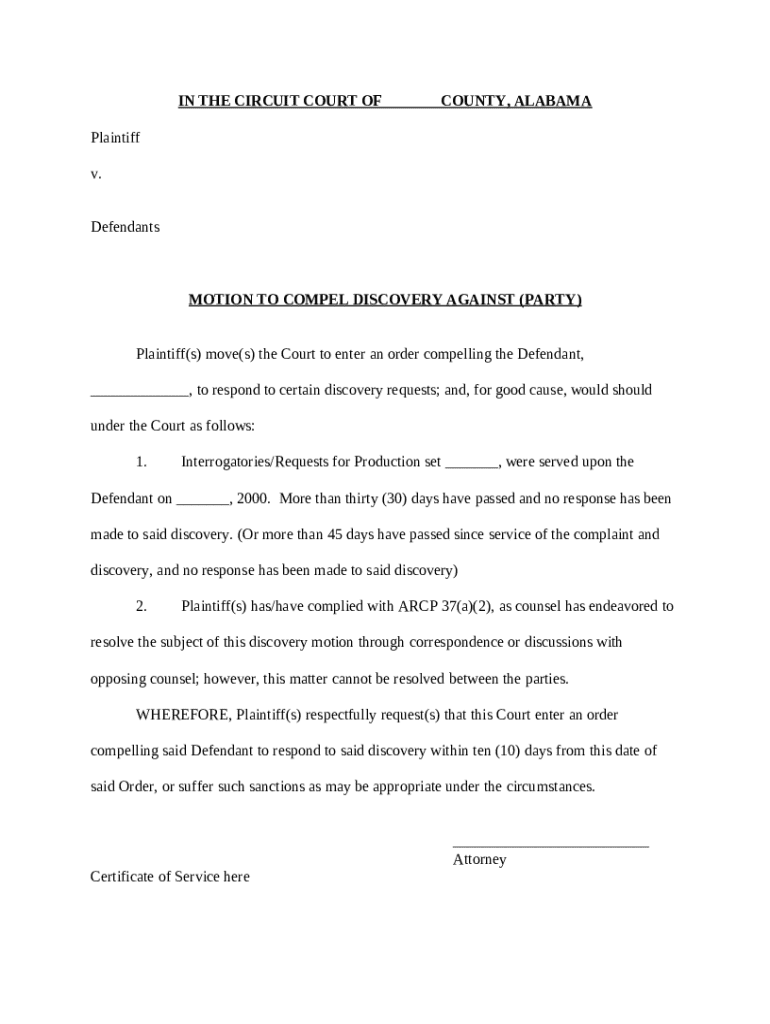







Definition and Meaning of Motion to Compel Discovery
A "Motion to Compel Discovery" is a legal instrument used in the litigation process when one party seeks the court's intervention to compel the opposing party to provide information or documents that have not been willingly disclosed. Discovery is a pre-trial phase in which parties exchange pertinent information to prepare for case proceedings. This motion is typically filed when the requesting party believes that the opposing side is withholding information essential to the case. In a Motion to Compel Discovery, the filing party outlines the specific requests that have been ignored and seeks a court order to enforce compliance.
Practical Example
- In a contract dispute, if one party has requested specific documents related to the agreement and the other party fails to provide them, a Motion to Compel Discovery might be filed.
- During a personal injury lawsuit, the defendant may need medical records from the plaintiff but has not received them despite prior requests. The defendant can seek a motion to compel these records to support their defense.
Steps to Complete the Motion to Compel Discovery
Completing a Motion to Compel Discovery requires adherence to specific procedural guidelines to ensure its acceptance by the court. The steps generally include:
-
Identify Unresolved Requests: Review discovery requests that have not been satisfactorily fulfilled. This could include unanswered interrogatories, requests for production, or requests for admission.
-
Attempt Resolution with Opposing Counsel: Before resorting to a motion, make documented efforts to resolve the issue directly with opposing counsel. This could involve written correspondence or meetings to discuss unmet requests.
-
Draft the Motion: The motion should succinctly detail all unanswered discovery requests and explain why the information is vital for the litigation process.
-
File the Motion: Submit the motion to the court along with any necessary supporting documents, such as prior correspondence with opposing counsel and formal requests for information.
-
Serve the Motion: Serve a copy of the filed motion to the opposing party, providing them notice of the hearing date and opportunity to respond.
Detailed Explanation with an Example
-
Initial Identification: Suppose a plaintiff in a civil rights case requested employment records that have not been provided despite several requests. They would include the specific unanswered request in their motion.
-
Efforts to Resolve: The plaintiff’s attorney gathers emails and letters sent to the defendant’s counsel requesting compliance, demonstrating attempts to resolve the issue cooperatively.
-
Drafting: The motion states the importance of the employment records, tying them directly to claims made in the plaintiff's case.
Key Elements of the Motion to Compel Discovery
Several crucial components must be included in a Motion to Compel Discovery to advance successfully in the court process:
-
Description of Original Requests: Clearly outline the details of the original discovery requests, such as the type of information requested.
-
Evidence of Non-Compliance: Provide documentation demonstrating the opposing party's failure to comply, like unanswered requests or lack of responses.
-
Attempts to Amicably Resolve: Include logs or records showing efforts made to resolve discovery issues without court intervention.
-
Legal Grounds: Cite relevant rules or statutes that support the motion, indicating how the opposing party's non-compliance aligns with these legal standards.
Practical Scenarios and Explanation
- Employment Dispute: An employee in a wage dispute requests timesheet records, which the employer fails to provide. The motion should attach copies of the formal request and any replies from the employer denying the request.
Legal Use of the Motion to Compel Discovery
The motion is a critical tool in ensuring all parties in a litigation process disclose pertinent information, thereby promoting fairness and transparency. It is used to:
- Enforce Compliance: Ensure that all parties adhere to disclosure requirements, leveling the playing field.
- Prevent Trial Surprises: Obtain information critical to cases before trial, allowing for adequate preparation and strategy formulation.
- Facilitate Settlement: Comprehensive discovery can sometimes prompt settlements as all parties clearly understand the case's strengths and weaknesses.
Real-World Case Study
- Personal Injury Litigation: In a case where the defendant withholds accident scene photos, the plaintiff can file a motion. If granted, the court may order the defendant to provide the requested evidence, which could significantly impact the trial's outcome.
State-Specific Rules for Motion to Compel Discovery
States may have variations in rules or timelines governing the filing and adjudication of a Motion to Compel Discovery. It is crucial to understand these distinctions as they can impact the motion's success:
- Different Deadlines: Some states might have strict timelines within which such a motion must be filed following non-compliance.
- Special Local Rules: There might be local rules requiring additional steps, such as arbitration requirements before a motion can be heard.
Examples
- California: Discovery disputes often require meet-and-confer efforts before court involvement.
- Texas: Unique discovery dispute procedures exist for expedited actions.
Examples of Using the Motion to Compel Discovery
Understanding practical uses of the motion can clarify its significance and utility in legal processes:
- Corporate Litigation: A party might move to compel financial records in a shareholder dispute, asserting that the documents illuminate improper revenue reporting.
- Divorce Proceedings: One spouse seeks clarification of asset holdings from the other, who has been reticent in disclosures, prompting a motion to compel financial statements.
Important Terms Related to Motion to Compel Discovery
Knowledge of specific legal terminology associated with this motion improves comprehension:
- Interrogatories: Written questions one party sends to another, seeking facts pertinent to the case.
- Request for Production: Document asking a party to provide tangible evidence, such as documents or electronic data, relevant to the case.
Detailed Breakdown
- Depositions: Out-of-court oral testimony reduced to writing for later use in court or discovery.
- Evidentiary Hearing: A later step where the court may consider arguments concerning denied evidence from discovery.
Filing Deadlines and Important Dates
Timing is critical for the effectiveness of a Motion to Compel Discovery, as missing deadlines can result in dismissal or delays:
- Filing Deadlines: Set by court rules, these often depend on when discovery non-compliance is identified.
- Response Timelines: Once served, the opposing party usually has a set number of days to respond or object to the motion.
Examples
- Standard Timeline: A typical requirement might be moving to compel within 30 days post-disputed response or lack thereof.
- Exceptions: Shorter timelines could apply under expedited litigation tracks.




