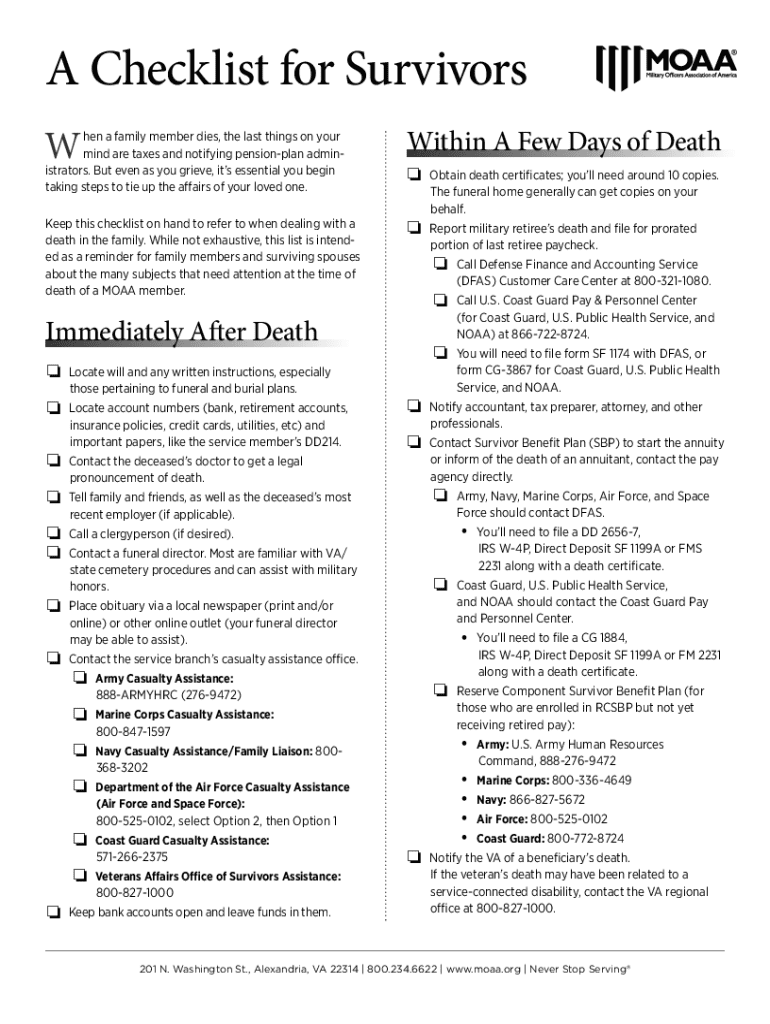







Definition & Purpose
The "What To Do When Your Loved One Dies + Checklist" serves as an essential tool for individuals and families coping with the loss of a loved one. This checklist provides comprehensive guidance on the various steps and decisions required following a death. Its primary function is to offer a structured approach to managing a myriad of tasks, from immediate to long-term, to alleviate the pressure on grieving family members. The checklist is invaluable in ensuring that financial, legal, and administrative duties are efficiently addressed during such a challenging time.
Key Elements of the Checklist
Understanding the main components of the checklist is crucial for effective use. Key elements typically include:
- Immediate Actions: Steps to take within the first 24-48 hours, like contacting medical professionals and locating important documents.
- Documentation: Ensuring access to essential documents such as the will, insurance policies, and financial records.
- Notifications: Informing necessary parties, including family, friends, and government and financial institutions.
- Estate Management: Initiating the probate process, if applicable, and managing the decedent's belongings and property.
- Funeral Arrangements: Coordinating funeral services, which may involve consulting the decedent's pre-existing plans or preferences.
Steps to Complete the Checklist
Managing the tasks following a loved one's death can be overwhelming. Here’s a detailed step-by-step guide to complete the checklist:
- Initial Notifications: Notify immediate family and close friends to rally support.
- Legal Documentation: Locate and review the will or trust documents to understand the decedent's wishes.
- Financial Accounts: Contact banks and financial institutions to secure accounts and notify them of the death.
- Government Agencies: Inform agencies like Social Security and the VA (if applicable) for benefit adjustments and cancellations.
- Funeral Planning: Arrange for the funeral or memorial service, keeping any pre-arranged plans or cultural practices in mind.
Required Documents
Having the correct documents is necessary for a smooth process. Required documents generally include:
- Death Certificate: Obtain multiple copies for use with various institutions.
- Will or Trust: Legal documents that dictate the distribution of assets and responsibilities.
- Insurance Policies: Life insurance and other policies that may provide financial benefits.
- Financial Records: Bank statements, tax returns, and investment statements.
- Property Titles: For homes, cars, and other assets to facilitate their management or transfer.
Legal Considerations
Legal aspects play a significant role in this process, ensuring compliance with state laws and decedent’s wishes:
- Probate Process: Understanding whether probate is necessary, based on the estate's structure.
- Executor Duties: Details on the executor’s responsibilities, providing guidance on managing the estate according to legal requirements.
- Liabilities and Debts: Identifying liabilities and managing any outstanding debts to preserve the estate's value.
State-Specific Rules
Each state has its laws and regulations regarding estate management and probate, which can affect the checklist's procedures:
- Probate Thresholds: Variations exist in the estate value that necessitates probate.
- Executor Guidelines: Different states may have specific requirements for executor eligibility and responsibilities.
- Intestacy Laws: In the absence of a will, state laws determine the distribution of assets, which varies considerably.
Who Typically Uses the Checklist
The checklist is designed for a range of users who find themselves responsible for managing a loved one's post-death affairs:
- Family Members: Immediate family often handles initial tasks and decisions.
- Executors: Individuals legally designated to manage the decedent's estate.
- Legal Advisors: Lawyers may use the checklist to guide and support families through legal processes.
- Financial Planners: Professionals assisting in the management of finances and transition of assets can also find the checklist useful.


Important Terms Related to the Checklist
Familiarity with certain terms enhances understanding and application of the checklist:
- Probate: Legal process for validating a will and supervising estate distribution.
- Executor: Person designated to carry out the terms of a will.
- Intestacy: Condition of an estate when someone dies without a will.
- Beneficiary: Individuals named to receive assets from a will or insurance policy.
- Estate Tax: Taxes imposed on the transfer of the estate's assets upon death.