






Definition and Purpose of the Therapeutic Contract Template
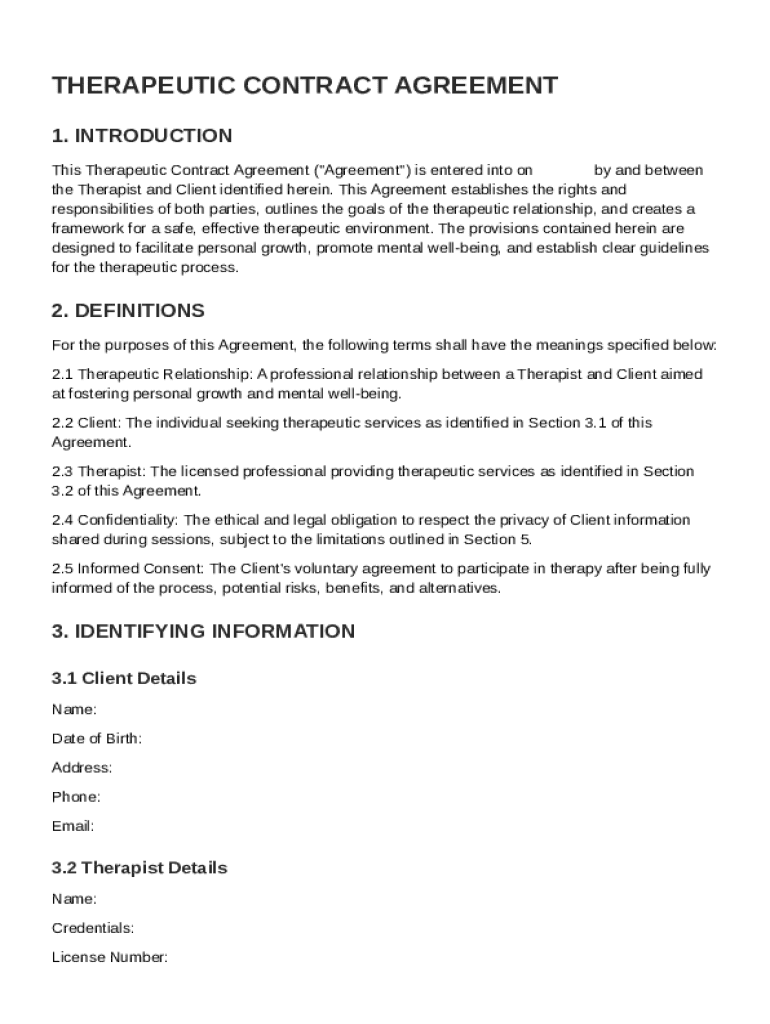
The Therapeutic Contract Template serves as a foundational document outlining the expectations and responsibilities in a therapeutic relationship between a therapist and a client. It defines critical aspects such as confidentiality, informed consent, goals of therapy, and the role of each party. The contract's primary purpose is to create a safe and structured environment favorable for personal growth and mental well-being. It enhances transparency and trust, essential components of effective therapy, by detailing mutual commitments and expected conduct.
Key Elements of the Therapeutic Contract Template
A comprehensive therapeutic contract typically includes several core components:
- Confidentiality Clause: Ensures that the client's private information remains protected. Exceptions, such as legal obligations to report harm, are also outlined.
- Informed Consent: Details the client's rights to understand the therapy process, methods used, and potential risks.
- Therapeutic Goals: Specifies the objectives agreed upon by the therapist and client to guide the therapy sessions.
- Roles and Responsibilities: Clarifies the obligations of both parties, aiding in managing expectations.
These components work collectively to foster a collaborative and effective therapeutic relationship.
Steps to Complete the Therapeutic Contract Template
Filling out a therapeutic contract requires careful attention to ensure all necessary aspects are covered:
- Client and Therapist Information: Enter full names and contact information.
- Confidentiality Agreement: Clearly specify what information will remain confidential and under what circumstances this might change.
- Informed Consent: Obtain the client's written acknowledgment of understanding the therapy process and its potential risks.
- Establishing Goals: Collaborate with the client to establish realistic and measurable therapy goals.
- Detailed Terms and Conditions: Outline policies regarding attendance, communication, fees, cancellations, and termination criteria.
- Signatures: Both the therapist and client must sign the document to validate the agreement.
Accurate completion ensures clarity and reduces the potential for disputes.
Who Typically Uses the Therapeutic Contract Template
The primary users of a therapeutic contract are:
- Licensed Therapists: Psychologists, counselors, and social workers ensure legal and ethical compliance in their practice.
- Counseling Agencies: Agencies that house multiple practitioners standardize client interactions through such contracts.
- Private Practice Clinicians: Independent practitioners utilize these contracts to establish clear therapeutic parameters with their clients.
These professionals rely on the contract to maintain consistency and professionalism in their treatment engagements.


Legal Use of the Therapeutic Contract Template
The legal use of the therapeutic contract stems from its ability to serve as a binding agreement that outlines the terms of therapy. This legally binding document is vital to uphold ethical standards as defined by the American Psychological Association and similar governing bodies. The contract offers legal protection for both parties by formally recording the respective responsibilities and expectations, reducing the risk of disputes regarding the nature and terms of the therapeutic relationship.
Examples of Using the Therapeutic Contract Template
A therapist working in a cognitive-behavioral therapy setting may use the contract to outline expected session outcomes and intervention strategies explicitly. In marital counseling, the contract might specify confidentiality limits and joint goals for both parties. The template can also be adapted for use in educational settings where school counselors outline roles with students and parents. Each example emphasizes how the contract accommodates varying circumstances and therapy modalities, ensuring appropriate usage standards.
State-Specific Rules for the Therapeutic Contract Template
Different states may have specific regulations influencing the content and enforcement of therapeutic contracts:
- California: Mandates include clauses regarding the mandatory reporting of certain disclosures.
- New York: Requires clear completion of consent statements with detailed descriptions of therapy modalities.
- Texas: Enforces clear documentation on termination and client rights in therapy.
Understanding these state-specific nuances ensures the contract's compliance with local laws and regulations.
Versions or Alternatives to the Therapeutic Contract Template
Various versions of therapeutic contracts exist, adapting to different therapy modalities or legal requirements. Alternatives may focus on:
- Expressive Arts Therapy: Contracts incorporate unique clauses relevant to creative modalities.
- Group Therapy Contracts: Describe the dynamics and confidentiality specific to group settings.
- Teletherapy Contracts: Highlight aspects of virtual confidentiality and consent due to remote communication.
Flexibility in contract versions and the availability of alternatives cater to diverse therapeutic needs and legal contexts.