
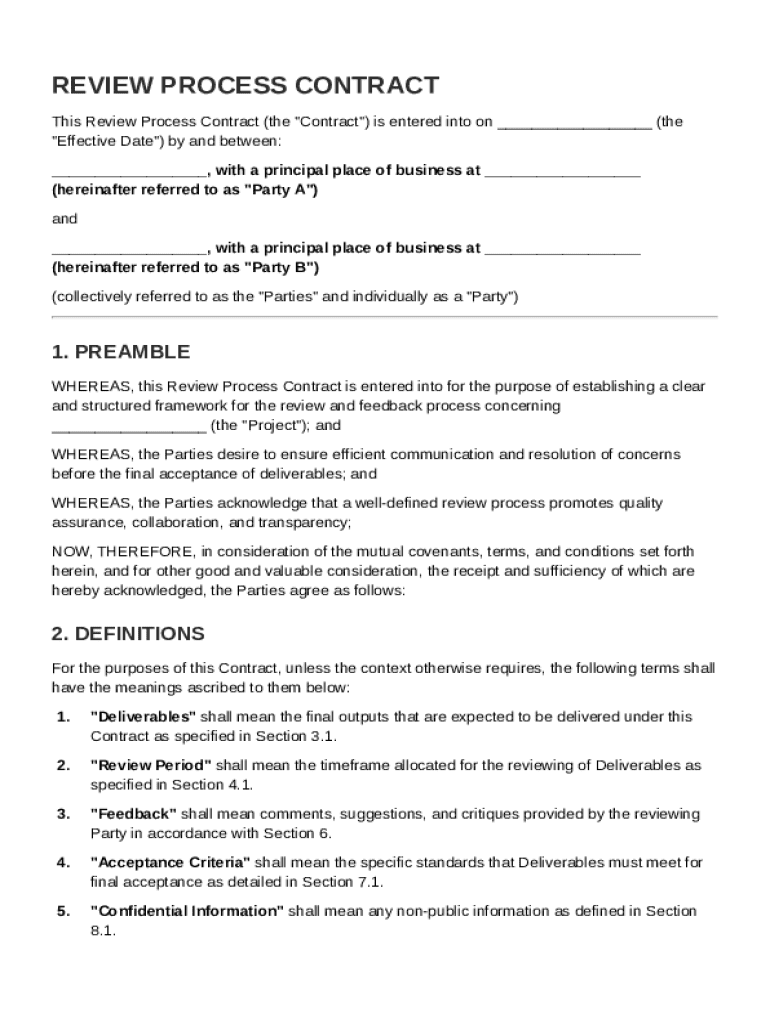







Definition & Meaning
The Review Process Contract Template is a formal document that outlines a comprehensive framework for the review and feedback stages between two parties engaged in a specific project. This template aims to streamline the collaboration process by defining clear roles, responsibilities, and expectations for both parties. It includes several critical sections, such as timelines, deliverables, and acceptance criteria, ensuring quality and consistency in the project's output. The primary objective of this template is to facilitate effective communication and accountability, reducing potential conflicts or misunderstandings.
Key Components
- Roles and Responsibilities: Clearly defines the duties of each party to avoid overlaps or gaps in the review process.
- Timelines: Establishes specific deadlines to maintain momentum and ensure timely completion of project phases.
- Acceptance Criteria: Sets standards for approving deliverables, which ensures all outputs meet the necessary quality benchmarks.
Key Elements of the Review Process Contract Template
This template includes several essential elements that ensure a structured and comprehensive review process:
- Confidentiality Provisions: Protects sensitive information shared during the review process, safeguarding intellectual property and proprietary data.
- Dispute Resolution Mechanisms: Outlines procedures for resolving conflicts, which include mediation or arbitration, to invite a fair and unbiased resolution.
- Amendments and Termination Clauses: Defines conditions for modifying the contract or terminating it under specific circumstances, providing a clear exit strategy.
Practical Examples
For example, in a software development project, the template could specify detailed criteria for code reviews, such as performance benchmarks and compatibility requirements. Similarly, in a marketing campaign review, it might set objectives for brand alignment and message consistency.
How to Use the Review Process Contract Template
Utilizing the Review Process Contract Template involves several strategic steps:
- Customize the Template: Tailor the document to fit the specific context of your project, including the nature of deliverables and stakeholder requirements.
- Assign Roles: Clearly define who is responsible for each segment of the review process to streamline communication and task completion.
- Set Milestones: Use the template to establish key milestones and deadlines, enabling all parties to track progress and meet objectives.
Real-World Scenarios
For example, a marketing agency collaborating with a client on a campaign launch can use this template to formalize their collaboration, specifying deliverables like mock-ups, social media posts, and analytics reports, along with review deadlines to guarantee the client’s satisfaction before the campaign goes live.
Steps to Complete the Review Process Contract Template
Completing the Review Process Contract Template efficiently involves a series of structured steps:
- Gather Necessary Information: Assemble all relevant project details, including objectives, participant roles, and milestone schedules.
- Complete Each Section Thoroughly: Fill out each section of the template carefully, ensuring accurate and complete information for clarity and adherence.
- Review and Finalize: Conduct a thorough review of the completed document with all parties to confirm agreement on terms and conditions before signing.
Detailed Process
In a content production setting, the template could be completed by inputting deadlines for drafts, feedback sessions, and revisions, ensuring every stakeholder understands the timeline and expected contributions prior to the project start date.
Important Terms Related to Review Process Contract Template
Familiarity with critical terms associated with the Review Process Contract Template is crucial to its effective use:
- Deliverables: Specific outputs or results expected as part of the contract.
- Stakeholders: Individuals or groups with a vested interest in the project's outcomes.
- Feedback Loop: A process of reviewing deliverables and providing constructive input to refine the output.
Contextual Examples
For instance, in a product design review, stakeholders might include designers, developers, product managers, and end-users, each providing targeted feedback at different stages of the review process.
Legal Use of the Review Process Contract Template
The equitable legal application of the Review Process Contract Template is assured when it aligns with relevant laws and standards:
- Adherence to Regulations: Ensures that all terms comply with applicable industry standards and legal requirements.
- Legally Binding Clauses: Informs the parties of their rights and obligations under the contract.
- Protection of Intellectual Property: Secures creative assets and proprietary information shared during the review process.
Detailed Exploration
For example, in an architectural project, the legal considerations might include zoning laws, safety standards, and intellectual property rights related to design concepts.
Examples of Using the Review Process Contract Template
The template is versatile and applicable across numerous scenarios:
- Software Development: Used to standardize the code review process, establishing clear expectations around functionality and performance benchmarks.
- Publishing Industry: Helps structure editorial reviews by defining timelines, feedback protocol, and quality checks.
- Corporate Communication: Assists in organizing communication audits, setting communication quality standards, and aligning content with brand guidelines.
Case Studies
A case study in the publishing industry could describe how an editor and author use the template to manage a manuscript’s review, detailing revision rounds and approval stages to ensure satisfaction and compliance with publication standards.
Versions or Alternatives to the Review Process Contract Template
Various versions or alternatives can be adapted based on the unique needs of a project:
- Basic Version: A simpler format suitable for small projects with only essential elements.
- Comprehensive Version: Includes additional sections for complex projects requiring detailed review and extensive collaboration.
- Digital Alternatives: Utilizes online collaboration tools to facilitate real-time communication and document sharing.
Applications Across Industries
In education, a basic version might define expectations for peer-reviewed academic papers, whereas a comprehensive version might be necessary for cross-disciplinary research projects requiring multi-stage reviews and revisions.




