01. Edit your form online
Type text, add images, blackout confidential details, add comments, highlights and more.

Type text, add images, blackout confidential details, add comments, highlights and more.

Draw your signature, type it, upload its image, or use your mobile device as a signature pad.

Send it via email, link, or fax. You can also download it, export it or print it out.
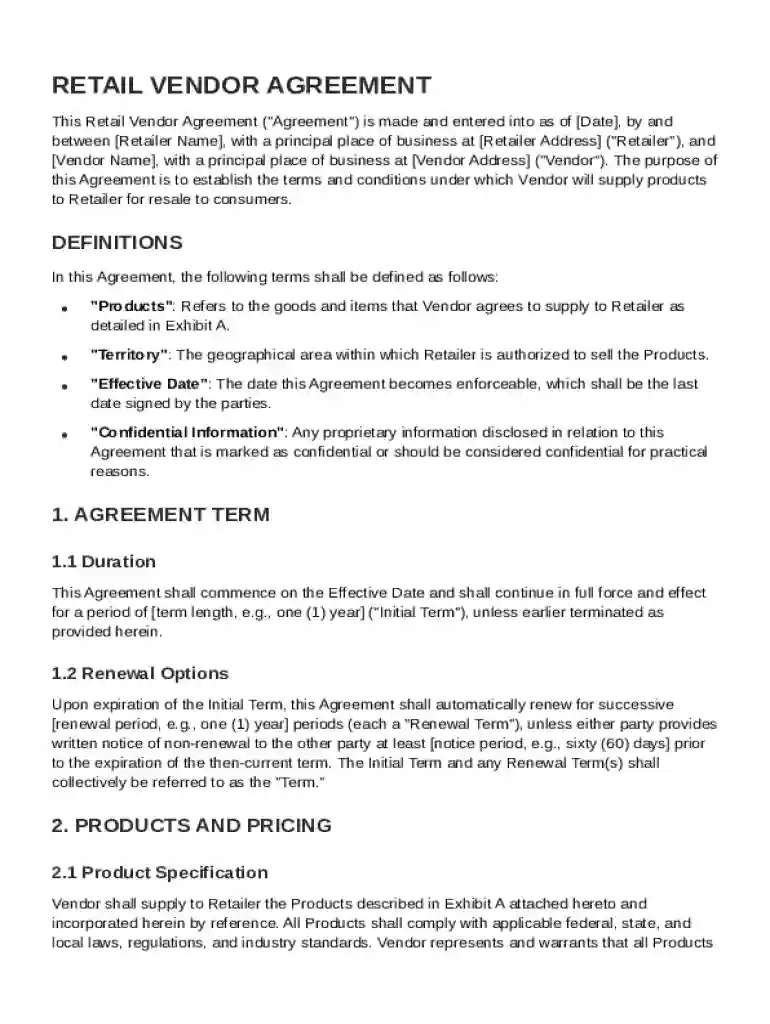
The Retail Vendor Contract Template serves as a foundational agreement between vendors and retailers, outlining the terms under which products are supplied for resale. At its core, this template establishes a binding relationship between the two parties and includes all necessary components for a legally sound contract. The document typically contains detailed sections defining product specifications, pricing, delivery terms, and confidentiality obligations, ensuring both parties are clear on their responsibilities and expectations.
By using a Retail Vendor Contract Template, businesses mitigate risks associated with misunderstandings or disputes. This document serves as a reference point, outlining agreed-upon terms and offering legal protection should disagreements arise. Through its structured framework, the contract distinctly delineates roles and obligations, emphasizing clarity and accountability.
Within retail operations, this template facilitates seamless transaction processes by ensuring all necessary agreements are documented. It becomes crucial when onboarding new vendors, serving as a tool for establishing the groundwork for professional and consistent dealings. The document is applicable across various sectors within the retail industry, from small businesses to large-scale enterprises.
The Retail Vendor Contract Template includes several critical components necessary for a comprehensive agreement between parties. Among these are:
A fully fleshed-out template prevents gaps in the agreement that could lead to misunderstandings or legal challenges. Each element is crucial not only for legal compliance but also for maintaining a harmonious and profitable partnership between the retail company and its vendor.
Utilizing the Retail Vendor Contract Template involves several steps designed to customize the document according to specific business needs. The process ensures that the contract is tailored to the nature of the goods and services involved.
Retailers might need to make adjustments regarding delivery terms or payment schedules to align with operational capabilities and financial policies. It’s vital to maintain open communications during this customization process to ensure mutual agreement on all terms.
Successfully completing the Retail Vendor Contract Template entails several meticulous steps to ensure that the document is both accurate and comprehensive.
During this process, businesses might encounter issues with language that is too ambiguous or a lack of alignment between different sections of the agreement. Addressing these challenges through meticulous editing and peer reviews can ensure the relevance and accuracy of the contract.
The Retail Vendor Contract Template is commonly used by various stakeholders in the retail and supply chain industries.


Outside of traditional retail, this template is applicable to eCommerce platforms and marketplaces that require structured vendor agreements regardless of product categories or distribution methods.
Several important legal and business terms are associated with the Retail Vendor Contract Template:
Having a firm grasp of these and other important legal terms ensures both parties are fully aware of their rights and obligations. This is essential for minimizing legal misunderstandings that can arise from misinterpretations.
Ensuring legal compliance is a fundamental aspect of using the Retail Vendor Contract Template. For the contract to be legally binding, several criteria must be met:
Should disputes arise, the contract provides a foundational document that courts and arbitration panels can rely upon to interpret agreements and responsibilities. Properly drafted, it offers greater protection against legal challenges.
In the U.S., retail vendor contracts must often adhere to state-specific legal requirements that can affect their enforceability.
Adhering to state-specific rules ensures the contract is enforceable under local law, minimizing the risk of void contracts and regional disputes. Legal advisors can provide guidance to adhere to these localized regulations.
At DocHub, your data security is our priority. We follow HIPAA, SOC2, GDPR, and other standards, so you can work on your documents with confidence.