







Definition and Meaning of Closing Costs Worksheet
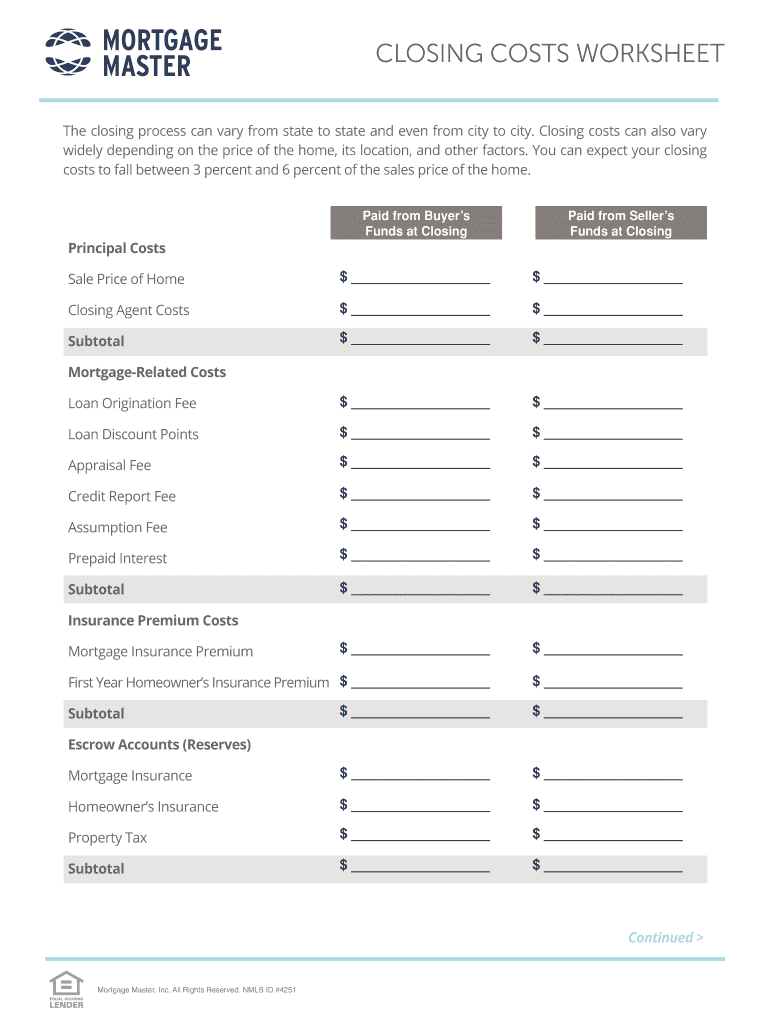
A closing costs worksheet is a detailed document used in real estate transactions, particularly in home buying or selling, that outlines the various costs associated with closing a deal. This worksheet serves to provide a comprehensive overview of the financial obligations that buyers and sellers must consider during the closing process.
Typically, closing costs can accumulate from three percent to six percent of the home's selling price and may vary based on location, specific transaction elements, and the type of mortgage involved. A closing costs worksheet lists these expenses systematically, which often include:
- Loan-related fees (e.g., origination, inspection, and appraisal fees)
- Title insurance premiums
- Government recording fees
- Prepaid expenses (e.g., property taxes and homeowner's insurance)
- Miscellaneous fees (e.g., commissions to real estate agents)
Understanding each of these costs helps both buyers and sellers prepare for and estimate the total funds required at closing.
Key Elements of the Closing Costs Worksheet
The closing costs worksheet is structured to capture essential information, helping users navigate expenses effectively. Its key elements typically include:
- Itemized List of Fees: A breakdown of all potential costs involved in closing, categorized into buyer and seller expenses.
- Estimated Costs: Approximate costs attached to each fee, giving users a practical view of their financial commitments.
- Total Closing Costs Calculation: A summation section at the end of the worksheet that aggregates all expected expenses, ensuring clarity on the financial requirement.
- Signature Lines: Space for both the buyer and seller to acknowledge and confirm their understanding of the fees listed prior to finalization.
For accurate tracking and assessment, it is advisable to check and update this worksheet with actual numbers as they become available during the closing process.
Steps to Complete the Closing Costs Worksheet
Filling out a closing costs worksheet necessitates careful attention to detail. Here are the steps to guide users through the process:
- Collect Information: Gather relevant documents such as the purchase agreement, loan estimates from lenders, and previous closing statements.
- Identify Fees and Expenses:
- List all applicable costs associated with the purchase or sale. Include both lender-required fees and optional costs that might arise during closing.
- Clarify which costs will be covered by the buyer or seller.
- Establish Estimated Amounts:
- Estimate the amount for each fee based on quotes from lenders, service providers, and real estate agents.
- Use local market standards to ensure the estimates reflect reality.
- Calculate Total Costs:
- Add all estimated amounts to derive the total closing costs figure.
- Ensure that this final number aligns with budgetary constraints and financing limits.
- Review and Finalize:
- Share the worksheet with all parties involved for review and approval.
- Update the worksheet as final amounts are confirmed before the closing date.
Each of these steps aids in minimizing surprises, enabling informed decisions during the closing process.
How to Obtain the Closing Costs Worksheet
Obtaining a closing costs worksheet can be done through several avenues to ensure accessibility and usability during real estate transactions. Here are the main options:
- Real Estate Agents: Many agents provide worksheets as part of their services, ensuring that clients have a comprehensive understanding of closing costs specific to their transaction.
- Lenders and Mortgage Brokers: Financial professionals often prepare closing costs worksheets as part of their initial loan estimates, which can illustrate the total financial commitment required at closing.
- Online Resources: Various real estate and financial service websites offer downloadable templates in PDF or spreadsheet formats. This provides flexibility for users to personalize based on their unique requirements.
- DocHub: Users can utilize the closing costs worksheet template directly, enabling real-time editing, annotation, and collaboration with various parties throughout the process.
In accessing these resources, buyers and sellers can ensure they have a clear view of their closing costs.
Important Terms Related to Closing Costs Worksheet
Familiarizing oneself with key terms related to the closing costs worksheet is crucial for understanding the document's components and implications. Important terms include:
- Good Faith Estimate (GFE): A document provided by lenders that outlines the estimated closing costs required for a mortgage, including lender-specific fees.
- Title Insurance: Insurance that protects against losses from defects in title or ownership of the property, typically incurred once during the closing.
- Escrow: An arrangement where a third party holds funds or documents until specified conditions are fulfilled, often used during the closing process to ensure all terms are met before finalizing the transaction.
- Prorated Costs: Expenses that are distributed fairly among parties based on the closing date, such as property taxes or utility bills.
Knowing these terms aids stakeholders in navigating the intricacies of closing costs while communicating effectively with professionals involved in the transaction.
Examples of Using the Closing Costs Worksheet
Using a closing costs worksheet effectively can lead to better financial preparedness and clarity. Here are two practical scenarios:
-
Home Purchase Scenario:
- A first-time homebuyer utilizes a closing costs worksheet to itemize costs such as appraisal fees, inspection fees, and points. They can see at a glance that their total estimated costs amount to $10,500, allowing them to adjust their budget accordingly.
-
Real Estate Sale Scenario:
- A seller preparing to list their property uses a closing costs worksheet to identify potential costs after reviewing offers. By estimating expenses such as real estate agent commissions and title insurance, they determine that selling the home will net them less than anticipated, prompting a reassessment of the listing price.
These examples demonstrate the practical application of the closing costs worksheet in various transactions and how it benefits both parties in understanding the full scope of financial obligations involved.




