




01. Edit your form online
Type text, add images, blackout confidential details, add comments, highlights and more.

Type text, add images, blackout confidential details, add comments, highlights and more.

Draw your signature, type it, upload its image, or use your mobile device as a signature pad.

Send it via email, link, or fax. You can also download it, export it or print it out.
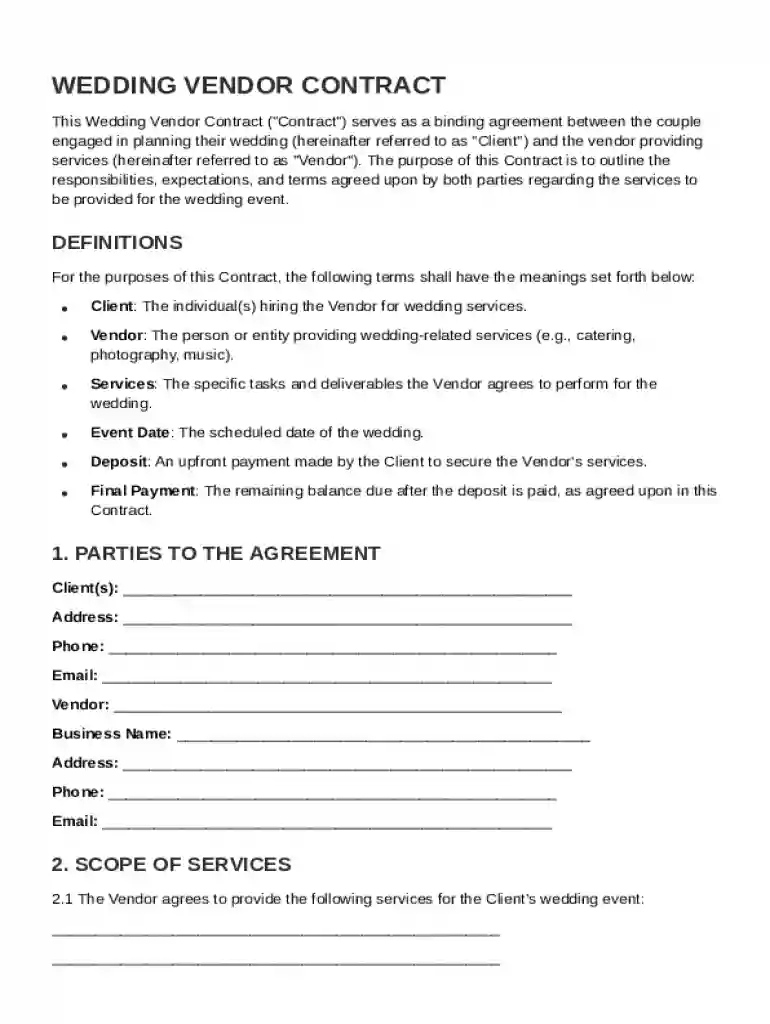
The Wedding Vendor Contract Template is a crucial tool for laying out the responsibilities and expectations between a couple and a wedding service provider. This document ensures both parties are clear on the terms of the agreement. Several key elements typically included are:
Scope of Services: Clear definitions of what services will be provided, such as catering, photography, or venue arrangements, are essential. This section should specify what tasks the vendor is responsible for completing.
Payment Terms: Detailed payment schedules are necessary to avoid disputes. It should include deposit amounts, final payment deadlines, and methods of payments accepted.
Cancellation and Refund Policies: This defines the conditions under which the contract may be canceled and outlines the refund policy. Including clauses that cover unforeseen circumstances can help mitigate financial losses.
Liability and Indemnification Clauses: These clauses protect both parties from unforeseen incidents. Vendors usually include a limitation of liability to shield themselves from excessive claims.
Definitions of Key Terms: Specific terminology used throughout the contract must be clearly defined to ensure mutual understanding of the document.
Completing a Wedding Vendor Contract Template involves several steps to ensure all necessary details are encapsulated:
Understanding the legal jargon often included in wedding vendor contracts is crucial:
Force Majeure: This term covers events outside the control of the parties, such as natural disasters or pandemics, which could void certain contractual obligations.
Indemnification: A clause whereby one party agrees to compensate the other for certain damages or liabilities stemming from the contract.
Deposit: An upfront payment made to secure the vendor's services for the requested date.
Non-Refundable: An indication that a deposit or other payment cannot be returned if the client cancels the service.
The use of a wedding vendor contract must adhere to specific legal standards to be enforceable:
Compliance with State Laws: Contracts must meet state-specific legal requirements to be valid. This could include specific paperwork or regulatory approvals.
Electronic Signatures Act Compliance: Digital signatures should comply with the ESIGN Act, ensuring they hold the same legitimacy as written signatures.
Legal Representation: Having a legal expert review the contract can help identify any gaps or issues with enforceability.
Modern technology allows for seamless management of contract templates using various software platforms:
DocHub's Integration Features: The template can be imported from cloud storage or created from scratch within platforms like DocHub. This enables detailed editing and real-time collaboration.
Google Workspace: Files can be shared and interacted with across platforms, helping to streamline the process and reduce the need for paper contracts.
Document Formats: Ensuring compatibility with formats like PDF, DOC, and others enhances flexibility for both creation and distribution.
Contracts are often subject to state-specific legal variances:
Marriage Statutes and Regulations: Understanding the local laws relating to marriage and service regulations can clarify service provider responsibilities.
Liability and Compliance: Different states may have specific stipulations about liability waivers, insurance requirements, or even environmental policies relating to events.
Using a wedding vendor contract can extend to various practical scenarios:
Photographer Service Agreement: Clearly detail what photos are included and the expected delivery date for album completion.
Venue Hire: Specify the access time, facility usage rules, and decor restrictions.
Catering Services: Outline menu options, guest count requirements, and food preparation logistics.
Various business entities engage regularly with this form of contract:
Event Planners: They often use these to manage numerous vendor relationships efficiently.
Caterers and Photographers: Ensuring payment and service terms are mutually agreed upon avoids disruptions.
Venue Managers: Securing services for event decoration, audio-visual arrangements, or even accommodations requires structured agreements.
While the wedding vendor contract is the mainstay, alternatives or variations may be suitable:
Master Service Agreements: For vendors providing repeat services, an overarching contract with sectioned orders for each engagement might be preferable.
Short Form Contracts: For simpler agreements or last-minute bookings, a concise contract that covers only essential terms could be applicable.
Each of these sections provides comprehensive details to ensure understanding, utility, and relevance for users seeking to create or manage wedding vendor contracts effectively.
At DocHub, your data security is our priority. We follow HIPAA, SOC2, GDPR, and other standards, so you can work on your documents with confidence.
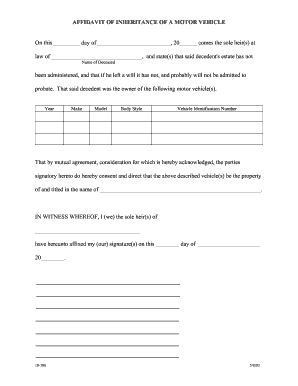

Carefully review the wedding agreements below. You may submit the completed and signed forms via email or mail. robertcarrchapel@tcu.edu.
Elara. Production Planner takes care of press configuration and template setup directly, from which the workflow gets all the information it needs. It also


