






Definition & Meaning
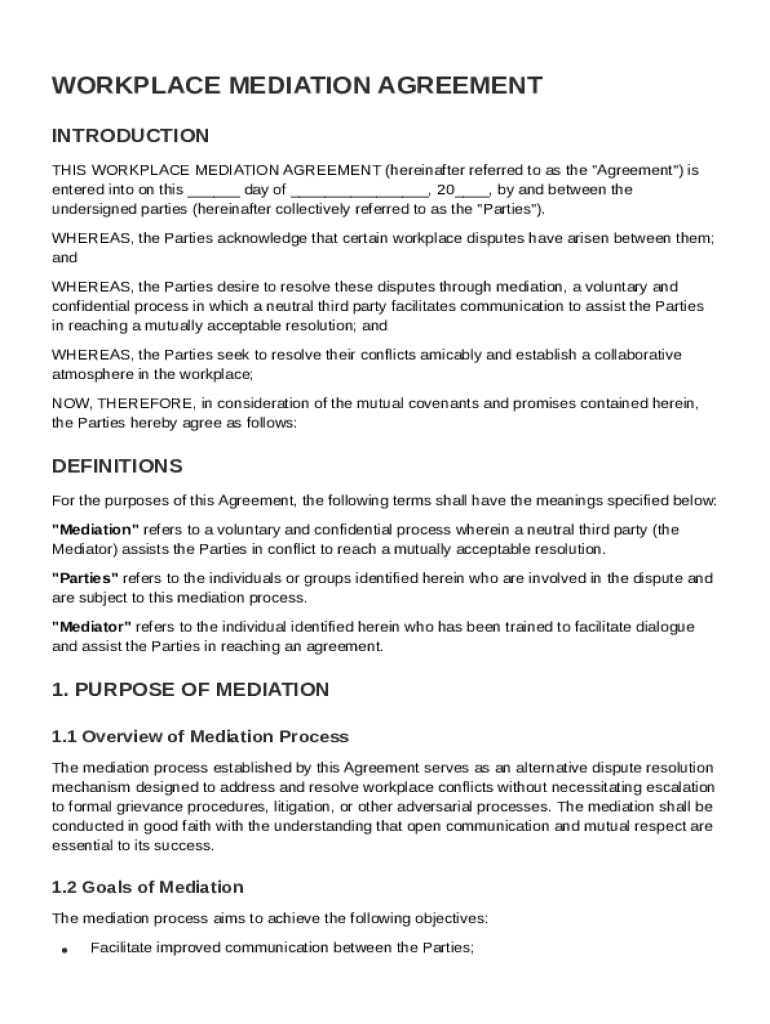
The Workplace Mediation Agreement Template serves as a structured guide for resolving disputes between parties in a professional setting through mediation. It provides a framework detailing how conflicts are addressed and resolved by a neutral third party facilitator. The agreement emphasizes voluntary participation, confidentiality, and outlines the mediator's role in fostering a mutually acceptable resolution. This template standardizes the process, ensuring all parties understand their responsibilities, the mediation procedure, and the importance of collaboration and open communication in reaching a settlement.
How to Use the Workplace Mediation Agreement Template
Using the Workplace Mediation Agreement Template involves several steps to ensure it is applied effectively:
-
Identify the Parties Involved: Clearly specify who will participate in the mediation process, including the mediator and all disputants.
-
Outline the Dispute: Document a neutral description of the issue to ensure all parties agree on the focus of the mediation.
-
Detail the Mediation Process: Provide a comprehensive overview of how the mediation will proceed, including timelines, meeting formats, and expected conduct.
-
Set Ground Rules: Establish basic rules for communication, confidentiality, and participation that all parties must adhere to during and after the mediation process.
-
Define Outcomes and Closure: Describe how any agreements reached will be documented and implemented, specifying follow-up actions where necessary.
Key Elements of the Workplace Mediation Agreement Template
The Workplace Mediation Agreement Template includes several critical components that ensure an effective mediation process:
- Purpose and Scope: Clarifies the objectives of the mediation and the issues to be addressed.
- Mediator's Role: Defines the responsibilities and impartial position of the mediator, ensuring they facilitate rather than dictate the outcomes.
- Confidentiality Clauses: Specifies that all discussions during mediation remain private, and reasons for confidentiality breaches, if any, are detailed.
- Participant Responsibilities: Outlines the expected behavior and participation level from each party to maintain a productive environment.
- Resolution Documentation: Provides guidelines on how agreements should be recorded, signed, and made actionable.
Steps to Complete the Workplace Mediation Agreement Template
To effectively complete the Workplace Mediation Agreement Template, follow these steps:
-
Review the Template: Familiarize yourself with the structure and content to understand the required information.
-
Fill in Participant Details: Include all relevant participant information, ensuring correct identification of each party.
-
Define the Conflict: Provide a precise description of the issue to ensure focus remains clear throughout the mediation.
-
Set Rules and Procedures: Include agreed ground rules and detail the mediation process, highlighting confidentiality agreements.
-
Document Outcomes: Prepare to record any agreements reached, ensuring they are clear, achievable, and documented appropriately for implementation and follow-up.
Who Typically Uses the Workplace Mediation Agreement Template
The Workplace Mediation Agreement Template is primarily utilized by:
- Human Resources Professionals: To manage employee disputes and foster a harmonious work environment.
- Mediators and Legal Counsel: To facilitate a structured dispute resolution process that complies with legal standards.
- Managers and Team Leaders: To address conflicts within teams and enhance team dynamics.
- Employees: Engaged in disputes seeking a neutral process to voice their concerns and reach a resolution.


Legal Use of the Workplace Mediation Agreement Template
The legal application of the Workplace Mediation Agreement Template involves:
- Complying with Mediation Laws: Ensuring the process adheres to relevant federal and state laws governing mediation practices.
- Contractual Obligations: Recognizing the agreement as a binding contract once signed by all parties and the mediator.
- Enforcement of Terms: Providing legal recourse should any party breach agreed-upon terms, with potential for court enforcement.
- Confidentiality Protections: Upholding privacy agreements to protect participants from disclosure of sensitive information.
Important Terms Related to Workplace Mediation Agreement Template
Understanding key terms related to the Workplace Mediation Agreement Template is essential:
- Mediation: A voluntary process where a neutral party assists in resolving disputes through communication and negotiation.
- Mediator: An impartial third party who facilitates the mediation process without imposing decisions.
- Confidentiality: The assurance that information shared during mediation cannot be disclosed outside the process.
- Settlement Agreement: The final document that records the terms agreed upon by all parties, legally binding once signed.
- Impartiality: The mediator's commitment to remain unbiased and serve only as a facilitator in the resolution process.
Examples of Using the Workplace Mediation Agreement Template
Real-world applications of the Workplace Mediation Agreement Template include:
- Resolving Employee Grievances: Employees in dispute over job roles or workplace behavior use the template to reach mutual understanding and resolution.
- Cross-Departmental Conflicts: When departments have conflicting interests, mediation helps align goals and improve interdepartmental collaboration.
- Negotiating Contract Terms: Utilizing the template to mediate terms of employment before finalizing contract agreements.
State-Specific Rules for the Workplace Mediation Agreement Template
The applicability and enforceability of the Workplace Mediation Agreement Template can vary by state, taking into account local legal standards and regulations:
- State Mediation Laws: Understanding specific mediation statutes and requirements in states like California, New York, and Texas.
- Workplace Regulations: Complying with state-specific employment laws that could affect mediation outcomes.
- Mediator Certification Requirements: Ensuring mediators meet any regional licensing or certification mandates.