
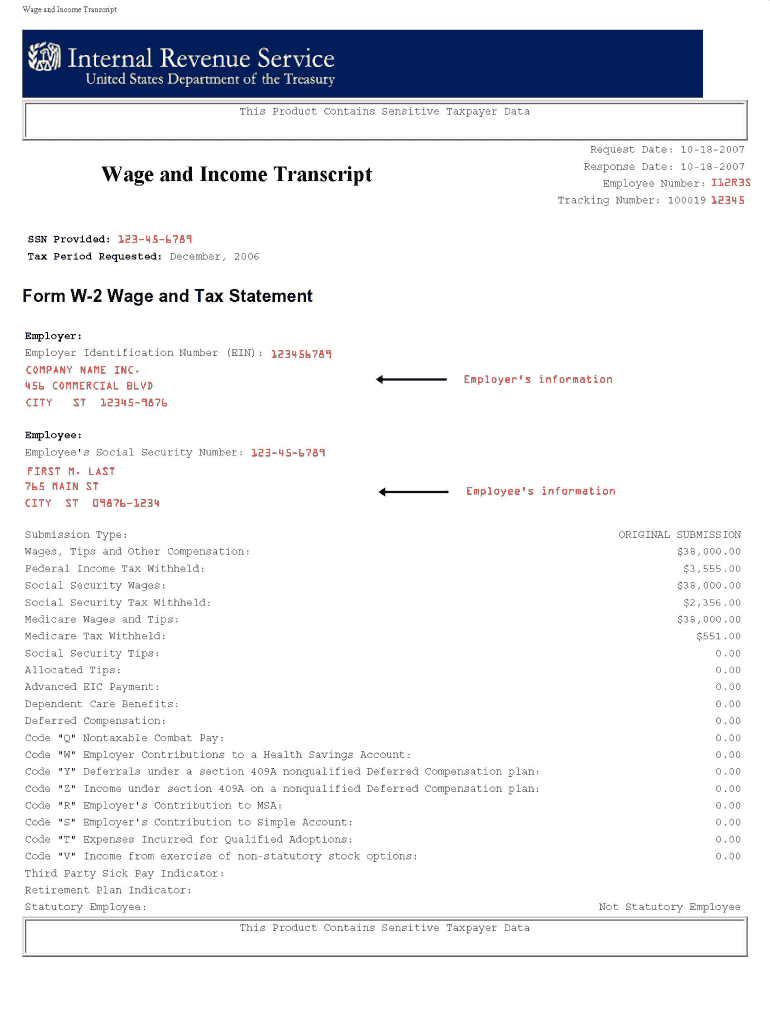







Definition and Meaning of IRS Tax Transcript Sample
An IRS tax transcript sample refers to a summary document provided by the Internal Revenue Service (IRS) that reflects key data from a taxpayer's tax returns. It serves as an official record of income, tax payments, and other relevant tax information. There are different types of tax transcripts, including:
- Tax Return Transcript: Shows most line items from the original tax return, including any adjustments made. It is commonly requested for income verification.
- Account Transcript: Provides a record of the taxpayer's account with the IRS, including any payments, penalties, and interest accrued.
- Wage and Income Transcript: Contains data from Forms W-2, 1099, and other income documents submitted to the IRS.
Tax transcripts are generally used for purposes such as loan applications, income verification, and tax preparation.
How to Obtain the IRS Tax Transcript Sample
Requesting an IRS tax transcript is a straightforward process that can be accomplished in several ways:
-
Online Request via the IRS Website:
- Use the IRS’s Get Transcript tool, which allows taxpayers to securely access and download their transcripts.
- You must have an account with the IRS and verify your identity through personal information.
-
By Mail:
- Complete IRS Form 4506-T to request your transcript by mail. This form can be found on the IRS website and must be submitted to the IRS address listed on the form.
- Requests may take five to ten business days to process.
-
Phone Request:
- Call the IRS at . Follow the prompts to request a transcript. Ensure to have your Social Security number, date of birth, and address information ready for verification.
-
Through Your Tax Professional:
- If you work with a tax preparer, they can request your transcript on your behalf, provided you grant them permission.
These options facilitate easy access to your tax information, catering to various preferences for obtaining this important document.
Key Elements of the IRS Tax Transcript Sample
When reviewing an IRS tax transcript sample, several critical components are typically included:
-
Personal Information: This includes the taxpayer's name, Social Security number (last four digits), and address. This section is vital for ensuring accuracy and proper identification.
-
Tax Year Information: The transcript details the tax year related to the data, indicating the time frame the financial information covers.
-
Income Information: It provides a summary of earnings from different sources, nudging taxpayers to evaluate their income accurately.
-
Tax Calculations: Displays the amounts for total income, adjusted gross income, tax owed, and tax paid, helping individuals understand their tax obligations clearly.
-
Refund Status: Information on any refund issued due to overpayment, including any adjustments processed.
Understanding these key elements is crucial for taxpayers seeking to use their transcripts effectively, whether for personal finance management or formal verification processes.
Examples of Using the IRS Tax Transcript Sample
The IRS tax transcript sample is utilized in various practical scenarios:
-
Loan Applications: Lenders, such as banks and mortgage companies, often require tax transcripts to verify income and assess a borrower's eligibility for loans.
-
Financial Aid Applications: Many colleges and universities request tax transcripts as part of the financial aid process, ensuring that awards are allocated based on accurate financial information.
-
Tax Preparation: Taxpayers may use their transcripts as a reference when preparing their annual returns or amend existing filings, ensuring all income has been reported.
-
Proof of Income: Freelancers or self-employed individuals can present their transcripts to clients or agencies that require formal proof of income.
Each of these examples underlines the practical relevance of having access to an accurate IRS tax transcript sample.
IRS Guidelines for Tax Transcripts
The IRS has established specific guidelines and regulations concerning the issuance and use of tax transcripts. Key points include:
-
Eligibility: Generally, any taxpayer who has filed a return can request their transcript. Additionally, authorized representatives can obtain transcripts with appropriate consent.
-
Processing Time: Online requests are typically processed instantly, whereas mail requests take longer—often between five to ten business days. Planning for this delay is essential, particularly when time-sensitive transactions are involved.
-
Limitations: Taxpayers may be limited to the number of transcripts requested per year, which aids the IRS in managing resources effectively.
-
Security Protocols: Due to the sensitive nature of tax information, the IRS employs stringent security measures, including identity verification, ensuring that only authorized persons can access their records.
Awareness of these guidelines ensures taxpayers navigate the process of obtaining their transcripts correctly and securely.
Important Terms Related to IRS Tax Transcript Sample
When dealing with IRS tax transcripts, various terminologies are essential for comprehension:
-
Transcript Codes: These are specific codes used on transcripts that indicate various statuses or actions taken by the IRS. Familiarity with these codes can help users understand their own transcripts more profoundly.
-
Form 4506-T: The form utilized to request tax transcripts from the IRS. Understanding this form and its requirements is crucial for accurate submission.
-
Tax Year: Refers to the period for which the taxpayer is filing their taxes, which is typically the previous calendar year.
-
Adjusted Gross Income (AGI): This is an important figure on tax returns, reflecting a taxpayer's total income minus specific deductions. Understanding AGI is vital for tax calculations and eligibility for various credits.
Grasping these terms is beneficial for effectively leveraging an IRS tax transcript sample in financial dealings and tax-related processes.




