



Understanding the Individualized Home Instruction Plan (IHIP) for Grades 1-6
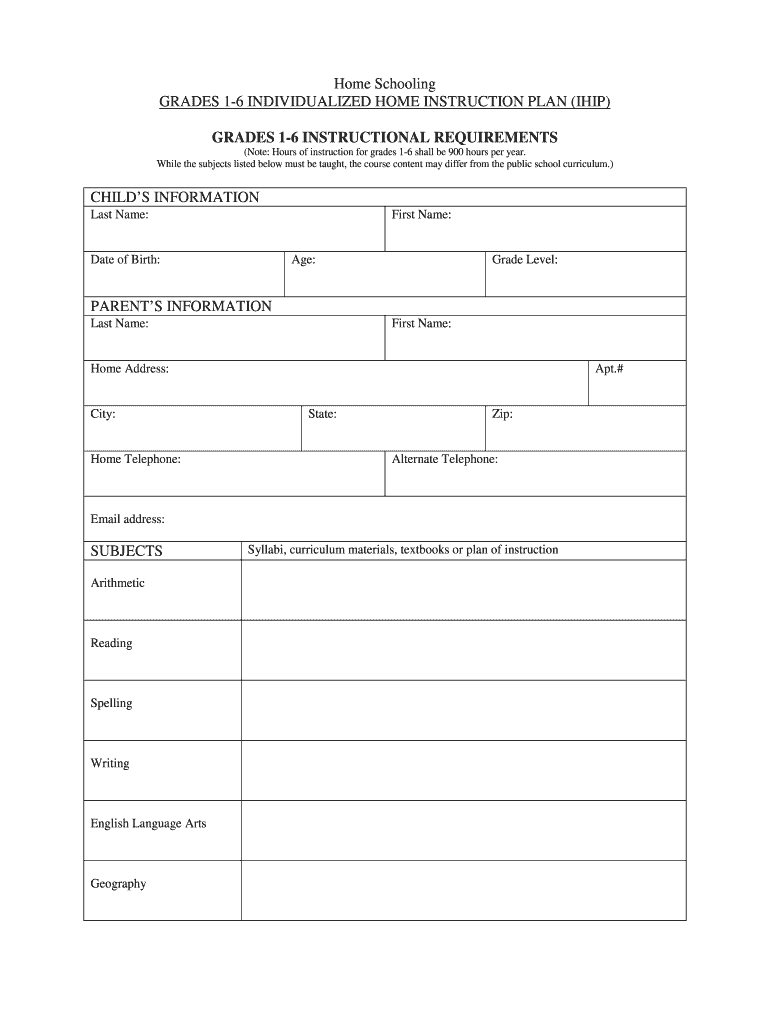
The Individualized Home Instruction Plan (IHIP) is a vital document for families engaged in homeschooling within New York state, particularly for children in grades one through six. This form outlines the educational framework, ensuring compliance with state regulations while fostering a structured learning environment.
Detailed Breakdown of IHIP Requirements
An IHIP must contain several core components, generally structured to provide clarity on the educational goals and methods being employed.
-
Child and Parent Information: The IHIP begins with essential details such as the child's name, age, and grade level, alongside the parent's contact information. This establishes the identity of the student and the accountability of the parent.
-
Subjects to be Taught: Families must list subjects consistent with the New York State Learning Standards. Common subjects include:
- English Language Arts
- Mathematics
- Science
- Social Studies
- Arts
- Health
-
Instructional Hours: Each IHIP should specify the anticipated number of instructional hours per subject weekly and monthly. States may have minimum requirements that need to be adhered to, ensuring students receive adequate educational exposure.
Quarterly Reporting and Evaluation Methods
The IHIP mandates regular updates and assessments to track educational progress.
-
Quarterly Reports: Parents are required to submit quarterly reports that detail the subjects taught, activities completed, and progress made. This is crucial for demonstrating adherence to the educational plan.
-
Evaluation Methods: The IHIP should outline how the child's progress will be evaluated. Common methods include:
- Standardized tests
- Written assessments
- Portfolio reviews
- Observations
These evaluations provide insight into the effectiveness of the homeschooling approach and offer opportunities for adjustments.
Flexibility in Instructional Design
Creating an IHIP provides flexibility to tailor instruction according to the child's interests, strengths, and learning pace.
-
Customized Learning Environment: Parents can adapt teaching techniques and resource materials based on what engages their child most effectively. This might include:
- Hands-on activities
- Field trips
- Multimedia resources
-
Incorporating Life Skills: Families can integrate life skills into their IHIP, combining academic subjects with practical applications, fostering a well-rounded educational experience.
Importance of Legal Compliance
Maintaining legal compliance through the IHIP is paramount for homeschooling families in New York.
-
Adhering to State Regulations: The IHIP must meet all state requirements, including submission deadlines for the initial plan and quarterly reports. Failure to do so can lead to penalties or even the discontinuation of a homeschooling program.
-
Record Keeping: It is advisable to keep a comprehensive record of submitted IHIPs, quarterly reports, and any communication with educational authorities. This documentation is essential in the event of any inquiries or audits.
Examples and Templates for IHIP
Utilizing templates can simplify the creation process for an IHIP.
-
NYS IHIP Template: The New York State provides templates that families can use to create their IHIP. These templates ensure all necessary components are included and formatted properly.
-
Fillable IHIP Forms: Using digital formats allows for easy editing and updating throughout the school year, adapting content and details as necessary.
Templates also include examples of previously approved IHIPs, which can serve as guides to structure new plans effectively, emphasizing compliance and completeness.
In summary, the IHIP for grades one to six serves as a foundational document for homeschooling families, ensuring a structured approach to education while meeting legal requirements in New York. The plan's flexibility and customization empower families to create a vibrant, engaging learning experience tailored to their child's unique needs.