
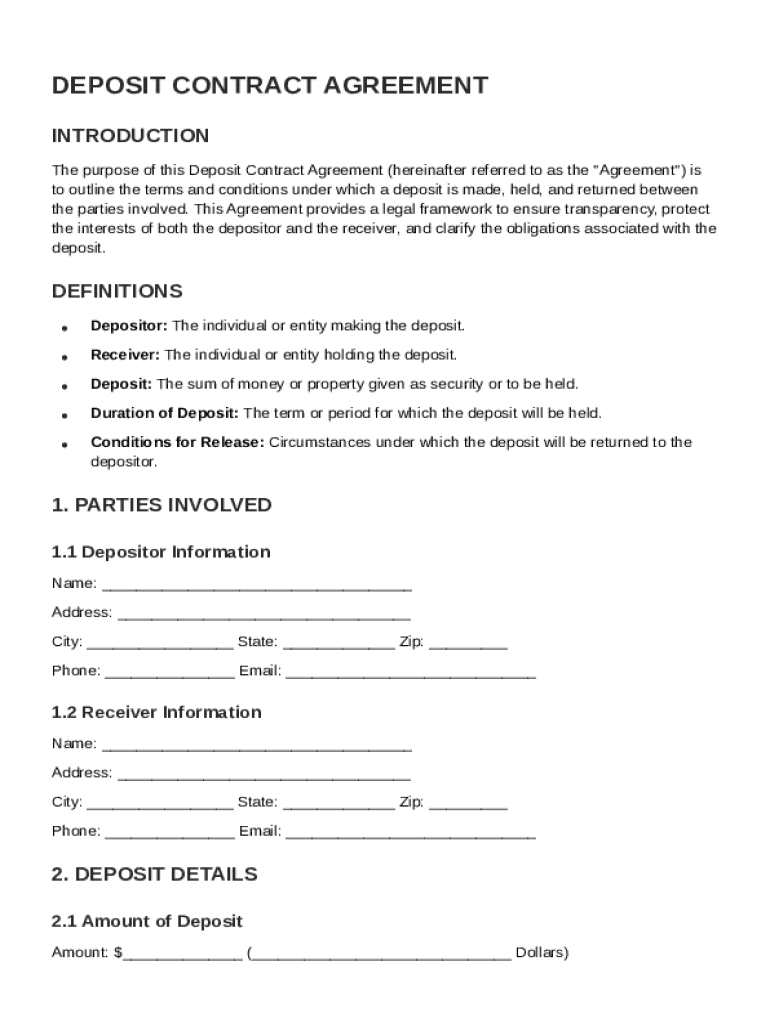







Definition and Meaning of a Deposit Contract Template
A Deposit Contract Template is a structured document that outlines the terms and conditions associated with the making, holding, and returning of a deposit between two parties: the depositor and the receiver. This template covers several crucial components, such as defining the roles of involved parties, specifying the deposit amount and duration, and detailing the conditions under which a deposit can be retained or refunded. Additional provisions often include dispute resolution protocols to ensure transparency and to uphold the interests of both parties.
Key Characteristics
- Clear Specification of Roles: Precisely defines who will deposit the funds and who will hold them.
- Conditions for Deposits: Lays out how long the deposit will be held and under what conditions it will be returned or forfeited.
- Protection Measures: Includes clauses for protecting the interests of both parties, such as penalties for non-compliance and dispute resolution steps.
Practical Examples
- Security Deposits: Used in landlord-tenant agreements to ensure property conditions are maintained.
- Business Transactions: Applied in commercial agreements where a deposit is required before services are rendered.
How to Use the Deposit Contract Template
Using a Deposit Contract Template involves a series of straightforward steps designed to ensure that all necessary information is accurately captured.
- Identify the Parties: Clearly state the names and contact details of the depositor and the receiver.
- Define the Deposit Details: Include the exact monetary value of the deposit and the agreed period it will be held.
- Establish Conditions: Specify all contingencies for the release or retention of the deposit. Examples include satisfactory completion of services or adherence to rental terms.
- Incorporate Legal Provisions: Add any legal clauses needed for compliance with local or federal laws.
- Review and Finalize: Go through the document to ensure all terms are clearly understood by both parties.
Tips for Efficient Use
- Use software tools like DocHub to fill in and manage documents digitally for ease and efficiency.
- Utilize collaboration features to get input or approval from stakeholders directly within the platform.
Steps to Complete the Deposit Contract Template
Completing a Deposit Contract Template carefully ensures all critical components are included and legally sound.
Detailed Completion Process
- Title the Document: Clearly indicate it's a Deposit Contract at the top.
- Fill Out Party Information:
- Names, addresses, and contact details of the depositor and the receiver.
- Specify Deposit Amount:
- Clearly enter the deposit sum both in figures and words to avoid confusion.
- Outline Conditions for Retention/Release:
- Detailed conditions under which the deposit will be returned or forfeited.
- Add Necessary Legal Clauses:
- Include clauses for governing law, jurisdiction, and dispute resolution.
- Signature Section:
- Leave space for the signatures of both parties, and include the date of signing.
Importance of Accuracy
- An accurately completed contract template prevents misunderstandings and future disputes.
- Ensures both legal protection and clarity for the involved parties.
Key Elements of the Deposit Contract Template
Understanding the key components of a Deposit Contract Template helps ensure that no critical information is omitted.
Essential Elements
- Identifying Details: Clear identification of involved parties including names and legal descriptions.
- Description of Deposit: Amount, purpose, and specific conditions for the deposit are outlined.
- Contingencies and Resolutions:
- Specifies scenarios where the deposit may not be returned and includes a section for dispute resolution.
- Legal Clauses: Involves governing law, indemnity, and amendment conditions.
Variations and Scenarios
- Monthly Rentals: Conditions may vary depending on the agreed rental period.
- Service Contracts: Include milestones or deliverables that trigger the release of a deposit.
Legal Use of the Deposit Contract Template
Legal validity is crucial for a Deposit Contract Template to serve its intended function.
Compliance Aspects
- Relevant Laws: Must comply with local and federal regulations concerning deposits and contract enforceability.
- Dispute Clauses: Should include sections on how disputes will be resolved, such as mediation or arbitration.
Recommendations for Legal Use
- Consult Legal Advisors: Ensuring the template fits the specific legal requirements of your jurisdiction.
- Regular Updates: Amend the contract as needed to reflect changes in law or business practices.
Examples of Using the Deposit Contract Template
Practical examples illustrate the scenarios in which a Deposit Contract Template proves indispensable.
Real-World Scenarios
- Rental Agreements: Landlords utilize the template to specify security deposit terms with tenants.
- Service Providers: Companies use it to ensure payment security for large projects before commencement.
Key Benefits
- Clarity and Security: Offers both parties clarity about the conditions regarding the deposit.
- Reduces Misunderstandings: Clearly sets out responsibilities and consequences, reducing disputes.
State-Specific Rules for the Deposit Contract Template
State-specific regulations can significantly impact how deposit contracts are structured and enforced.
Variable Rules Across States
- Amount Limits: Some states may impose limits on how much can be charged as a security deposit.
- Return Timelines: Different states might have specific timelines within which a deposit must be returned after the end of an agreement.
- Interest Requirements: In some jurisdictions, interest may accrue on held deposits and must be returned alongside the principal amount.
Guidelines for Adherence
- Research Local Laws: Understanding state-specific rules is key to ensuring compliance.
- Incorporate Specific Clauses: Adjust the template to reflect unique state requirements and avoid legal pitfalls.
Importance of a Deposit Contract Template
Understanding the significance of a Deposit Contract Template is crucial for leveraging its full benefits.
Essential Justifications
- Legal Protection: Provides a legal framework for both parties, protecting their interests and establishing clear expectations.
- Streamlined Transactions: Ensures that all terms are agreed upon before any exchange of money, promoting smoother negotiations and trust.
Broader Benefits
- Enhances Trust: Clear contracts help build trust by providing assurance to both parties about the handling of the deposit.
- Facilitates Dispute Resolution: With clearly defined terms, resolving disputes becomes a straightforward process.




