




Definition & Meaning
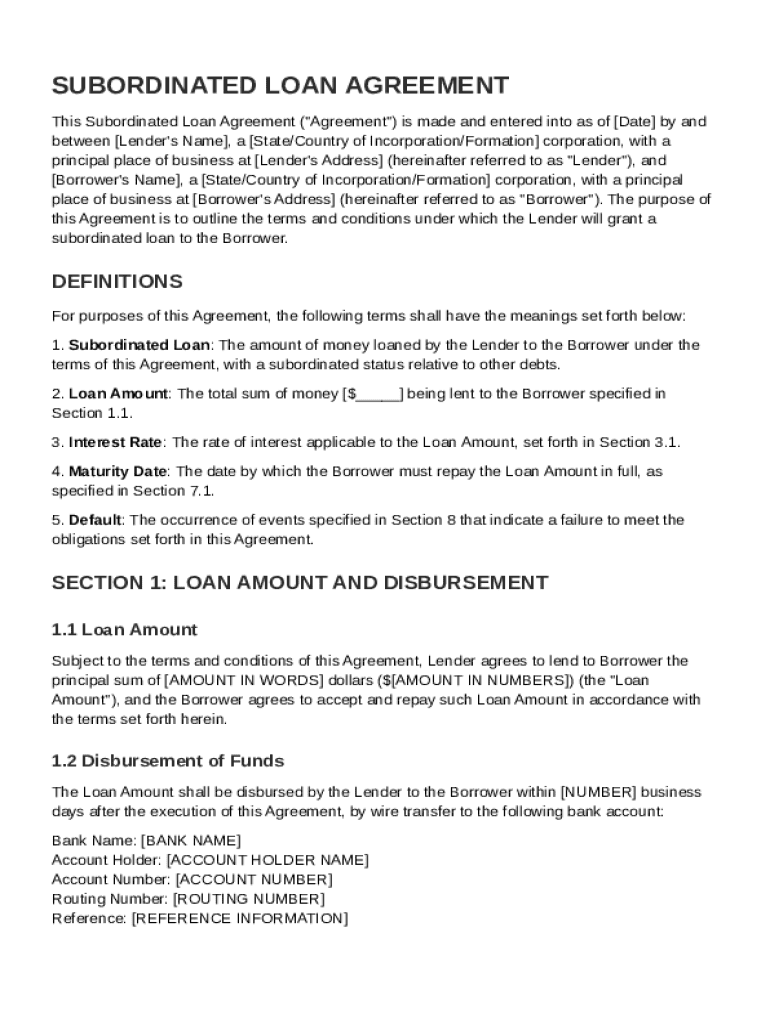
A subordinated loan agreement is a legal document that outlines the terms under which a lender provides financing that ranks below other debts in the case of borrower default. This document specifies the loan amount, interest rate, repayment terms, and any conditions under which the priority of repayment may be affected. Crucially, subordinated loans have a junior status compared to primary loans, meaning that if a borrower goes bankrupt, senior debts are repaid before any payments are made toward subordinated loan obligations. Understanding the meaning and implications of this form is essential for both lenders and borrowers when entering into such financial agreements.
Key Elements of the Subordinated Loan Agreement Template
The subordinated loan agreement template consists of several critical elements that structure the legal and financial relationship between the lender and borrower. Important elements include:
-
Loan Amount and Interest Rate: Specifies the principal borrowed and the interest rate to be applied.
-
Repayment Schedule: Outlines the timeline and frequency of repayments.
-
Conditions of Default: Defines situations where the borrower could be considered in default.
-
Priority of Payments: Details the subordination aspect, clarifying that senior debts have repayment priority.
-
Representations and Warranties: Assurances made by each party regarding their ability to enter into the agreement.
-
Covenants: Obligations that the borrower must adhere to throughout the duration of the loan.
-
Security Interests: Any collateral pledged to secure the loan.
How to Use the Subordinated Loan Agreement Template
To effectively utilize the subordinated loan agreement template, follow these steps:
-
Download and Review: Obtain the form and review all sections, ensuring you understand each term.
-
Modify for Specific Needs: Customize sections such as loan amount, interest rates, and repayment terms to fit the specific agreement details.
-
Consult Legal Advisors: Engage with attorneys to validate the terms and ensure compliance with state-specific regulations.
-
Negotiate Terms: Discuss and negotiate any ambiguous terms with the counterparty to reach mutual agreement.
-
Finalize and Sign: Once both parties agree, finalize the contract and execute it with authorized signatures.
Important Terms Related to Subordinated Loan Agreements
Understanding the terminology used within a subordinated loan agreement is crucial for proper comprehension. Key terms include:
-
Principal: The initial sum of money borrowed before interest.
-
Subordination: The arrangement where the lender agrees that their claim will be subordinate to the claims of other creditors.
-
Amortization: The process of spreading the loan payments over a period, reducing interest more quickly in the earlier payments.
-
Covenant: Promises within a loan agreement that stipulate the borrower’s actions, such as maintaining certain financial ratios.
-
Collateral: Assets pledged by the borrower as security for the loan, giving the lender claim in case of default.
Steps to Complete the Subordinated Loan Agreement Template
When completing the subordinated loan agreement template, adhere to the following sequence:
-
Insert Basic Information: Enter the names and addresses of both the borrower and the lender.
-
Define Loan Terms: Specify the principal amount, interest rate, and duration of the loan.
-
Clarify Repayment Details: Detail the frequency and amount of repayments required.
-
State Default Conditions: Clearly define what constitutes a default and the consequences thereof.
-
Add Subordination Clause: Include terms that confirm the loan’s subordinate status against other debts.
-
Review and Amend: Ensure all details are accurate, making amendments as necessary.
-
Execution: Both parties should sign and date the agreement in the presence of legal witnesses or notaries if needed.
Legal Use of the Subordinated Loan Agreement Template
Subordinated loan agreements have specific legal purposes and must comply with jurisdictional regulations. Legal stipulations include:
-
Compliance with State Law: The agreement must adhere to the laws governing contracts and financial transactions in the relevant state.
-
Claim Hierarchies: Legally establishes the priority of repayment claims in case of liquidation or bankruptcy.
-
Disclosure Obligations: Both parties must fully disclose all necessary financial information to prevent fraud.
-
Amendment Provisions: The document should outline how modifications can be made, ensuring all parties agree to any changes.
Who Typically Uses the Subordinated Loan Agreement Template
Subordinated loan agreements are commonly used by:
-
Startups and Small Enterprises: Seeking additional financing without affecting senior creditors.
-
Investors: Providing mezzanine financing to obtain potentially superior returns, accepting increased risk.
-
Corporations: In structured financing arrangements to manage capital structure and financing costs effectively.
-
Financial Institutions: Engaged in complex transactions that require nuanced debt and equity balances.

State-Specific Rules for the Subordinated Loan Agreement Template
Each U.S. state may have unique legal considerations regarding subordinated loan agreements:
-
Usury Laws: States regulate maximum permissible interest rates and may vary significantly.
-
Security Interests: Varies by state in terms of enforcement and filing requirements for secured interests.
-
Bankruptcy Protocols: Differing state laws affect how subordination is treated in insolvency cases.
Ensuring the agreement complies with the specific rules of the pertinent jurisdiction is crucial for its enforceability.
Examples of Using the Subordinated Loan Agreement Template
Practical use cases for subordinated loan agreements can illustrate their applications:
-
Startups raising capital: A tech startup might use subordinated loans when early-stage venture capital funds require deeper subordination to secure financing rounds.
-
Restructuring corporate debt: A manufacturing firm may restructure its debt to maintain operational liquidity while making senior debt obligations.
-
Real Estate Financing: Real estate developers might employ subordinated loans to enhance project financing without affecting existing senior mortgages.
These examples highlight the strategic use of subordinated loans in various business scenarios.