






Definition and Meaning of the Hood Cleaning Service Report
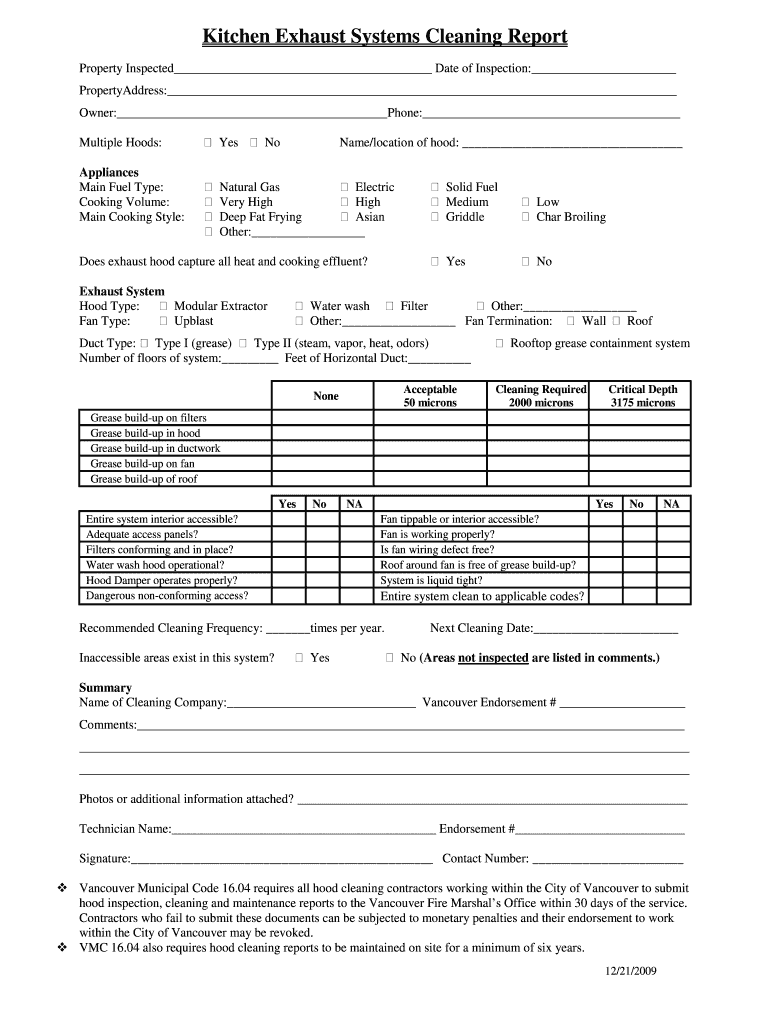
The hood cleaning service report is a comprehensive document that outlines the condition and cleaning status of kitchen exhaust systems. This report is essential for ensuring compliance with health and safety regulations, particularly in commercial kitchen settings. It captures detailed information about the cleaning performed on exhaust hoods, including aspects such as grease accumulation, condition of filters, and any associated repairs or maintenance needs.
Key elements typically included in this report are:
- Inspection Overview: A summary of the initial condition of the exhaust systems, noting any potential fire hazards due to grease buildup.
- Cleaning Details: Specifics about the cleaning process undertaken, including the products used and the methods employed to ensure thorough cleanliness.
- Compliance Status: A declaration of adherence to local fire codes and health regulations, confirming that the exhaust system meets safety standards.
- Recommendations: Suggestions for any necessary follow-up services or maintenance to maintain compliance and efficiency.
Understanding and utilizing this report is critical for restaurants and food service operations to uphold safety and operational standards.
Steps to Complete the Hood Cleaning Service Report
Completing a hood cleaning service report involves a structured process to ensure that all necessary information is accurately captured. Here is a step-by-step guide to assist in this undertaking:
- Conduct a Thorough Inspection: Begin with a comprehensive assessment of the kitchen hood systems, examining grease accumulation and the condition of filters and fans.
- Document Findings: Record observations in detail, mentioning any areas that may need special attention or repair.
- Outline Cleaning Procedures: Note the cleaning methods used, including the types of cleaning solutions and whether any eco-friendly products were utilized.
- Verify Compliance: Ensure that the cleaning meets all local regulations regarding kitchen exhaust systems. This may include checking against local fire codes.
- Sign and Date the Report: Have the technician performing the cleaning sign the report along with the date to validate the work completed.
This structured approach not only guarantees thorough documentation but also supports compliance with regulatory requirements.
Legal Use of the Hood Cleaning Service Report
The legal use of the hood cleaning service report extends to several important facets of commercial kitchen operations. Understanding its legal implications can protect businesses from liability and ensure adherence to regulations. Some key uses include:
- Proof of Compliance: The report serves as a legal record of compliance with health codes and fire safety regulations. It is often required during inspections by health department officials.
- Mitigation of Liability: Restaurants can demonstrate due diligence in maintaining kitchen safety, thereby protecting themselves from potential lawsuits in case of incidents related to fire hazards.
- Insurance Requirements: Many insurance companies require documentation of regular maintenance and cleaning of kitchen exhaust systems. The hood cleaning service report can fulfill this requirement, proving that preventative measures have been taken.
Properly maintaining and utilizing this report will support legal and insurance considerations for food service establishments.
Key Elements of the Hood Cleaning Service Report
The key elements of a hood cleaning service report contribute to its effectiveness as a compliance document. These elements ensure that the information provided is clear, concise, and comprehensive. Essential components include:
- Identification Information: Details including the business name, address, and type of food service operation.
- Service Date: The date on which the cleaning was performed, aiding in tracking maintenance schedules.
- Detailed Findings: A section dedicated to specific observations about the exhaust system, including any areas of concern, such as heavy grease buildup or damaged components.
- Cleaning Actions Taken: A summary of methods and products used during the cleaning process, indicating adherence to best practices.
- Final Assessment: A conclusion regarding the overall condition of the kitchen exhaust system following cleaning, along with recommendations for future maintenance.
Collectively, these elements ensure that the report delivers valuable insights into the maintenance of kitchen exhaust systems.
Examples of Using the Hood Cleaning Service Report
Using the hood cleaning service report effectively can significantly improve operational standards in commercial kitchens. Below are practical examples of its application:
- Health Inspections: During routine inspections, health inspectors may request the hood cleaning service report to verify that appropriate cleaning practices have been followed, significantly impacting compliance outcomes.
- Staff Training: New employees in maintenance teams can review past reports to understand common issues and preferred cleaning methods, fostering a culture of diligence in maintaining cleanliness standards.
- Performance Reviews: Restaurant management can utilize the reports to assess the performance of contractors by comparing service frequency and thoroughness based on documented cleaning history.
- Incident Response: In the event of an incident such as a fire, this report can provide crucial documentation to demonstrate maintenance efforts and compliance with safety regulations, potentially mitigating liability.
By integrating the hood cleaning service report into various operational aspects, establishments can enhance their safety and efficiency.