






Definition and Meaning of a Behavior Change Contract Template
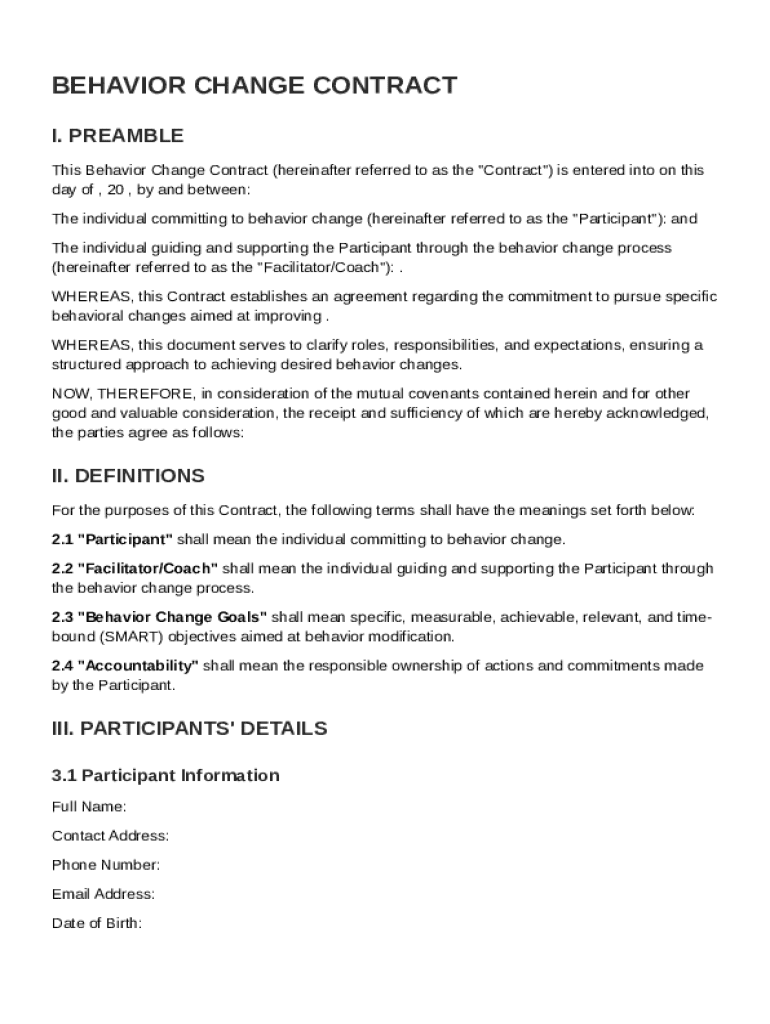
A Behavior Change Contract Template is a structured document designed to facilitate behavioral improvement by setting clear expectations and responsibilities between a Participant and a Facilitator or Coach. The template serves as a commitment tool, clearly outlining roles, responsibilities, goals, strategies, and accountability measures. The primary aim is to encourage consistent and effective behavior change through a transparent and agreed-upon framework. This document is beneficial in therapeutic environments, coaching sessions, and organizational behavior programs, promoting self-awareness and accountability.
Key Components of a Behavior Change Contract
- Roles and Responsibilities: Identifies the specific roles of the Participant and Facilitator, including what each is expected to contribute throughout the behavior change process.
- Goals and Objectives: Specifies clear, measurable goals that the Participant aims to achieve, providing a roadmap for success with timelines and benchmarks.
- Strategies and Support: Details the methods and resources that will be utilized, such as regular check-ins, progress tracking tools, or additional support mechanisms.
- Accountability Measures: Outlines the methods for tracking progress, such as regular reports or meetings, and describes the consequences for non-compliance.
- Termination and Review: Defines the conditions under which the contract can be terminated and how the progress will be reviewed and adjusted if necessary.
How to Use the Behavior Change Contract Template
This template is versatile and can be tailored to suit individual and organizational needs. To use the form, both parties should discuss and agree upon each section, ensuring that the contract reflects the Participant's goals and the Facilitator's methods for support.
- Initial Discussion: Both parties should communicate their expectations, objectives, and personal commitments before formalizing them in the document.
- Drafting the Contract: Begin by filling out the roles, responsibilities, and goals sections, utilizing the template’s structured format to ensure all relevant details are captured.
- Customization and Agreement: Customize the contract to include specific strategies and accountability measures pertinent to the Participant’s unique context.
- Review and Sign: Once completed, both the Participant and Facilitator should review the document thoroughly, making necessary adjustments before each signs.
Best Practices for Implementation
- Set Realistic Goals: Ensure that goals are specific, achievable, and time-bound to increase likelihood of success and motivation.
- Regular Check-ins: Schedule consistent meetings to review progress, discuss any challenges, and modify strategies as needed.
- Adaptability: Be open to revising goals and strategies in response to progress or unforeseen challenges, maintaining the contract's relevance and effectiveness.
Who Typically Uses the Behavior Change Contract Template
This template is widely utilized by various professionals and organizations where behavior modification is essential.


Common Users
- Therapists and Counselors: Employ the template to create a structured plan for clients who are working on personal behavior modifications.
- Life Coaches: Utilize contracts to aid clients in achieving specific goals through consistent actions and accountability.
- Corporate Trainers: Apply in organizational settings to encourage employee development and performance improvement.

Case Study: Organizational Use
A corporate wellness program might implement a Behavior Change Contract Template to help employees set personal health goals. The template would outline each employee’s targets, such as increased physical activity or stress reduction tactics, alongside support offered by wellness coaches, such as gym memberships or mindfulness workshops.
Key Elements of the Behavior Change Contract Template
Ensuring that these key elements are effectively integrated can enhance the contract’s utility and effectiveness:
- Clarity of Terms: Clearly defined behavior change goals and terms help prevent misunderstandings and ensure that both parties have a mutual understanding of expectations.
- Measurable Outcomes: Quantifiable objectives make it easier to track progress and identify areas needing adjustment.
- Flexible Framework: While the contract provides structure, allowing for adjustments in goal-setting or strategies helps accommodate real-life challenges.
Structuring for Success
- Flexibility: Consider adding sections for periodic review where either party can suggest amending terms to better fit evolving situations or needs.
- Objective Measures: Use tools like progress charts or journals to solidify the understanding and tracking of the desired behavior shifts.
Steps to Complete the Behavior Change Contract Template
Efficiently completing the template ensures a solid foundation for successful behavior change initiatives.
- Introduction Meeting: Begin with a meeting to set the stage for collaborative drafting, discussing overarching goals and individual expectations.
- Gather Information: Collect details on current behaviors and desired changes, establishing a comprehensive understanding of the context.
- Draft Content: Use collected information to populate the template, focusing on developing meaningful and relevant content for each section.
- Review and Revise: Go through the draft with both parties, amending any sections to ensure clear, concise, and mutual understanding.
- Finalize: Obtain signatures from both the Facilitator and Participant as a token of agreement and commitment to the outlined goals.
Incorporating these practices when completing the Behavior Change Contract Template can support effective behavior modification by ensuring clarity, commitment, and accountability through structured planning and agreement.