






Definition & Meaning
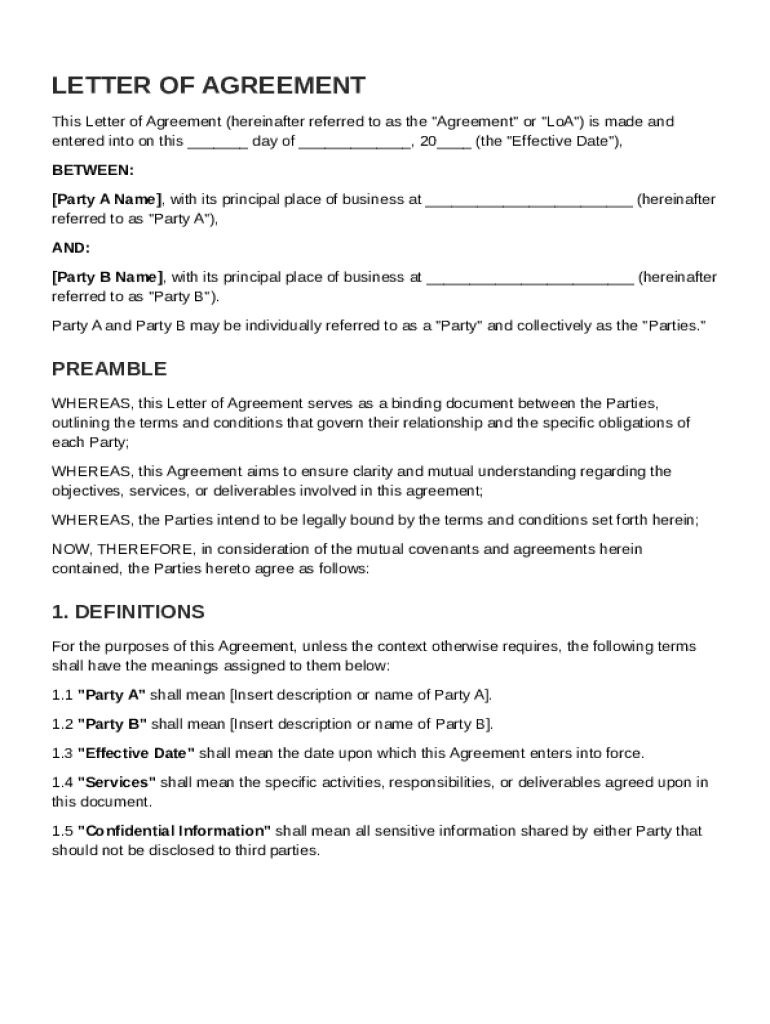
A Letter of Agreement (LoA) is a document that outlines the terms and conditions of a business arrangement between two parties. It serves as a formal record of the agreement, detailing the roles, responsibilities, and expectations each party has agreed upon. Unlike more formal contracts, an LoA is often used for straightforward agreements where simplicity and clarity are preferred. However, it still holds enough weight to be considered a binding legal document, ensuring mutual understanding and legal compliance between the parties involved.
Key Components
- Parties Involved: Identifies the individuals or entities entering the agreement.
- Scope of Work: Describes the duties, responsibilities, and services to be provided.
- Payment Terms: Details how and when payments will be made under the agreement.
- Confidentiality: Any privacy obligations to protect sensitive information.
- Termination Clause: Outlines how and under what circumstances the agreement can end.
- Dispute Resolution: Methods for resolving conflicts that arise from the agreement.
- Governing Law: Specifies which jurisdiction's laws will apply to the agreement.
How to Use the LoA Contract Template
Utilizing a LoA contract template helps streamline the drafting process by providing a pre-structured format that can be customized to suit specific needs. Here’s how to effectively use the template:
Step-by-Step Process
- Download Template: Obtain the LoA contract template from a reliable platform like DocHub.
- Customize Information: Fill in party names, scope of work, and other specific details.
- Set Payment Terms: Clearly define how payments will be handled, including timelines.
- Edit Terms & Conditions: Adjust any pre-filled terms to match the agreement specifics.
- Review Legal Clauses: Ensure confidentiality, termination, and dispute clauses are correctly formatted.
- Add Signatures: Use digital signatures for a secure and legally binding agreement.
Practical Tips
- Keep language clear and concise to avoid misunderstandings.
- Ensure both parties review and consent to the terms before signing.
- Regularly update the template based on changes in agreements or legal standards.
Key Elements of the LoA Contract Template
LoA contracts typically include various crucial components that clearly define the agreement between parties. Understanding these elements is essential for creating an enforceable agreement.
Contractual Components
- Introduction: Provides an overview of the agreement, including the effective date.
- Definitions: Clarifies terms and conditions used throughout the document to prevent ambiguity.
- Obligations: Highlights what each party agrees to do or not do under the contract.
- Penalties: Outlines consequences for non-compliance or breach of contract terms.
Importance of Each Element
- Introduction and Definitions: Ensures there is no confusion about who the parties are or the intent of the agreement.
- Obligations and Penalties: Promotes accountability and provides recourse if terms are not adhered to.
Legal Use of the LoA Contract Template
The legal standing of an LoA depends on its adherence to contract law principles. When well-constructed, it can uphold similar legal weight as a traditional contract.
Legal Considerations
- Enforceability: For the agreement to be enforceable, it must include offer, acceptance, consideration, and intent to enter legal relations.
- Jurisdiction: Clearly stating the governing law reinforces the document's legality and clarifies which court may preside during disputes.
Scenario Examples
- Business Transactions: Used by small businesses for adding clarity to service agreements.
- Consulting Services: Utilized by consultants to lay out project expectations and payments.
Important Terms Related to LoA Contract Template
When drafting or reviewing an LoA contract, understanding certain terminologies is essential for full comprehension of the document.
Common Terms and Definitions
- Governing Law: Refers to the body of laws under which the contract is interpreted.
- Force Majeure: A clause that frees parties from obligations due to extraordinary events.
- Indemnity: A provision that requires one party to compensate the other for any harm or loss.
Application of Terms
- Governing Law: Ensures consistency with the applicable legal context for a variety of agreements.
- Force Majeure: Protects parties from uncontrollable events, such as natural disasters.
- Indemnity: Ensures one party is the primary bearer of certain potential risks.
Steps to Complete the LoA Contract Template
Filling out an LoA contract template requires careful attention to detail to ensure all necessary information is included. Here’s a breakdown of how to efficiently complete this document:
Detailed Instructions
- Identify Parties: Clearly list the entities or individuals entering the contract.
- Define Scope of Work: Write a precise description of the duties each party has agreed to undertake.
- Set Payment Terms: Specify how much and when payments will be due.
- Draft Confidentiality Details: Outline the expected secrecy level required for business-sensitive information.
- Include Dispute Resolution: Add methods by which parties will resolve any conflicts.
Checklist
- Verify all parties are clearly listed with accurate contact details.
- Ensure the scope of work is comprehensive and leaves no room for misinterpretation.
- Double-check all numerical information, like payment amounts and dates, for accuracy.
Examples of Using the LoA Contract Template
Exploring real-world applications of the LoA contract template can aid in understanding its practical benefits across various sectors.
Business Applications
- Freelance Projects: Freelancers and clients use LoAs to outline project expectations, delivery schedules, and compensation.
- Partner Agreements: Startups use LoAs to document collaborative efforts with other businesses, clearly laying out shared responsibilities.
Variations in Usage
- Short-Term vs. Long-Term: Different template modifications might be needed based on the timeline; short-term projects may need less detail compared to longer, more complex engagements.
- Sector-Specific Needs: Industries like technology may require specific terms regarding intellectual property rights compared to other sectors.
Who Typically Uses the LoA Contract Template
Various professionals and businesses rely on LoA templates to ensure their agreements are adequately documented and legally recognized.


Common Users
- Small Business Owners: Use LoAs for transactions with clients or service providers.
- Independent Contractors: Employ them to formalize agreements with hiring companies.
- Corporate Entities: Large companies may use LoAs in inter-departmental agreements.

User Benefits
- Clarity: Provides a clear framework for what both parties expect.
- Legal Assurance: Offers additional protection should disputes arise, safeguarding both parties’ interests.