
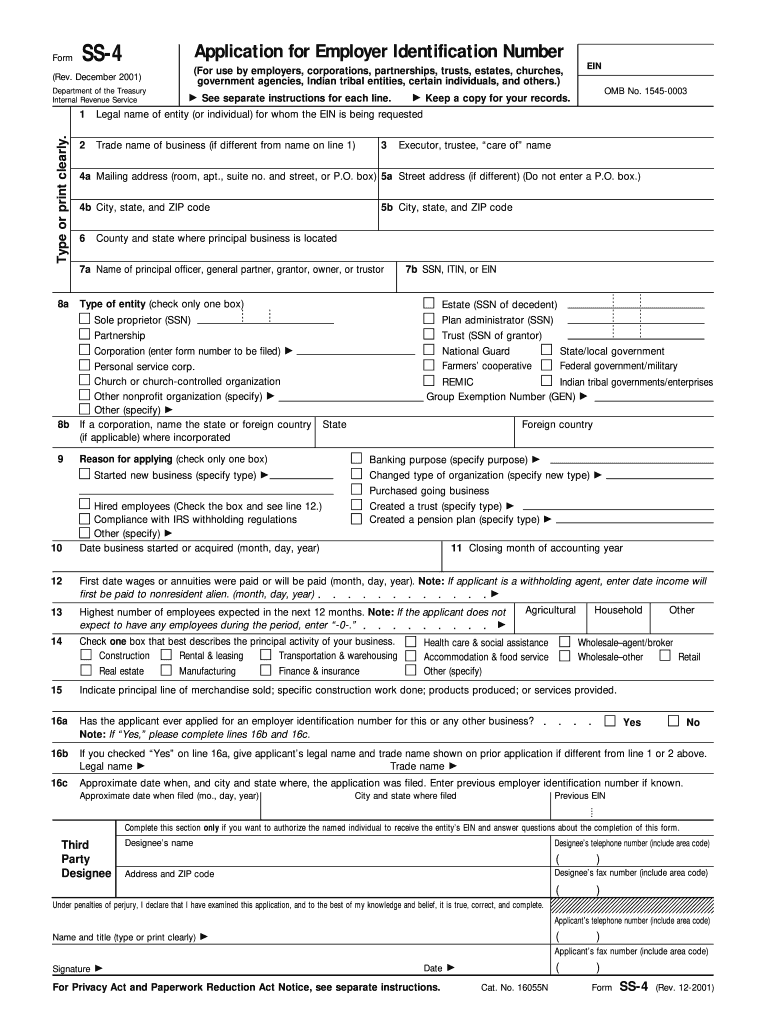







Definition and Meaning of EIN Application
The EIN application, officially known as Form SS-4, is used by businesses and other entities to apply for an Employer Identification Number (EIN) through the Internal Revenue Service (IRS). An EIN serves as a unique identifier for a business entity, much like a Social Security number for individuals. This number is essential for tax reporting purposes and is required for businesses when hiring employees, opening business bank accounts, or applying for business licenses. The application collects specific information, such as the entity's legal name, trade name, and type of entity, to properly issue and manage the EIN.
Importance of the EIN Application
Applying for an EIN is a fundamental step in establishing a business. This application is a critical component for several reasons:
- Tax Compliance: EINs facilitate compliance with federal tax regulations, ensuring that businesses can file their taxes appropriately.
- Legal Requirements: Many financial institutions require an EIN to open business bank accounts, apply for loans, or conduct other business-related financial transactions.
- Hiring Employees: An EIN is mandatory for any business hiring employees, as it is used for reporting employment taxes.
- Business Identity: It provides a permanent identity for a business that does not change, even if the entity name or location changes.
Entities that typically require an EIN include corporations, partnerships, non-profit organizations, trusts, and estates.
Steps to Complete the EIN Application
Completing the EIN application involves multiple steps to ensure all necessary information is accurately provided:
- Gather Required Information: Start by collecting pertinent details such as the entity's legal name, type, and mailing address. Identify the responsible party for the business, usually a principal officer or owner.
- Choose the Appropriate Method: Determine whether you will submit the application online, by mail, or by fax. The online method is generally the fastest.
- Complete Form SS-4: Fill out each section of the form, making sure to include all requested information, such as the type of entity, reason for applying, and the principal business activity.
- Submit the Application: Depending on your chosen method, either submit the form electronically through the IRS website, send it via fax, or mail it to the appropriate IRS address.
- Receive Your EIN: If applying online, an EIN is usually issued immediately. For mailed or faxed applications, allow up to four weeks to receive your EIN.
Who Typically Uses the EIN Application
The EIN application is used by a diverse group of entities, each requiring a unique identification number to operate legally.
- Businesses: Corporations, partnerships, and sole proprietorships often need EINs for tax reporting and to open business accounts.
- Non-Profit Organizations: Charities and other non-profit entities require EINs for federal tax exemption and fundraising efforts.
- Trusts and Estates: These entities need EINs for managing and distributing assets as part of estate planning.
- Government Agencies: These agencies apply for EINs to manage their operations and tax obligations effectively.


IRS Guidelines for the EIN Application
The IRS provides specific guidelines to ensure compliance and accurate processing of EIN applications:
- Eligibility: Only specific individuals, such as a principal officer, general partner, or grantor, can apply for an EIN on behalf of the entity.
- Accuracy: Ensure all entries on the form are correct and up-to-date to avoid delays in processing.
- Timeliness: Apply for an EIN well before you need it, such as prior to tax filing deadlines or business transactions that require an identification number.
How to Obtain the EIN Application
There are several methods to obtain and complete the EIN application:
- Online: The IRS website provides a user-friendly online application, offering instant EIN issuance for eligible applicants.
- By Mail or Fax: Request or download Form SS-4 from the IRS website and submit it via mail or fax for processing.
- In-Person: Although less common, EIN applications can be completed through specific IRS offices by appointment.
The method chosen often depends on the applicant’s access to technology and time constraints.
State-Specific Rules for the EIN Application
While the EIN itself is a federal identifier, businesses should be aware of additional state-specific requirements:
- State Tax IDs: Some states issue their own tax IDs, which are separate from the federal EIN. Businesses may need both to operate legally within the state.
- Registration Requirements: Certain states may have specific forms or registration processes tied to EIN issuance, especially for foreign or multi-state entities.
- State Tax Obligations: An EIN may be used to register for state-level employment taxes or other state-specific business taxes.
Penalties for Non-Compliance
Failing to comply with EIN application requirements can result in significant repercussions:
- Delayed Business Operations: Without an EIN, businesses might face setbacks in opening bank accounts, securing financing, or starting employee payroll.
- Tax Penalties: Entities failing to obtain an EIN may face penalties for inaccurate or late tax filings.
- Legal Risks: Operating without an EIN when required can expose the business to legal challenges, including difficulties in establishing contracts or partnerships.
Entities should prioritize obtaining an EIN promptly to avoid these potential issues.




