




01. Edit your construction progress payment template online
Type text, add images, blackout confidential details, add comments, highlights and more.

Type text, add images, blackout confidential details, add comments, highlights and more.

Draw your signature, type it, upload its image, or use your mobile device as a signature pad.

Send construction progress payments example via email, link, or fax. You can also download it, export it or print it out.
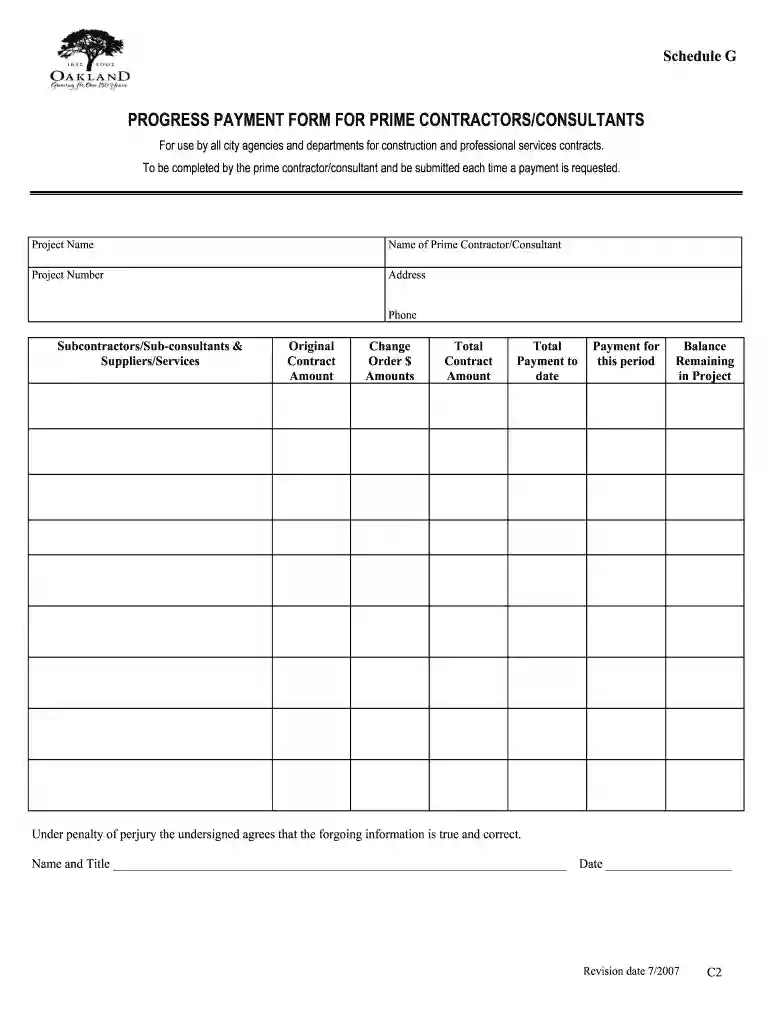
A progress payment form is a structured document utilized primarily in the construction industry, enabling contractors, subcontractors, and other service providers to request payments for work completed at various stages of a project. This form addresses financial transactions in alignment with contractual agreements, ensuring that payments are distributed according to specified milestones or completed portions of work. It serves as a formal request that details the work performed, current costs, and any adjustments to payment terms as per the contractual agreements between parties, thereby solidifying accountability and providing a clear payment tracking mechanism.
Using the progress payment form effectively requires an understanding of both its structure and purpose. Typically, the document is initiated by the contractor, who fills in the necessary details demonstrating the work completed to date. Stakeholders then review the submission, approving it for payment based on the contractual agreement.
Understanding key terminology associated with the progress payment form is vital for effective communication and compliance during the payment process. Familiarization with these terms can minimize confusion and foster smoother transactions.
Completing a progress payment form involves several key steps. Each section must be filled out carefully to ensure accuracy and compliance with contractual obligations, which can ultimately impact payment timelines and relationships among stakeholders.
The progress payment form is widely utilized across various sectors, particularly in industries involving large-scale projects such as construction, engineering, and consulting.



The legal framework surrounding the progress payment form plays a crucial role in governing transactions and protecting the rights of all parties involved. Understanding these legal implications can help mitigate risks associated with non-payment and contract disputes.
Practical examples of the progress payment form in action can provide valuable insights into how it operates within different scenarios, particularly in the construction sector.
These examples illustrate the flexibility and necessity of the progress payment form in maintaining financial flow throughout project lifecycles.
We've got more versions of the construction progress payment template form. Select the right construction progress payment template version from the list and start editing it straight away!
| Versions | Form popularity | Fillable & printable |
|---|---|---|
| 2007 | 4.9 Satisfied (43 Votes) |
At DocHub, your data security is our priority. We follow HIPAA, SOC2, GDPR, and other standards, so you can work on your documents with confidence.
progress payment. Before any recipient of this document relies on it, said party should verify evidence of payment to the undersigned. 26. 27, Dated: 28Read more
This Section must be completed only if the contractor has received advance payments against this contract, or if the items have been delivered, invoiced and.Read more
In this document, we will outline how contractors will review and approve Progress Payments in HeadLight. Contractors will have HeadLight accounts that canRead more


