






Definition & Meaning
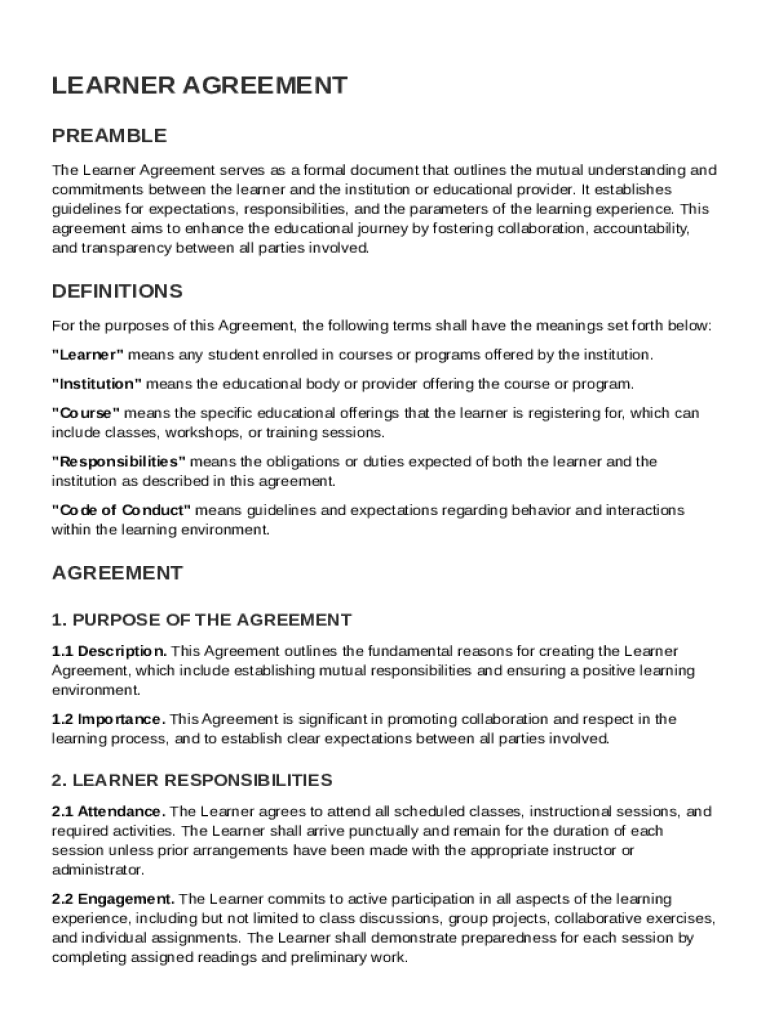
A Learner Agreement Template is a structured document designed to formalize the relationship between learners and educational institutions. This agreement outlines the mutual commitments and responsibilities of both parties involved. Typically, it covers aspects such as attendance expectations, engagement in learning activities, adherence to academic integrity, and standards of communication and conduct within the educational setting. The agreement aims to foster collaboration, accountability, and transparency, thus enhancing the overall educational experience. Moreover, it delineates the institution's obligations regarding course delivery, feedback, and dispute resolution processes.
Examples of Key Components
- Attendance Requirements: Specifies the expectations for learner attendance.
- Academic Integrity: Details the standards for maintaining honesty in academic work.
- Conduct Guidelines: Outlines acceptable behavior within academic settings.
- Responsibilities of Institutions: Includes course delivery methods and feedback mechanisms.
Key Elements of the Learner Agreement Template
The Learner Agreement Template includes several essential components that establish a comprehensive framework for the learning relationship. These elements ensure that both parties understand and agree to their roles and responsibilities, which supports a cohesive and structured educational experience.
Core Sections
- Engagement and Participation: Specifies how learners should actively engage in their studies.
- Communication Protocols: Defines how learners and instructors should communicate.
- Feedback and Assessment: Highlights how learners will receive feedback on their performance.
- Resolution of Disputes: Details the process for addressing and resolving conflicts.
Practical Examples
- Feedback Methods: This may include peer reviews, instructor feedback sessions, or online forums.
- Communication Platforms: Examples could be email, learning management systems, or video calls.
How to Use the Learner Agreement Template
Utilizing the Learner Agreement Template involves a systematic process that starts with understanding its components and ends with its implementation. The template serves as a guide to set clear expectations and ensure that both parties are aligned.
Step-by-Step Usage Guide
- Review the Full Template: Understand the entire agreement to ensure clarity on every point.
- Customize the Template: Tailor the template to fit the specific needs of your learning environment.
- Discuss with Stakeholders: Ensure that all parties, including learners and educational staff, understand and agree to the terms.
- Finalize and Implement: Once agreed upon, implement the agreement, ensuring that copies are distributed to all involved parties.
Edge Cases
- Online vs. In-Person Learning: Adaptations may be required for remote learning contexts.
- Non-traditional Learning Environments: Modifications might be necessary for alternative education settings, like workshops or independent studies.
Steps to Complete the Learner Agreement Template
Completing the Learner Agreement Template requires attention to detail and a clear understanding of each section. Here is an outline of the steps involved:
Completion Process
- Gather Essential Information: Collect all necessary details concerning learner enrollments and institutional policies.
- Fill Out Institutional Obligations: Clearly state the responsibilities of the educational institution, such as course delivery and evaluation methods.
- Outline Learner Duties: Specify the expectations for learners, including participation and integrity standards.
- Review for Accuracy and Clarity: Ensure that all information is accurate and comprehensible to all parties involved.
- Obtain Signatures: Secure signatures from both the learner and institution representatives to validate the agreement.
Detailed Context
- Signatures: These are essential for legal binding and acknowledgment.
- Review Process: This might include legal counsel or academic advisors to ensure completeness.
Who Typically Uses the Learner Agreement Template
The Learner Agreement Template is utilized by a variety of individuals and organizations within the educational sector. Understanding who uses this template can aid in tailoring it appropriately to fit different contexts.


Common Users
- Educational Institutions: These include schools, colleges, and universities seeking to formalize student responsibilities.
- Learners and Students: Individuals who are entering an educational program and need to understand their commitments.
- Academic Departments: Departments that oversee specific programs and require detailed documentation for their learners.

Variations in Use
- Professional Training Programs: Organizations offering professional development courses use these agreements to structure participant expectations.
- E-Learning Platforms: Online education providers utilize modified versions to accommodate virtual learning environments.
Legal Use of the Learner Agreement Template
The legal use of a Learner Agreement Template centers around the enforceability of its terms and the protection it provides to both educational institutions and learners. Legal accuracy ensures that issues related to compliance and liabilities are adequately addressed.
Essential Legal Components
- Compliance with Educational Standards: Ensures alignment with local, state, and federal education regulations.
- Dispute Resolution Clauses: Provides mechanisms for resolving disagreements or disputes that may arise.
- Signature Validity: Confirms that the agreement is legally binding with appropriate authorization and consent.
Detailed Considerations
- State-Specific Regulations: Takes into account variations in educational law that differ by state.
- Documentation and Record Keeping: Maintains records for potential legal reference or audits.
Important Terms Related to Learner Agreement Template
Familiarity with specific terms related to the Learner Agreement Template is vital for both educational staff and learners alike. These terms support a clear understanding and facilitate smoother implementation of the agreement.
Key Terminology
- Mutual Commitments: The shared responsibilities agreed upon by both learners and the institution.
- Academic Integrity: The ethical policy or moral code of academia which encompasses various elements such as avoiding plagiarism.
- Engagement: Refers to the involvement and active participation in the learning process by the students.
Examples and Variations
- Mutual Commitments: Can vary based on program type, such as full-time vs. part-time courses.
- Engagement Levels: Different programs might require minimum engagement metrics, like attendance rates or participation in discussions.
Software Compatibility
Understanding the software compatibility of the Learner Agreement Template ensures that it can be effectively used across various digital platforms. This section addresses the technical aspects that support the smooth implementation of the form.
Supported Platforms
- DocHub Integration: Facilitates the management and editing of agreement documents directly within DocHub.
- Cloud Services: Compatibility with services like Google Drive and Dropbox for seamless storage and access.
- Cross-Platform Use: Supports both desktop and mobile devices through web browsers, eliminating the need for additional applications.
Real-World Scenarios
- Cross-Platform Editing: Allows changes to be made on mobile devices during meetings or classes.
- Cloud Integration Benefits: Provides instant access to the template for multiple users concurrently, aiding collaborative editing.