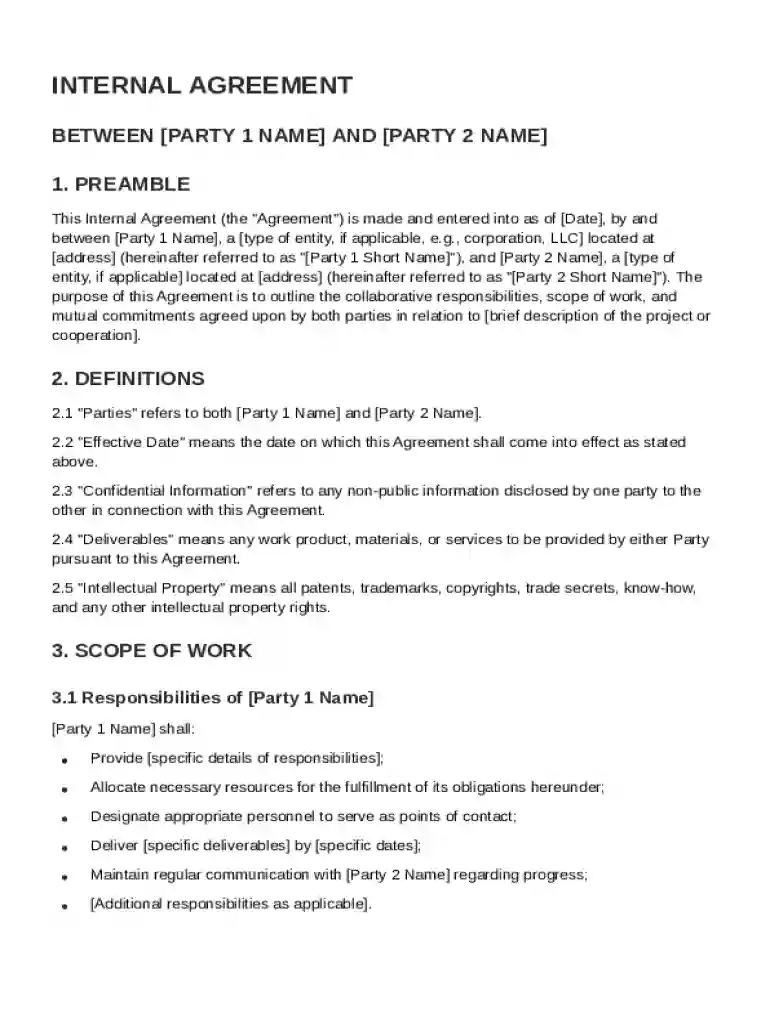
Internal Agreement Template 2026

Get Form
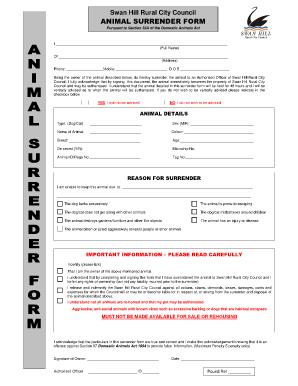
Internal Agreement Template Preview on Page 1

Here's how it works

01. Edit your form online
Type text, add images, blackout confidential details, add comments, highlights and more.

02. Sign it in a few clicks
Draw your signature, type it, upload its image, or use your mobile device as a signature pad.

03. Share your form with others
Send it via email, link, or fax. You can also download it, export it or print it out.

Definition & Meaning

The Internal Agreement Template serves as a foundational document in defining the collaborative responsibilities, scope of work, and mutual commitments between two or more parties within an organization. This agreement is instrumental in establishing a clear framework for cooperation on specific projects or ongoing interactions. It typically includes various sections outlining roles and responsibilities, deliverable timelines, confidentiality obligations, and provisions for dispute resolution.

  • Scope of Work: Establishes the specific tasks and duties each party is responsible for, ensuring clarity and preventing overlaps or neglect in responsibilities.
  • Mutual Commitments: Details the shared obligations of the parties involved, providing a basis for accountability and performance expectations.
  • Confidentiality: Ensures that sensitive information shared under the agreement is adequately protected and limits unauthorized disclosures.

Key Elements of the Internal Agreement Template

An Internal Agreement Template is comprised of several fundamental components that are essential for its effectiveness and legal standing.

  • Definitions: Clarifies terminology used within the agreement to prevent misunderstandings and ensure all parties have a common understanding of the terms.
  • Responsibilities: Enumerates the specific duties and obligations of each involved party, fostering transparency and setting performance standards.
  • Timeline for Deliverables: Specifies deadlines for each task or deliverable, helping to enforce the timely completion of agreed-upon actions.
  • Termination Clauses: Outlines conditions under which the agreement can be terminated, including mutual consent, breach of terms, or completion of objectives.
  • Dispute Resolution: Provides mechanisms for resolving conflicts that may arise, such as mediation or arbitration, to avoid costly litigation.

Importance of Using the Internal Agreement Template

Utilizing an Internal Agreement Template ensures that everyone involved in a collaborative project understands their roles, responsibilities, and obligations. This standardization is vital for several reasons:

  • Clarity and Communication: Reduces ambiguity and promotes effective communication by setting clear expectations for all parties.
  • Legal Protection: Offers a documented reference that can be used in legal proceedings to uphold the agreed-upon terms.
  • Efficiency: Streamlines processes by providing a structured format for agreements, reducing the time spent drafting new documents for each project.
  • Risk Management: Identifies and mitigates potential risks by clearly delineating responsibilities and conditions for handling disputes or termination.

Who Typically Uses the Internal Agreement Template

This template is widely used across various sectors and organizational roles, primarily for internal collaborations:


  • Project Managers: To formalize the terms of collaboration between team members on specific projects.
  • HR Departments: For drafting agreements concerning the responsibilities and expectations of different roles within an organization.
  • Legal Teams: For creating standardized agreements across departments to ensure compliance with organizational policies and law.
  • Cross-Functional Teams: Involving multiple departments, who need to align their efforts for corporate initiatives or projects.
decoration image ratings of Dochub

How to Use the Internal Agreement Template

Implementing the Internal Agreement Template involves several detailed steps that ensure comprehensive coverage and enforceability of the agreement:

  1. Identify Parties: List all individuals or departments involved in the agreement, providing clear identification and contact information.
  2. Define Terms: Clearly outline the scope of work, roles, responsibilities, and mutual commitments required.
  3. Establish Timelines: Set specific deadlines for each milestone or deliverable, ensuring aligned expectations regarding project timelines.
  4. Specify Terms and Conditions: Include provisions for confidentiality, dispute resolution techniques, and termination procedures.
  5. Draft and Review: Create the draft of the agreement, reviewing it alongside all parties for input and necessary revisions.
  6. Finalize and Sign: Once all involved parties agree on the terms, formalize the agreement with signatures to ensure its enforceability.

Legal Use of the Internal Agreement Template

The enforceability of the Internal Agreement Template hinges on several legal principles that must be adhered to for the agreement to be considered valid:

  • Mutual Assent: All parties must voluntarily agree to the terms outlined in the document without coercion.
  • Consideration: The agreement should involve exchange of value, where each party offers something of benefit, such as services or compensation.
  • Legality: The template's terms must comply with applicable legal regulations and should not include any clauses that are illegal or unethical.
  • Capacity: All signatories must have the legal capacity to enter into a contractual agreement, meaning they should be of age and sound mind.

Steps to Complete the Internal Agreement Template

Completing the Internal Agreement Template requires meticulous attention to detail to ensure all necessary sections are accurately addressed:

  • Preliminary Drafting: Develop an initial version based on the project's requirements, paying particular attention to the definition of tasks and deliverables.
  • Collaboration and Input: Engage all relevant stakeholders to collect feedback and ensure all perspectives are accounted for.
  • Final Edits and Revisions: Incorporate feedback into the final draft, making necessary adjustments to achieve consensus.
  • Approval Process: Secure formal approval from all parties through signatures, confirming acceptance of all terms.
  • Archiving: Store the signed agreement in a secure location accessible to all involved parties for future reference.

Software Compatibility and Integration

Internal Agreement Templates may be utilized and stored in various digital formats, compatible with numerous software platforms. This compatibility facilitates easy sharing, editing, and collaboration:

  • DocHub Compatibility: The template can be effortlessly edited, shared, and stored using DocHub's suite of tools, providing a seamless document management experience.
  • Cloud Services: Integration with cloud services, such as Google Drive and Dropbox, allows for centralized access and real-time collaboration.
  • Office Suites: Compatibility with popular office software like Microsoft Word and Google Docs enables straightforward drafting and editing.
  • Secure Storage: Ensures that all documents and agreements are stored securely with encryption and password protection for sensitive data.

State-Specific Rules for Internal Agreement Template

While the Internal Agreement Template provides a robust structure, it's essential to consider specific state laws that may impact its implementation. These variations can affect elements like enforceability and required legal disclosures:

  • State Jurisdiction: Each state may have unique requirements regarding contract formation and terms, which should be reviewed to ensure compliance.
  • Governing Law Clause: Typically included to specify which state's laws will govern the interpretation and enforcement of the agreement.
  • Statutory Regulations: Depending on the type of agreement, there could be state-specific laws on confidentiality, dispute resolution, or specific clauses that must be adhered to.

Examples of Using the Internal Agreement Template

Practical applications of the Internal Agreement Template demonstrate its versatility and adaptability in various organizational contexts:

  • Cross-Departmental Collaborations: An agreement used to outline responsibilities and deliverables between marketing and product development teams for a new product launch.
  • Joint Projects: Agreements between different branches of a company working together on a unified project, detailing each branch's contribution and workload.
  • Vendor Agreements: Use of the template to determine the roles and expectations when departments within an organization engage in collaborative contracts with external vendors.

Penalties for Non-Compliance

Failing to adhere to the terms set out in the Internal Agreement Template can lead to several potential consequences:

  • Legal Action: Breach of contract terms can result in litigation, leading to financial penalties or court orders enforcing compliance.
  • Internal Sanctions: Organizations may impose disciplinary actions on parties who fail to meet their agreement obligations, impacting their professional standing.
  • Reputational Damage: Non-compliance can harm relationships between departments or external partners, leading to loss of trust and future cooperation opportunities.
be ready to get more

Complete this form in 5 minutes or less

Get form

Got questions?

We have answers to the most popular questions from our customers. If you can't find an answer to your question, please contact us.
Contact us
4 Common Types of Contracts Non-Disclosure Agreement. Companies often request or provide a Non-Disclosure Agreement (NDA) when they have sensitive or confidential information to disclose. Master Services Agreement. Order Form. Buy-Side Contracts.
How to write a service level agreement in 5 steps Agreement overview. A list of stakeholders. The goals of all stakeholders. A description of services. Service levels. A list of services excluded from the agreement. Conditions of cancellation. A plan if goals arent docHubed.
An external contract is where one or more parties to the contract are separate legal entities from the University. An internal contract exists when all parties to the contract are part of the legal entity The Pennsylvania State University.
An internal agreement is a contract between two parties within the same company or organization that functions to unite the parties toward a common goal. The contract states who the parties are, what their roles and responsibilities will be under the new agreement, and how long the agreement should last.
10 Different Types of Contracts Type of ContractEveryday Use Unilateral Contracts Seen in reward-based offers and promotions, common in everyday transactions like dining out. Implied Contracts Common in everyday transactions like dining out. Express Contracts Standard in formal business agreements.11 more rows Jul 18, 2024

Security and compliance

At DocHub, your data security is our priority. We follow HIPAA, SOC2, GDPR, and other standards, so you can work on your documents with confidence.

Learn more
ccpa2
pci-dss
gdpr-compliance
hipaa
soc-compliance
be ready to get more

Complete this form in 5 minutes or less

Get form

People also ask

Write the contract in six steps Start with a contract template. Open with the basic information. Describe in detail what you have agreed to. Describe how the contract will end. Say which laws apply and how disputes will be resolved. Include space for signatures.

Related links