
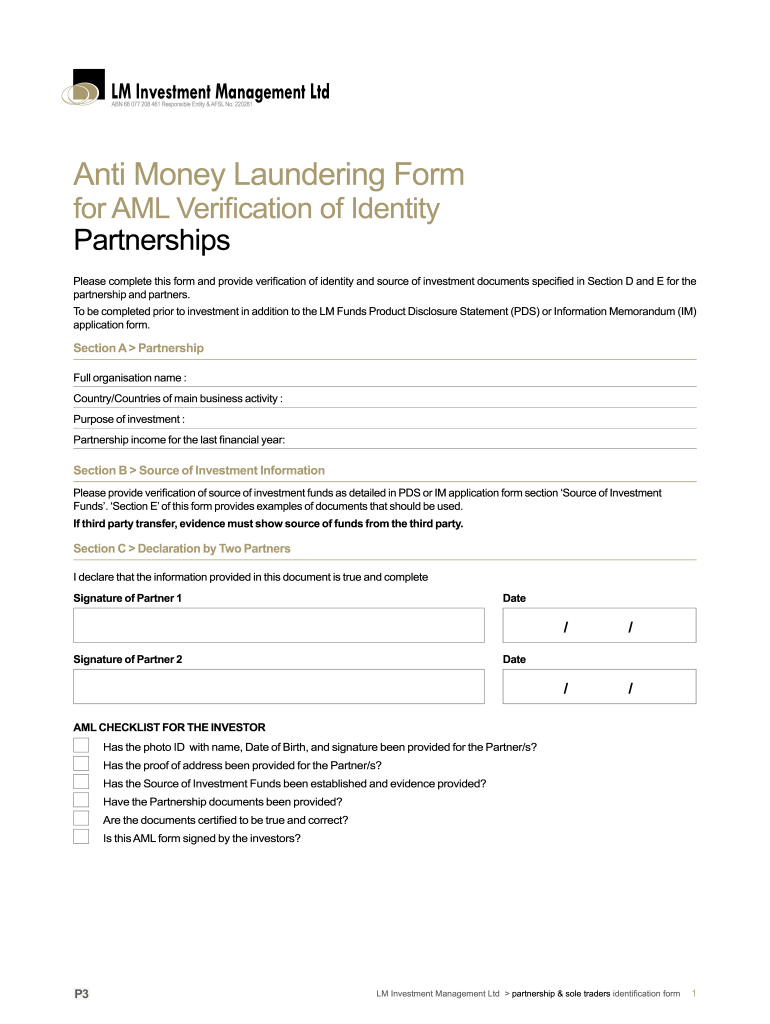







Definition & Meaning of LM Anti Money Laundering
The term "LM Anti Money Laundering" refers to regulatory practices and procedures specifically aimed at preventing money laundering activities by financial institutions and businesses. Money laundering is the process of concealing the origins of illegally obtained money, typically by passing it through a complex sequence of banking transfers or commercial transactions. The LM Anti Money Laundering guidelines arise from various laws and regulations designed to ensure that institutions validate customer identities and monitor financial activities in order to detect and report suspicious transactions.
Key components of an LM Anti Money Laundering framework may include:
- Customer due diligence (CDD): The process of gathering information about customers to assess risk.
- Know Your Customer (KYC): Mandatory regulations that require financial institutions to verify their clients' identities.
- Reporting obligations: Requirements to report large or suspicious transactions to authorities, such as the Financial Crimes Enforcement Network (FinCEN) in the U.S.
- Compliance policies: Internal procedures set by organizations to ensure adherence to relevant AML regulations.
Steps to Complete the LM Anti Money Laundering Form
Completing the LM Anti Money Laundering form entails several steps designed to ensure full compliance with legal requirements. The following process is integral for institutions engaging in financial transactions or investment activities.
-
Gather Required Information
- Collect identification documents for individuals involved in the partnership, including government-issued IDs.
- Compile documentation evidencing the source of investment funds, such as bank statements or pay stubs.
-
Complete Partner Identification
- Fill in sections detailing each partner’s personal information, including name, address, date of birth, and Social Security Number or Tax Identification Number.
- Specify the role of each partner within the partnership for clarity.
-
Outline the Source of Funds
- Clearly state and document where the investment funds are originating from. This may include documentation that shows the legitimacy of the funds, like business earnings or savings.
-
Sign and Date the Form
- Ensure that the form is signed by authorized representatives of the partnership, certifying that the information provided is accurate and complies with AML regulations.
-
Submit the Form
- Determine the acceptable submission methods, which may include online platforms, email, or postal services, as required by regulatory bodies.
Key Elements of the LM Anti Money Laundering Framework
Understanding the key elements of an LM Anti Money Laundering framework is vital for compliance. This ensures that organizations adopt a thorough approach to mitigate risks related to money laundering. The primary elements include:
-
Risk Assessment: Organizations must perform risk assessments to identify potential threats and vulnerabilities in their operations related to money laundering, tailored to the nature of their business and customer demographics.
-
Compliance Programs: Establishing comprehensive compliance programs that include employee training, regular audits, and updated policies to adapt to changing laws.
-
Monitoring Transactions: Implementing systems and technology to monitor transactions in order to flag unusual or suspicious activity.
-
Reporting Mechanisms: Establishing clear processes to report suspicious activities to the authorities responsible for financial crime investigation.
-
Documentation and Record Keeping: Maintaining detailed records of transaction histories and customer identifications as per the regulatory requirements.
Important Terms Related to LM Anti Money Laundering
Familiarizing oneself with the terminology associated with LM Anti Money Laundering can provide clarity in understanding the framework. Some key terms include:
-
Beneficial Owner: The individual or entity that ultimately owns or controls a customer, regardless of the name on the account.
-
Suspicious Activity Report (SAR): A document filed by financial institutions to report suspicious activity that might indicate money laundering or fraud.
-
Politically Exposed Persons (PEPs): Those who hold prominent public functions and are at higher risk for involvement in bribery or corruption.
-
Enhanced Due Diligence (EDD): An additional layer of examination for clients considered higher risk, requiring deeper scrutiny into their transaction histories and sources of funds.
Who Typically Uses the LM Anti Money Laundering Form?
The LM Anti Money Laundering form is primarily utilized by a variety of financial entities and businesses, including:
- Banks and Credit Unions: Institutions that provide banking services and need to comply with AML obligations.
- Investment Firms: Companies engaged in managing investments and portfolios must verify the source of funds for compliance.
- Real Estate Companies: Entities involved in property transactions often use this form to ensure funds come from legitimate sources.
- Insurance Companies: Organizations that underwrite policies may deal with substantial transactions requiring AML compliance.
Understanding the user base helps in designing AML practices that are fit for the specific entity involved.


Filing Deadlines / Important Dates for LM Anti Money Laundering Compliance
Entities must remain vigilant regarding essential dates associated with filing and adhering to LM Anti Money Laundering requirements. These dates may vary based on the jurisdiction and the nature of financial activities but typically include:
- Initial Filing: Organizations should complete and file the LM Anti Money Laundering form at the onset of the partnership or before commencing investment activities.
- Periodic Reviews and Updates: Financial institutions often need to review their AML strategies and practices at least annually to ensure compliance is maintained and updated as necessary.
- Submission of Suspicious Activity Reports (SARs): If suspicious activity is detected, SARs must generally be filed within a specified timeframe to comply with regulations.
Organizations must stay informed about industry-specific deadlines and modifications to relevant AML regulations to avoid non-compliance penalties.




