




Definition and Scope of the HIPAA Data Agreement Template
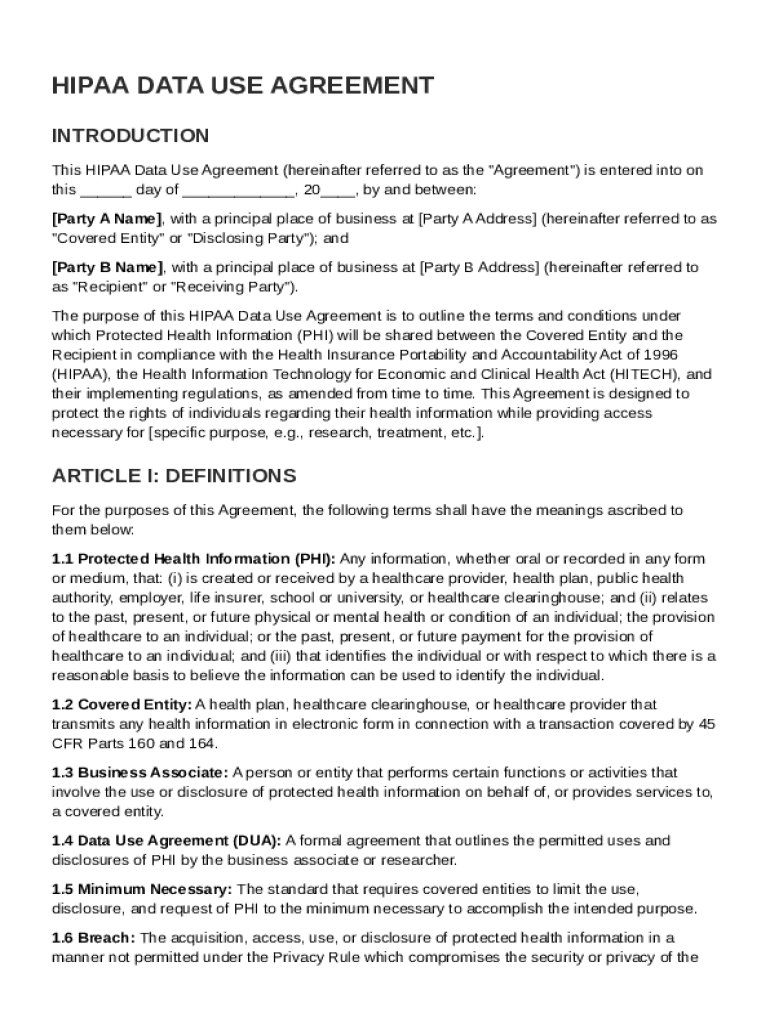
The HIPAA Data Agreement Template is a legally binding document designed to facilitate the secure sharing of Protected Health Information (PHI) between a Covered Entity and a Recipient. The primary purpose of this document is to ensure compliance with both HIPAA and HITECH regulations, providing a robust framework for safeguarding sensitive health data. It outlines the essential terms, the roles and responsibilities of each party, and sets forth strict obligations regarding confidentiality, data security, and permissible uses of PHI. The template is essential for institutions and individuals who handle PHI, ensuring they adhere to all necessary legal standards and practices.
This agreement is crucial for any entity involved in the healthcare industry, where the protection of patient data is paramount. By defining key terms and setting clear boundaries on data use, the template acts as a safeguard against unauthorized data sharing and potential legal repercussions.
Steps to Complete the HIPAA Data Agreement Template
Completing the HIPAA Data Agreement Template involves a thorough understanding of the roles and responsibilities of both the Covered Entity and the Recipient. Here is a step-by-step guide to ensure accurate completion:
-
Identify the Parties Involved: Clearly detail the full legal names of both the Covered Entity and the Recipient. Include any relevant identification numbers or additional contact information required.
-
Define the Purpose: Specify the purpose of data sharing. This includes detailing the type of data being shared and the intended outcomes of such data use.
-
Outline Responsibilities: Clearly articulate the specific responsibilities of each party, covering data access, use, storage, and exchange protocols.
-
Set Data Security Measures: Enumerate the security measures each party agrees to implement, which should align with HIPAA security standards for protecting PHI.
-
Agree on Confidentiality Obligations: Both parties must agree to adherence with confidentiality protocols. This involves restricting data access to authorized personnel only and preventing unauthorized disclosures.
-
Include Legal Provisions: Address legal factors such as termination clauses, liability limitations, governing law, and amendment protocols to ensure complete legal compliance and protection.
Completing this form requires careful attention to detail to ensure that all legal requirements and security standards are fully met. The document should be reviewed by legal professionals experienced in HIPAA regulations to verify its accuracy and completeness.
Legal Use of the HIPAA Data Agreement Template
The HIPAA Data Agreement Template serves as a cornerstone for legal data sharing in the healthcare sector. It is designed to comply with federal mandates, particularly those outlined in the Health Insurance Portability and Accountability Act (HIPAA) and the Health Information Technology for Economic and Clinical Health (HITECH) Act. These laws provide a framework that protects patient health information in the United States. Using this template ensures that organizations involved in the handling of PHI maintain optimal levels of privacy and security.
The agreement stipulates legal penalties for non-compliance, which can include substantial financial penalties and even criminal charges. Therefore, it is vital that entities correctly implement the terms outlined in the template to avoid repercussions that could result from data breaches or privacy violations.
Key Elements of the HIPAA Data Agreement Template
Certain critical components must be present in the HIPAA Data Agreement Template to safeguard PHI. These elements ensure the agreement adheres to both HIPAA and HITECH regulation standards.
-
Data Scope: Clearly identify the types and extent of data covered under the agreement.
-
Permissible Uses: Define allowed uses of PHI, ensuring both parties understand the boundaries of data application.
-
Security Measures: Establish the protocols and standards that each party must follow to protect PHI.
-
Breach Notification: Outline the steps to be taken in the event of a data breach, including timelines and required notifications to affected parties.
-
Termination Clauses: Specify conditions under which the agreement can be ended, and the procedures to follow upon termination.
These elements form the backbone of a compliant HIPAA Data Agreement, structuring its legal and operational mandates to protect PHI effectively.
Who Typically Uses the HIPAA Data Agreement Template
The HIPAA Data Agreement Template is used extensively within the healthcare sector and any industry that deals with PHI. Common users include:
-
Hospitals and Clinics: When sharing patient data with third-party service providers or researchers.
-
Health Insurance Companies: To ensure secure data exchanges with healthcare providers.
-
Research Institutions: When requiring access to PHI for studies and analyses.
-
Health IT Vendors: During collaborations with healthcare providers that necessitate data interchange.
Organizations across these fields rely on the template to ensure that they comply with stringent data protection laws while enabling necessary data sharing that supports operational requirements and research endeavors.

Important Terms Related to the HIPAA Data Agreement Template
Understanding specific terminology is crucial when employing the HIPAA Data Agreement Template. Here are some key terms:
-
Protected Health Information (PHI): Any information about health status, healthcare provision, or healthcare payment that can be linked to an individual.
-
Covered Entity: An organization that collects and maintains PHI.
-
Recipient: The entity receiving PHI from the covered entity for specific purposes.
-
Data Breach: Incident where PHI is accessed, disclosed, or accessed without authorization.
-
Consent: Approval obtained from individuals for use or disclosure of their PHI.
These terms are integral to comprehending and correctly executing the template, ensuring clarity and compliance across all data exchanges.
State-Specific Rules for the HIPAA Data Agreement Template
While the HIPAA Data Agreement Template operates under federal law, state-specific nuances can influence its application. Some U.S. states have additional privacy laws that complement or enhance HIPAA standards, such as California's stringent privacy regulations under the California Consumer Privacy Act (CCPA).
Healthcare entities should be aware of and incorporate state-specific regulations into their agreement templates to ensure complete legal compliance. Failure to adapt to state laws might result in legal liabilities and impede data-sharing initiatives. It is often advisable to consult with legal experts familiar with both federal and state regulations to adequately integrate these requirements into the template.
Examples of Using the HIPAA Data Agreement Template
There are diverse scenarios where the HIPAA Data Agreement Template plays a pivotal role. Some typical examples include:
-
A regional hospital collaborating with a university for medical research: The template allows for secure sharing of patient data necessary for research while safeguarding privacy.
-
An insurance company coordinating care information with healthcare providers: Ensures seamless data exchange for adjudicating claims without infringing on patient privacy.
-
A healthcare provider outsourcing billing and coding services: Ensures that third-party service providers handle PHI in compliance with legal standards.
These examples highlight the template’s versatility in facilitating necessary data exchanges while maintaining legal and ethical integrity in handling sensitive health information.