




01. Edit your form online
Type text, add images, blackout confidential details, add comments, highlights and more.

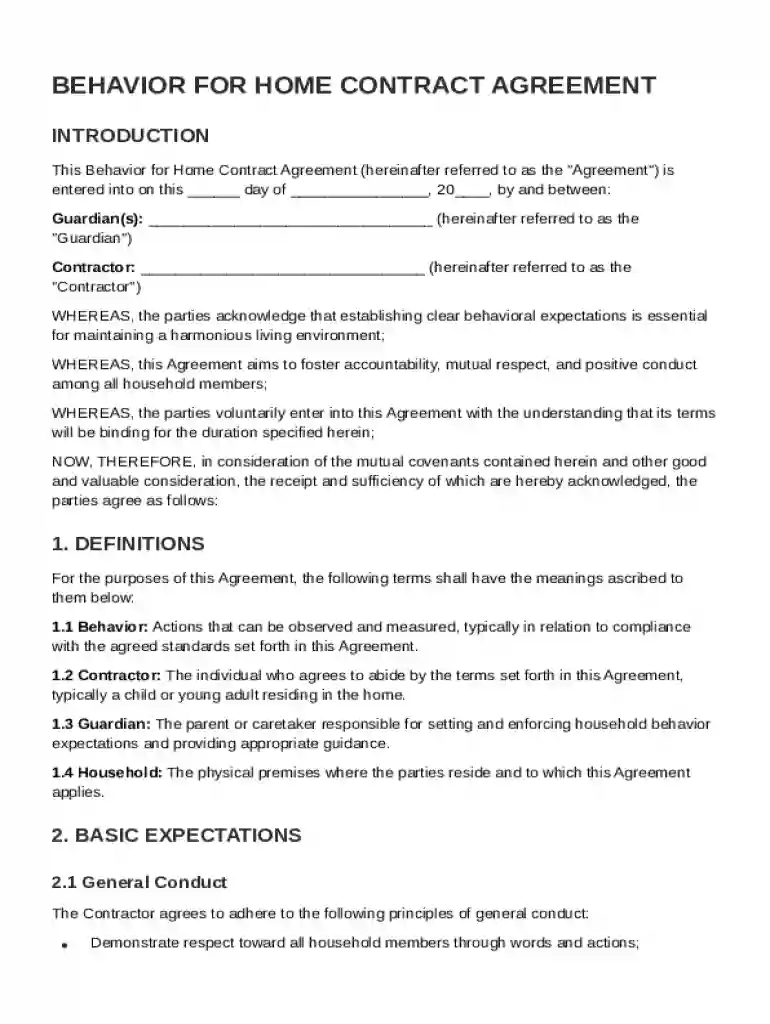
Type text, add images, blackout confidential details, add comments, highlights and more.

Draw your signature, type it, upload its image, or use your mobile device as a signature pad.

Send it via email, link, or fax. You can also download it, export it or print it out.
The Behavior for Home Contract Template is a formal agreement that sets the expectations and responsibilities of an individual living within a household. Typically used for managing the behavior and responsibilities of children or young adults residing with their guardians, this contract outlines specific behavioral standards and household duties. It serves as a guide for maintaining discipline and harmony within the home by clearly defining acceptable conduct and the consequences of deviating from these standards. This template is useful for ensuring all parties are on the same page regarding household expectations.
The contract includes several essential components that address different aspects of household life. Key elements include:
These elements collectively ensure a well-rounded structure that promotes mutual respect and accountability.
Using this template involves customizing it to meet the specific needs of your household. Here are the steps:
Following these steps helps in effectively implementing the contract within your home environment.
This template is predominantly used by guardians aiming to formalize the expectations for younger members of the household. It is beneficial for:
Different family scenarios can find this template a valuable resource for structured living arrangements.


Implementing this contract offers several advantages, including:
The template's structured approach contributes significantly to household harmony and discipline.
Practical uses of the template include:
These examples demonstrate the template's versatility and utility in various household contexts.
Understanding specific terms in the contract is crucial for all parties involved:
Familiarity with these terms ensures clear communication and understanding of the contract's provisions.
Though not legally binding like official contracts, this document holds moral and social weight within the family. It serves as:
Acknowledging its limited legal status while focusing on its primary role in household management maximizes its effectiveness.
At DocHub, your data security is our priority. We follow HIPAA, SOC2, GDPR, and other standards, so you can work on your documents with confidence.





The following is a sample contract clause for submitting all permissible controversies that may arise between the parties to an agreement to voluntary trial
Dec 2, 2021 This Contract contains all of the terms and conditions agreed upon by the parties. No other understandings or.
Rule #1: Treat family members respectfully. No fighting. This means no kicking, pushing, shoving, hitting, throwing things, or spitting at someone.


