




Definition & Meaning
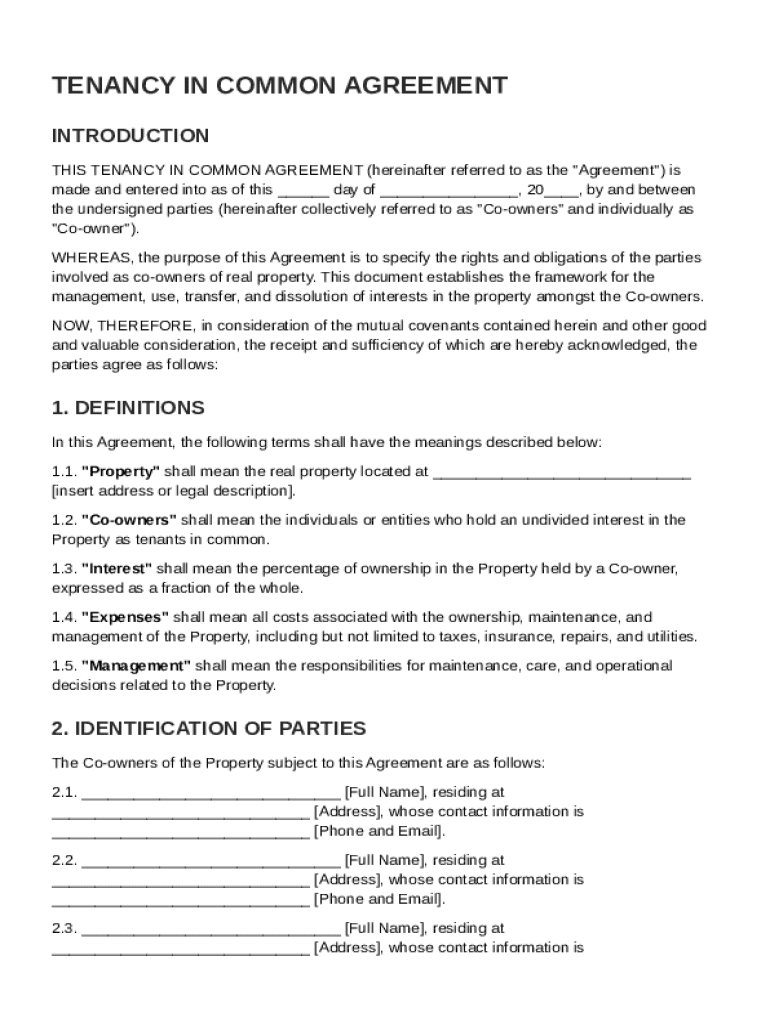
A Tenancy in Common Agreement Template is a legal document that lays out the rights and responsibilities of co-owners of a property. It defines how the property is managed, outlines financial obligations, and provides guidelines for the transfer of ownership interests among co-owners. This agreement establishes a framework that helps prevent disputes by clearly defining each owner's roles and responsibilities.
Key Elements of the Tenancy in Common Agreement Template
The template typically includes several critical components to ensure comprehensive coverage:
- Ownership Interests: Clearly states the percentage of ownership each party holds.
- Financial Responsibilities: Outlines how expenses related to the property, such as maintenance, taxes, and insurance, will be shared among co-owners.
- Use and Occupancy: Describes the rights each owner has regarding the use of the property, including any restrictions or exclusive use areas.
- Transfer of Interests: Sets forth procedures for selling or transferring ownership interests, including any right of first refusal provisions.
- Dispute Resolution: Provides methods for resolving conflicts among co-owners, whether through mediation, arbitration, or court proceedings.
How to Use the Tenancy in Common Agreement Template
Utilizing this template involves a series of steps to ensure that all necessary aspects are considered and legally sound:
-
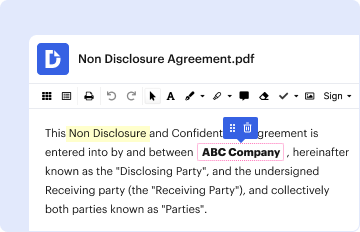
Review and Customize: Start by reviewing the entire document to understand its structure and contents. Customize sections to reflect specific agreements between the co-owners.
-
Consult Legal Counsel: It’s advisable to consult a lawyer to ensure the agreement complies with local laws and effectively protects all parties’ interests.
-
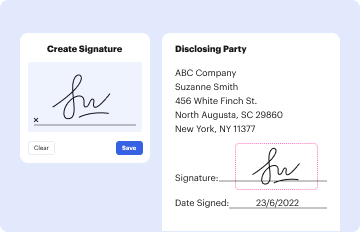
Collect Signatures: Each party must sign the agreement to make it legally binding. Electronic signatures can be utilized if all parties agree.
-
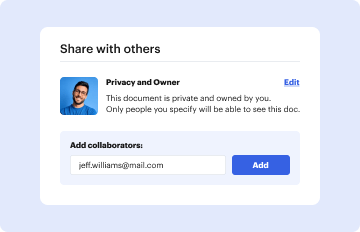
Store Securely: Keep a copy of the signed agreement in a secure location. Using a secure document management service like DocHub can safeguard the document with encryption and password protection.
Steps to Complete the Tenancy in Common Agreement Template
Completing this agreement requires careful attention to detail and collaboration among the parties involved:
-
Gather Personal Information: Collect names, contact details, and ownership percentages for all co-owners.
-
Financial Breakdown: Detail the method for dividing expenses and how payments will be handled.
-
Usage Guidelines: Clearly outline any guidelines for usage, including who will occupy which parts of the property.
-
Ownership Transfer Protocols: Define how interests can be transferred, stipulating any consent needed from other owners.
-
Finalize and Sign: Once all sections are completed and agreed upon, each owner should sign the document. Consider adding witness signatures for added verification if required by state laws.
Legal Use of the Tenancy in Common Agreement Template
This template serves as a binding contract that can be enforced in a court of law. It’s essential for parties to understand the document's legal implications fully:
- Enforceability: As a formal agreement, the provisions outlined can be legally enforced in case of disputes.
- Compliance with State Laws: The document must comply with property and contract laws in the state where the property is located.
- Amendments: Any amendments to the agreement should be documented in writing and signed by all co-owners to maintain legal validity.
State-Specific Rules for the Tenancy in Common Agreement Template
Real estate laws vary by state, which can affect how tenancy in common agreements are structured and enforced:
- Community Property States: States like California and Texas may have unique rules affecting co-ownership structures like tenancy in common.
- Right of Partition: Many states allow co-owners to file for partition, enabling them to request a physical division or sale of the property if disputes arise.
- Tax Implications: Property tax obligations and responsibilities in the context of co-ownership can differ based on state-specific regulations.
Required Documents
In addition to the agreement itself, the following documents might be needed:
- Property Deed: To confirm ownership and legal descriptions of the property.
- Tax Records: To clarify financial responsibilities and any existing liens on the property.
- Identification: Copies of valid IDs for all parties involved to verify identities, especially when dealing with notaries or legal professionals.
Versions or Alternatives to the Tenancy in Common Agreement Template
There are other forms of property co-ownership that might be considered, depending on the preferences and legal advice:
- Joint Tenancy: Involves the right of survivorship where ownership passes to surviving owners upon the death of a co-owner.
- Trust Agreements: Property can be held in trust, managed according to the trust's provisions, which can offer tax benefits and smoother transfer of ownership.