




01. Edit your form online
Type text, add images, blackout confidential details, add comments, highlights and more.

Type text, add images, blackout confidential details, add comments, highlights and more.

Draw your signature, type it, upload its image, or use your mobile device as a signature pad.

Send it via email, link, or fax. You can also download it, export it or print it out.
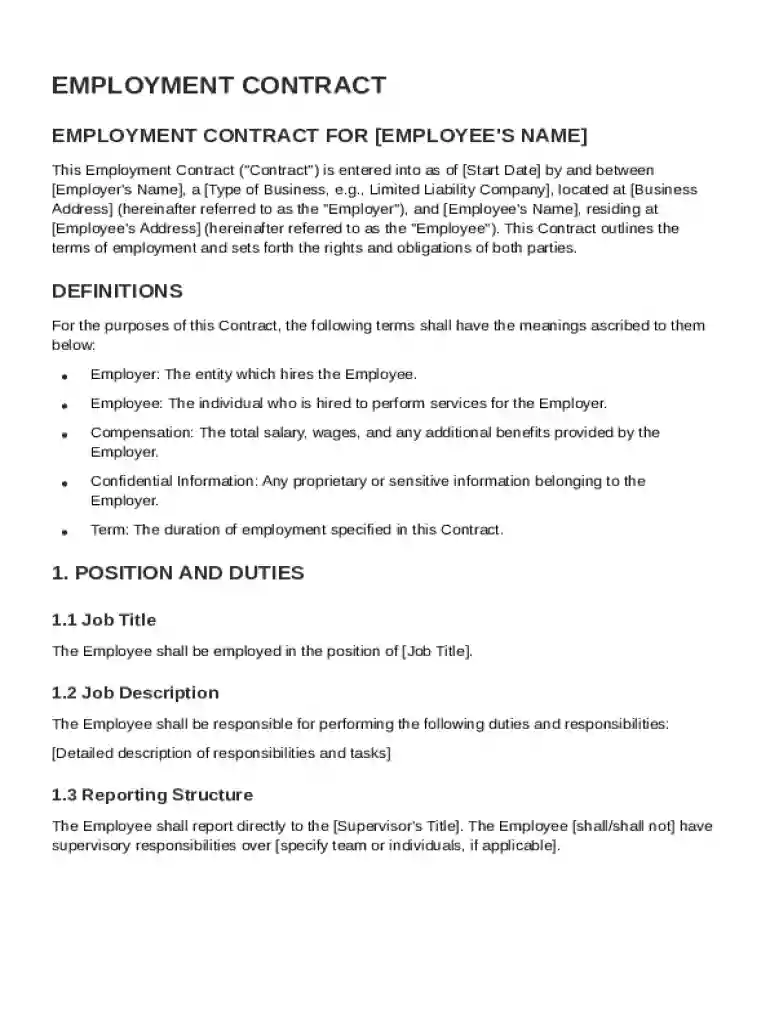
The Small Business Employee Contract Template serves as a legal document that defines the relationship between an employer and an employee. It includes essential details such as employment terms, job responsibilities, compensation, benefits, and confidentiality obligations. This template ensures that both parties have a clear agreement, helping to prevent disputes and misunderstandings in the future. Employers typically customize this template to fit their specific business needs, providing flexibility while maintaining legal consistency.
The contract should specify the employee's job title and outline their primary duties and responsibilities. This clarity helps set expectations and serves as a baseline for performance evaluations. Employers can include additional tasks as required, provided they align with the employee's role.
Compensation details should cover the employee's salary or hourly wage, payment schedule, bonuses, and any incentives. Benefits may include health insurance, retirement plans, and paid time off. These elements should be clearly defined to avoid future confusion or disputes.
The template often includes clauses to protect the business's confidential information and prevent employees from engaging in competitive activities during and after employment. These clauses help safeguard the company's interests, ensuring that proprietary information remains secure.
Customization: Begin by tailoring the template to meet the specific needs of your business. This customization includes adjusting job descriptions, compensation, and any unique terms relevant to your industry or company.
Review by Legal Counsel: It's advisable to have the contract reviewed by legal counsel to ensure compliance with federal and state laws. This step helps identify potential legal issues or unenforceable terms.
Finalization and Signature: Once both parties agree on the contract's terms, proceed with obtaining signatures. This action solidifies the agreement and signifies mutual understanding and acceptance of all conditions outlined.
Fill in Basic Information: Start by entering the company’s and employee’s complete details, including contact information and employment start date.
Detail Job Specifications: Insert the employee’s job title, department, and detailed responsibilities. Make sure the duties align with company expectations and industry standards.
Specify Compensation: Clearly outline the salary, any applicable bonuses, and benefit plans. Include payment frequency and conditions for salary reviews.
Include Legal Clauses: Add confidentiality agreements and non-compete clauses tailored to your business needs. These sections are crucial for protecting business interests.
Legal Review and Adjustments: Seek a legal professional’s opinion for any adjustments to ensure all clauses comply with legal standards.
Finalize and Secure Signatures: After legal review and necessary adjustments, both parties should sign the document. Keep copies for records.
The contract should comply with state and federal employment laws, such as those governing minimum wage, overtime, and workplace discrimination. Employing the template appropriately can provide legal protection and clarify each party's obligations, reducing the risk of litigation.
Small and medium-sized business owners frequently use the template to formalize employment relationships. It is particularly beneficial for startups and growing companies looking to establish clear guidelines without extensive legal overhead. HR professionals and managers also utilize the template to streamline the hiring process and maintain consistency across employee agreements.


Employment laws vary by state, affecting contract terms like non-compete agreements, minimum wage requirements, and termination procedures. Employers must adjust the template according to these regulations to ensure compliance and enforceability. Consulting state-specific legal guidelines or a local attorney can help in tailoring the document appropriately.
In many states, employment is "at-will," meaning either party can terminate the relationship without cause. This term should be reflected in the contract, along with any state-specific exceptions.
If applicable, include details about severance pay, outlining conditions under which it will be provided, such as layoffs or mutual separations.
Include a clause specifying dispute resolution methods, such as mediation or arbitration. This approach can offer a less adversarial and more cost-effective alternative to litigation.
These structured, comprehensive blocks aim to provide maximum value by deeply exploring aspects of the Small Business Employee Contract Template, ensuring small business employers have a clear, legal, and functional framework for their employment agreements.
At DocHub, your data security is our priority. We follow HIPAA, SOC2, GDPR, and other standards, so you can work on your documents with confidence.




This Reporting and Disclosure Guide for Employee Benefit Plans has been prepared by the U.S. Department of Labors Employee.
This includes automobile, truck, and other travel expenses; vehicle maintenance and repair costs; vehicle and other license fees and permits; insurance premiums


