






Definition and Meaning of a Bilateral Confidentiality Agreement
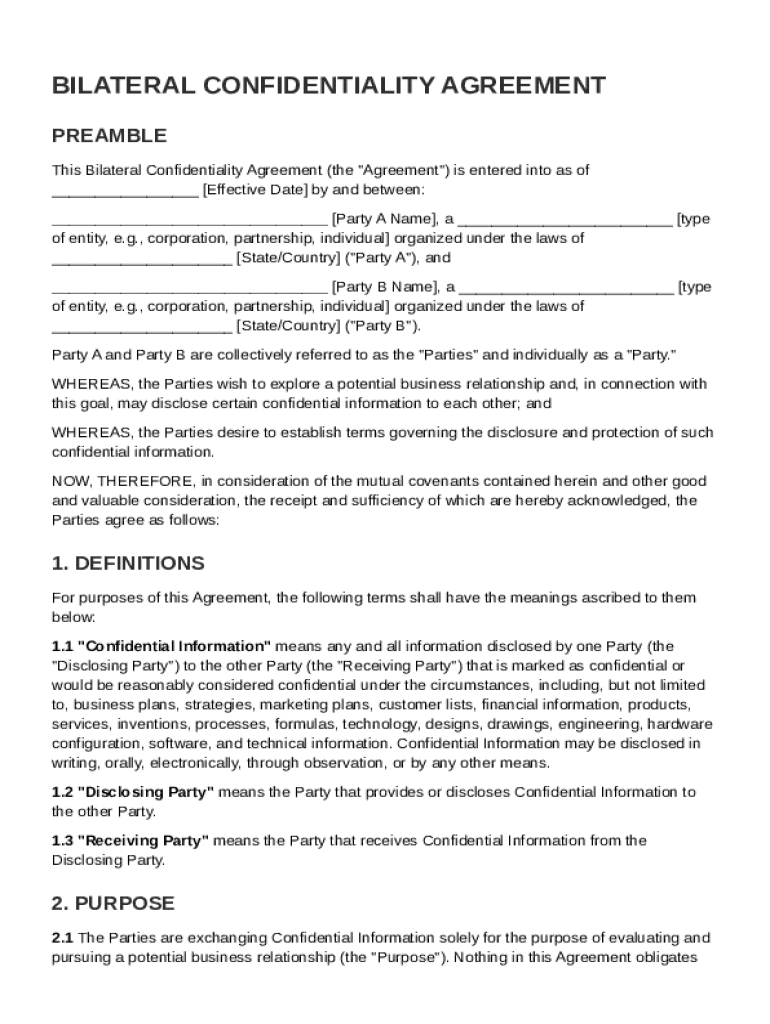
A Bilateral Confidentiality Agreement, also known as a mutual non-disclosure agreement (NDA), is a legal document that establishes terms for the protection and confidentiality of information exchanged between two parties. This document is crucial when both parties anticipate sharing proprietary information and want to ensure it remains confidential. The agreement defines the obligations of both parties to safeguard sensitive information and stipulates the conditions under which such information may be disclosed.
Key Purposes and Benefits
- Protection: Provides a legal framework to protect sensitive business data from unauthorized access.
- Clarity: Outlines each party's responsibilities and the limits of confidentiality.
- Trust: Establishes trust between parties by setting clear expectations regarding information use and disclosure.
How to Use the Bilateral Confidentiality Agreement Template
Using a Bilateral Confidentiality Agreement Template simplifies the process of creating a legally sound agreement tailored to the specific needs of both parties involved in a potential business relationship. Here’s how to effectively use this template:
Step-by-Step Instructions
- Identify the Parties: Clearly state the names and addresses of both parties involved in the agreement to avoid any ambiguity.
- Define Confidential Information: Outline what constitutes confidential information, including any specific categories of data.
- Set Obligations and Permissions: Clearly define what each party is permitted to do with the confidential information and any obligations they must meet to protect it.
- Duration: Indicate the period during which confidentiality must be maintained, including any time beyond the end of the relationship.
- Signatures: Ensure both parties sign the document to acknowledge their agreement to the terms and conditions.
Practical Examples
- Companies negotiating a merger or acquisition often use bilateral confidentiality agreements to protect sensitive financial details.
- Two businesses exploring a joint venture might employ this template to safeguard proprietary technology or methodologies.
Important Terms Related to Bilateral Confidentiality Agreement
Understanding the terminology used in a Bilateral Confidentiality Agreement is essential for effective use and adherence. Below are some key terms commonly found in these agreements:
- Confidential Information: Any data disclosed that is marked, or reasonably understood to be, confidential.
- Disclosing Party: The party that shares confidential information with another party.
- Receiving Party: The party that receives confidential information from the disclosing party.
- Permitted Purpose: The specific reason or project for which the confidential information may be used.
Nuances and Edge Cases
- Certain information may not be covered under confidentiality if publicly available or already known to the receiving party.
- Disclosures required by law may be permitted, but typically must be communicated to the disclosing party first.
Key Elements of the Bilateral Confidentiality Agreement Template
The key elements of a Bilateral Confidentiality Agreement Template are what ensure the document’s effectiveness in protecting shared information. These components must be clearly articulated to avoid misunderstandings:
- Title and Introduction: Clearly labels the agreement as a bilateral confidentiality agreement, followed by an introductory paragraph specifying the intent.
- Confidentiality Obligations: Details on how confidential information should be handled, including who may access it.
- Exclusions: Defines what does not qualify as confidential information to prevent disputes.
- Remedy for Breach: Specifies legal or financial penalties for failing to comply with the agreement terms.
Comprehensive Coverage
To avoid potential legal disputes, it is crucial to incorporate detailed descriptions and specific obligations regarding each party's responsibilities and the protective measures required to ensure confidentiality.
Legal Use of the Bilateral Confidentiality Agreement Template
The legal enforceability of a Bilateral Confidentiality Agreement depends on its compliance with applicable laws and regulations. Here’s how to ensure the agreement is legally binding:
Compliance Considerations
- Jurisdiction: Clearly specify which state's laws govern the agreement to prevent jurisdictional conflicts.
- Modification Clause: Include a clause that stipulates how the agreement may be amended or terminated.
Real-World Scenarios
- A tech startup entering negotiations with a potential investor would use this template to protect its proprietary codes and algorithms.
- An entertainment company collaborating on a new project might use the agreement to safeguard creative ideas and concepts shared during the process.
Steps to Complete the Bilateral Confidentiality Agreement Template
Proper completion of the Bilateral Confidentiality Agreement Template is vital for its effectiveness. Here is a detailed process to help streamline the task:
- Preparation: Gather all necessary information regarding the confidential data to be shared.
- Drafting: Use the template to draft the agreement, customizing sections to fit the unique context of your relationship.
- Review by Legal Counsel: Have a legal professional review the document to ensure all legal requirements are met and that it’s enforceable.
- Finalization: Both parties review the agreement together, suggest necessary changes, and reach a consensus.
- Execution: Both parties sign the finalized document, making it legally binding.
Variations
Depending on the specific industry or nature of the shared information, certain specifics may be adjusted in sections related to confidentiality obligations and exclusions.
Who Typically Uses the Bilateral Confidentiality Agreement Template
Various business entities and professionals frequently use the Bilateral Confidentiality Agreement Template. It assists in maintaining confidentiality across different industries and business scenarios:


Common Users
- Corporations and Businesses: Protect sensitive operational details during partnerships or mergers.
- Entrepreneurs and Startups: Secure proprietary ideas when seeking investment or collaboration.
- Legal and Financial Advisors: Maintain client confidentiality when the sensitive information is accessed during advisement.

Industry-Specific Use Cases
- In the pharmaceutical industry, companies often use bilateral NDAs when conducting joint research or clinical trials.
- In the fashion industry, designers protect their new designs by having manufacturers sign confidentiality agreements.
State-Specific Rules for the Bilateral Confidentiality Agreement Template
Laws governing confidentiality agreements can vary by state, affecting the drafting and enforceability of the agreement:
Considerations for Different States
- California: Places restrictions on overbroad NDAs related to employment or trade secrets.
- New York: Recognizes the enforceability of oral modifications to NDAs if supported by proper consideration.
Adjustments for Compliance
- Customize sections on legal jurisdiction, remedies, and modifications to conform to specific state requirements.
- Consult a legal professional familiar with local laws when drafting the agreement for state-specific guidance.
Implications
Understanding state-specific rules helps ensure the Bilateral Confidentiality Agreement is enforceable and protects all parties involved.