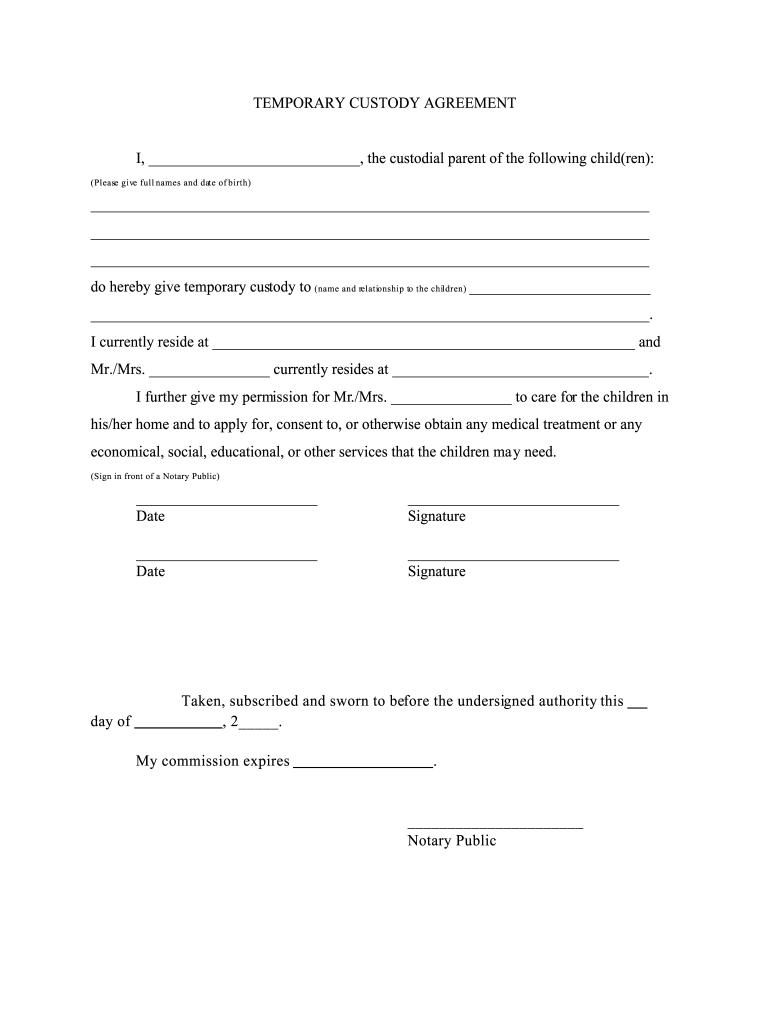







Definition and Purpose of the Temporary Guardianship Form
A temporary guardianship form is a legal document that allows a parent or legal guardian to designate an individual to care for their child temporarily. This arrangement is important when the custodial parent is unable to care for the child due to various circumstances, such as illness, travel, or personal emergencies. The temporary guardian is granted the authority to make decisions regarding the child’s health, education, and general welfare. This form is often a critical legal tool used to protect the child's interests during the absence of the parent or legal guardian.
In many states, the form must be signed in front of a notary to ensure authenticity and validity. The temporary guardianship can last for a specific duration or until the parent or legal guardian is able to resume care. It is essential for the form to cover pivotal details including the names of the child and guardian, contact information, and explicit instructions about the guardian's responsibilities and authorities.
How to Obtain the Temporary Guardianship Form
Obtaining a temporary guardianship form is generally a straightforward process. The form can usually be accessed through various sources, including:
- Online Legal Services: Many websites provide templates for a temporary guardianship form. These are often customizable and available for free or for a nominal fee.
- Local Family Courts: Family courts often have official copies of legal forms available for the public, including those for temporary guardianship.
- State Judicial Websites: Many states offer downloadable legal forms on their official judicial department websites, which can help ensure compliance with state-specific legal requirements.
- Attorneys: Consulting with a family lawyer can provide access to correctly drafted forms and advice on how to fill them out.
It is crucial to ensure the version obtained conforms to the specific legal requirements of the state where the guardianship is to be exercised.
Steps to Complete the Temporary Guardianship Form
Filling out a temporary guardianship form involves several important steps. The following procedure outlines how to complete the form effectively:
-
Identify Necessary Information: Gather all required information which typically includes the parental details, guardian's details, the child's full name, and dates relevant to care.
-
Fill in the Guardian's Responsibilities: Clearly specify the rights and responsibilities of the temporary guardian. This may encompass decisions about education, healthcare, and daily living arrangements.
-
Duration of Guardianship: Indicate the time frame for which guardianship is granted. This can range from a few days to several months, depending on the specific situation.
-
Signature and Notarization: Ensure that both the parent and the temporary guardian sign the document in the presence of a notary public. This step is often required for the document to be legally binding.
-
Distribute Copies: Once completed and notarized, provide copies to the temporary guardian, the child (if age-appropriate), and keep a copy for personal records.
Following these steps helps to ensure that the guardianship is legally recognized and that the child's best interests are prioritized during the designated temporary period.
Legal Use and Recognition of the Temporary Guardianship Form
The legal use of a temporary guardianship form is recognized in the context of child welfare, allowing parents to delegate temporary care to trusted individuals. It is critical to ensure the form is compliant with state laws, which vary in terms of the form's specifications and the requirements for its execution.
In many jurisdictions, the temporary guardianship arrangement is valid once the form is properly executed and witnessed, often requiring notarization for added legal enforcement. The temporary guardianship form typically provides legal backing for the designated guardian to make decisions concerning medical care, education, and welfare of the child.
It is important to note that while the temporary guardian has legal authority, they do not replace the biological parent’s rights. The temporary arrangement remains subject to the parent’s rights, and the parent retains the ability to revoke the guardianship at any time within the designated timeframe.
Important Elements Included in the Temporary Guardianship Form
When filling out a temporary guardianship form, certain key elements must be included to ensure it serves its intended purpose effectively:
- Identifying Information: Full names of both the child and the temporary guardian, along with their contact details.
- Duration of Guardianship: Clearly state how long the guardianship will last, specifying start and end dates.
- Responsibilities of the Guardian: Explicitly outline what the guardian is authorized to do. This may include medical decisions, authority to sign school documents, and permissions for travel.
- Parental Acknowledgment: A section where the parents acknowledge their decision to appoint a guardian, affirming understanding of the guardianship arrangement.
- Notary Section: A designated area where the document can be notarized, affirming its legitimacy.
Including these elements helps mitigate misunderstandings and provides clarity about the guardianship arrangement, thus protecting the interests of the child involved.