






Definition & Meaning
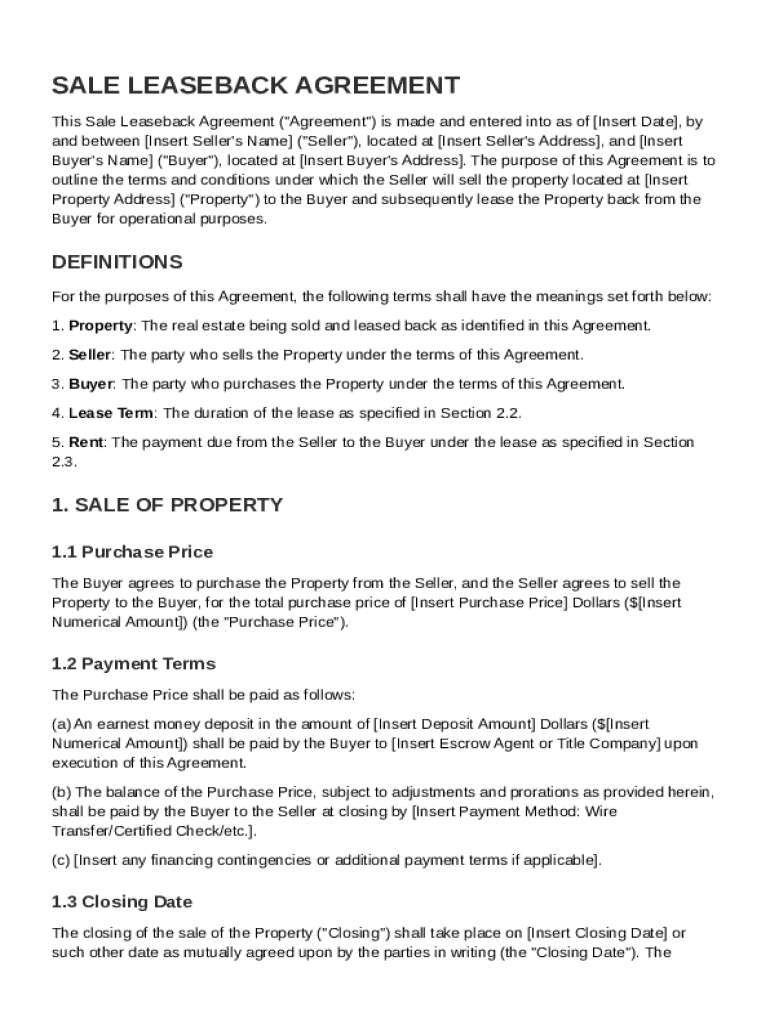
A "Sale Leaseback Agreement" is a financial transaction whereby a property owner sells their asset, usually real estate, to another party and simultaneously leases it back for continued operational use. This arrangement allows the seller to free up capital while maintaining the use of the asset. The agreement clearly defines the rights and obligations of both the seller (now a tenant) and the buyer (now a landlord), covering essential aspects such as the purchase price, lease terms, maintenance responsibilities, and other relevant conditions.
How to Use the Sale Leaseback Agreement Template
Using the Sale Leaseback Agreement Template involves several steps designed to ensure the document captures all necessary transaction details. Here’s how to utilize the template effectively:
- Review the Template: Familiarize yourself with the sections and language used.
- Customize the Content: Insert specific information related to your transaction, such as names, addresses, and property descriptions.
- Specify Financial Terms: Detail the purchase price, payment terms, lease duration, and monthly rent.
- Define Responsibilities: Clearly outline who is responsible for property maintenance and insurance.
- Consult with Legal Counsel: Ensure compliance with state laws and protect legal interests.
- Finalize the Document: Review and ensure accuracy before signing.
Key Elements of the Sale Leaseback Agreement Template
The template includes several critical sections:
- Property Description: A detailed account of the real estate, including boundaries and existing structures.
- Purchase Price and Terms: Outlines how the buyer will compensate the seller, including payment schedule and method.
- Lease Terms: Specifies lease length, renewal options, and conditions for termination.
- Maintenance Responsibilities: Designates which party handles upkeep and repairs.
- Insurance Requirements: Defines necessary insurance coverage to protect against potential damages.
- Default Remedies: Provides measures and consequences for non-compliance by either party.
- Notice Provisions: Establishes protocols for delivering official communications.
Steps to Complete the Sale Leaseback Agreement Template
Completing the Sale Leaseback Agreement Template can be straightforward if following structured steps:
- Gather Information: Collect all relevant details about the property, both parties, and financial terms.
- Fill in Boilerplate: Utilize the template to input the seller’s and buyer’s information and property specifics.
- Clarify Terms: Ensure all terms are unambiguously stated, with examples if necessary, to prevent misunderstandings.
- Assign Responsibilities: Assign roles clearly for managing the property and meeting legal requirements.
- Legal Review: Involve a legal professional to verify that the agreement complies with applicable laws.
- Sign and Execute: Obtain signatures and distribute copies for all involved parties.
Who Typically Uses the Sale Leaseback Agreement Template
This template is commonly used by:
- Businesses: Looking to unlock capital tied up in real estate while still needing property for operations.
- Real Estate Investors: Interested in acquiring properties while ensuring a steady stream of rental income.
- Corporations: Wanting to leverage property equity to reinvest in core business activities.
- Educational Institutions and Non-profits: Aiming to optimize financial resources by retaining access to essential facilities.

Legal Use of the Sale Leaseback Agreement Template
The Sale Leaseback Agreement must comply with both federal and state regulations. It legally binds the buyer to the purchase and the seller to the lease terms. Legally binding under the ESIGN Act when signed electronically, the agreement protects parties from breaches through pre-established remedies. Insights from legal professionals ensure these transactions adhere to any local zoning laws or property regulations that might impact the agreement.
State-Specific Rules for the Sale Leaseback Agreement Template
Different states might impose distinct regulations or requirements regarding sale leaseback transactions:
- Disclosure Requirements: Some states mandate detailed disclosure of terms to protect both parties.
- Recording Requirements: Local laws might require the agreement to be recorded in public records to substantiate claims on the property.
- Real Estate Taxes: Tax treatment of sale leasebacks can vary; understanding state-specific tax implications is crucial.
Examples of Using the Sale Leaseback Agreement Template
Several examples illustrate the utility of sale leaseback agreements:
- Manufacturing Firms: A manufacturing company sells its factory to an investor, freeing up capital while retaining site operations.
- Retail Chains: A retail business sells its store locations to a real estate holding group but continues operating in the same places through leasebacks.
- Tech Startups: A growing tech firm undergoes sale leasebacks to reinvest capital into business expansion and development.