






Definition and Purpose of the Customer Contract Template
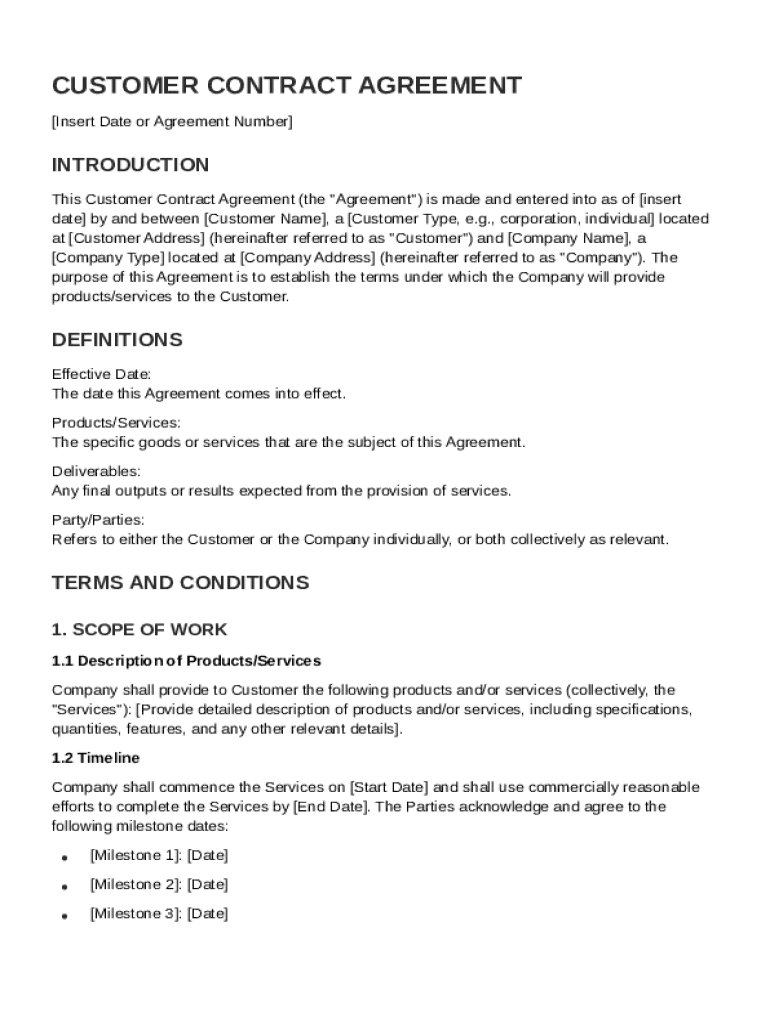
The Customer Contract Template is a pre-structured document designed to formalize the terms and conditions under which a company provides products or services to a customer. This template serves to streamline negotiations and contract drafting by providing a comprehensive starting point that can be customized to fit specific business relationships. Critical elements covered in this template typically include the scope of work, payment terms, delivery schedules, duties and responsibilities of both parties, confidentiality agreements, termination clauses, liability limitations, and specific legal requirements. The goal of using such a template is to ensure that all parties have a clear understanding of the mutual expectations and legal obligations involved.
Key Elements of the Customer Contract Template
A well-crafted Customer Contract Template encompasses several crucial sections that address different aspects of the business relationship:
- Scope of Work: This section outlines the specific services or products to be provided, including detailed descriptions, quantities, and any applicable service limits.
- Payment Terms: Defines how, when, and in what form payments should be made. This may include details about advance payments, instalments, or late payment penalties.
- Responsibility and Obligations: Specifies the duties of each party, ensuring both the company and customer are aligned on their respective roles.
- Confidentiality: Details on how sensitive information will be protected and any conditions under which it might be shared.
- Termination Clauses: Conditions under which the contract can be terminated by either party, including necessary notice periods and potential penalties.
- Liability and Dispute Resolution: Limits liability and sets procedures for resolving disputes, such as mediation or arbitration.
Steps to Complete the Customer Contract Template
Completing a Customer Contract Template involves several methodical steps to ensure accuracy and thoroughness:
- Review and Customize: Begin by reviewing the template thoroughly. Make alterations to fit the specific needs and circumstances of the agreement, ensuring that all bespoke arrangements are clearly documented.
- Fill in Specific Details: Insert specific details such as names, addresses, and precise descriptions of services or products in the relevant sections.
- Negotiate Terms: Engage in discussions with the client to negotiate any terms that might require adjustment from the template standard, ensuring all agreed alterations are documented.
- Verification and Sign-Off: After filling in all necessary information, both parties should verify the details and provide their signatures to indicate agreement and readiness to proceed.
Legal Use and Compliance
The legal enforceability of a Customer Contract Template is critical. It should adhere to the U.S. legal framework, accounting for federal standards such as those set by the ESIGN Act for electronic signatures. Contracts must also reflect local state laws, as there can be considerable variation in contract law between states. Legal professionals should review any customized contract to ensure full compliance and enforceability. Additionally, incorporating clauses like force majeure or severability can protect against unforeseen events and clarify how parts of the contract may independently stand or fall if challenged.
Variations and Alternatives to the Customer Contract Template
Different businesses might require variations of the contract template to address unique needs. Alternatives such as Letters of Agreement, Memorandums of Understanding, or Service Level Agreements might be used in different contexts. For instance, businesses operating internationally might use an international sales contract to address specific compliance issues and economic considerations in different jurisdictions. Customizing a template while maintaining critical legal protections allows flexibility while safeguarding both parties.
Who Typically Uses the Customer Contract Template
The use of a Customer Contract Template is widespread across various sectors, from small and medium-sized enterprises (SMEs) to large corporations. Industries such as technology, consulting, construction, and retail particularly benefit due to their reliance on clear service provision agreements to avoid disputes and clarifications. Legal departments or advisors frequently manage the drafting process, with project managers or sales executives playing a pivotal role in negotiating and customizing specifics to each contract.


Examples of Using the Customer Contract Template
Practical examples of the Customer Contract Template in action include:
- Tech Company: A software company might use this template to draft agreements with its clients to specify the development and delivery of software products, support services, and licensing arrangements.
- Construction Firm: For construction projects, this template can outline scope, timelines, material specifications, and cost structures to avoid any project misunderstandings.
- Consulting Services: Management consultants often rely on such templates to define deliverables and intellectual property usage in their service agreements.
Software Compatibility and Digital Use
Using a robust digital platform like DocHub integrates seamless compatibility for creating, editing, and signing the Customer Contract Template electronically. This template is adaptable with various document formats, supporting flexibility for businesses already utilizing programs like Google Workspace. DocHub's electronic signature feature ensures these documents hold the same legal weight as traditional paper contracts, benefiting remote or fast-paced business operations where paper-based system efficiency is critical.
Important Legal Terms Associated with the Customer Contract Template
Understanding crucial legal terms that commonly appear in a Customer Contract Template adds depth to interpreting and customizing contracts:
- Indemnity Clause: Protects one party from being liable for damages or losses that the other party may incur in connection with the contract.
- Governing Law: Specifies which jurisdiction's laws will apply in interpreting the contract.
- Force Majeure: Provides relief in the case of unforeseen events that prevent fulfilling contract obligations, like natural disasters.
- Severability: Ensures that if parts of the contract are deemed unenforceable, the remaining sections remain in effect.
These terms play significant roles in negotiation and contract standardization, influencing risk management and compliance across business operations.