






Definition and Meaning
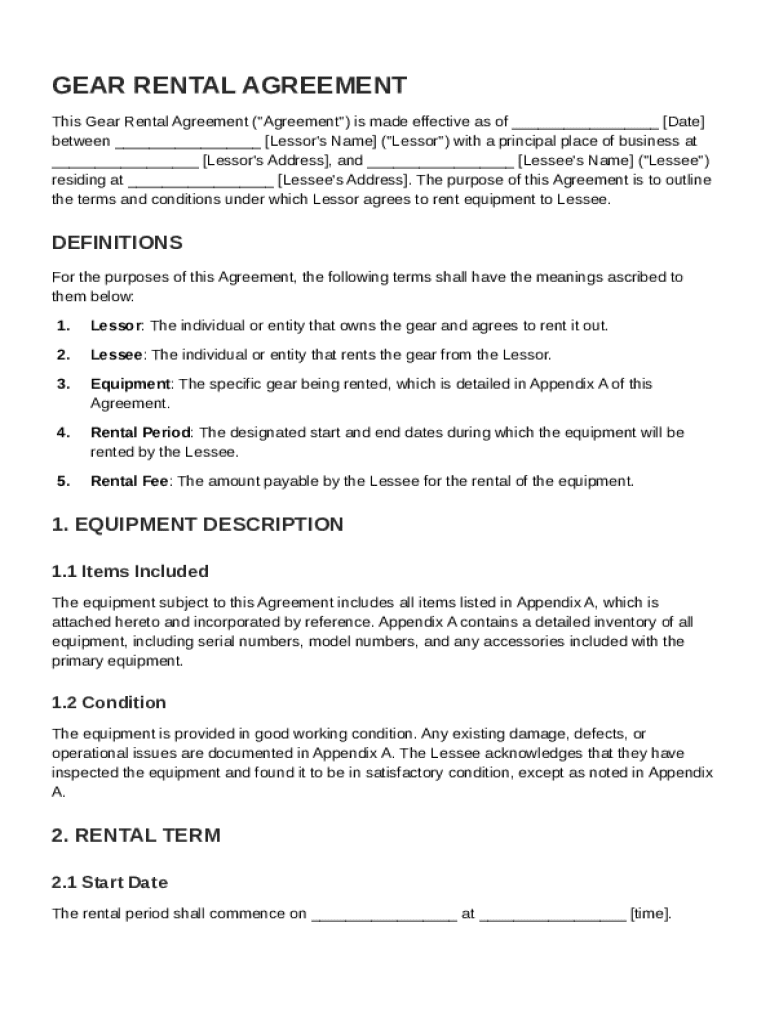
A Gear Rental Agreement Template is a legal document that outlines the specific terms and conditions under which equipment is rented from one party, the lessor, to another, the lessee. It is designed to clearly define each party's rights and responsibilities, ensuring a mutual understanding of the rental transaction. Such agreements typically cover various aspects, including the type of equipment being rented, the rental period, payment details, maintenance responsibilities, and liability concerns. By establishing these details in advance, both the lessor and the lessee can effectively manage their expectations and obligations, reducing the likelihood of disputes or misunderstandings.
How to Use the Gear Rental Agreement Template
To effectively use the Gear Rental Agreement Template, follow these step-by-step instructions:
- Review the Template: Before customizing, read through the entire template to understand its structure and the information required.
- Identify Parties: Clearly identify and include the details of both the lessor and the lessee. Details should include names, addresses, and contact information.
- Detail Equipment Information: Specify the equipment being rented, including make, model, serial numbers, and condition at the time of rental. This helps prevent disputes over equipment condition or expectations.
- Set Rental Period: Define the start and end dates of the rental period. Make sure both parties agree on these terms to avoid confusion.
- Outline Payment Terms: Establish the rental fees, payment schedule, and acceptable methods of payment. Be clear about due dates and any potential late fees or penalties.
- Include Security Deposit Information: If applicable, detail the security deposit amount, how it's used, and conditions for its return. This provides both parties with a clear understanding of financial expectations.
- Add Maintenance Responsibilities: Clearly define who is responsible for maintaining and repairing the equipment during the rental period. Specify any routine maintenance that should be performed and by whom.
- Mention Liability and Insurance Requirements: Explain the liability each party holds in case of damage, loss, or theft of the equipment. Include insurance requirements, if necessary, to protect against unforeseen incidents.
By completing and reviewing these steps, both parties ensure all essential aspects of the rental are covered, fostering a cooperative rental process.
Steps to Complete the Gear Rental Agreement Template
Form completion requires careful attention to detail. Here’s how you can efficiently complete the Gear Rental Agreement Template:
- Prepare Required Information: Collect all necessary data, including personal and equipment details, rental terms, and financial agreements.
- Fill Out the Template: Input the collected information into the designated sections of the template. Ensure accuracy to avoid future conflicts.
- Review for Clarity: Once completed, review the document for clarity and completeness. Ensure that all terms are clearly articulated and understood by both parties.
- Consult with Legal Counsel: If uncertain about any provisions, consult with legal counsel to ensure compliance with applicable laws and regulations. This step is crucial to legally binding agreements.
- Make Necessary Adjustments: Update or modify sections based on legal advice or mutual agreement between the lessor and the lessee.
- Finalize and Sign: After agreeing on all terms, both parties should sign the document to formalize the agreement. Ensure all signatures are obtained before the rental period begins.
This structured process helps ensure that the agreement is clear, comprehensive, and legally sound.
Key Elements of the Gear Rental Agreement Template
The template incorporates several critical elements to ensure a complete understanding between the involved parties:
- Identification of Parties: Clearly lists the lessor and lessee's involved, ensuring accountability.
- Equipment Specifications: Details the equipment's essential attributes and current condition upon the agreement's start.
- Rental Term: Specifies the duration of the rental, including start and end dates.
- Payment Obligations: Outlines payment methods, schedules, and penalties for late payments.
- Security Deposits: Details deposit requirements to protect the lessor against potential losses.
- Maintenance and Repair Duties: Clearly allocates responsibilities related to equipment maintenance and repairs.
- Risk of Loss and Damage Clauses: Provides guidance on the risk each party assumes if the equipment is damaged or lost.
- Termination Terms: Includes conditions under which the agreement may be terminated, either mutually or due to breach of contract.
These elements are essential in mitigating disputes, clarifying expectations, and delineating responsibilities.
Important Terms Related to Gear Rental Agreement Template
Understanding key terminologies in the agreement is crucial for effective comprehension and execution:
- Lessor: The owner or provider of the equipment.
- Lessee: The individual or entity renting the equipment.
- Indemnification: A clause providing protection from claims or damages.
- Governing Law: Jurisdictional parameters that dictate how disputes will be settled legally.
- Security Deposit: Funds held in trust to cover potential damages or losses.
- Late Payment Penalty: Fees incurred when rent is not paid by the agreed-upon deadline.
- Force Majeure: Events outside either party's control that might hinder contract fulfillment.
- Assignment Clause: Conditions under which the lessee can transfer the agreement to another party.
Familiarity with these terms helps both parties anticipate obligations and protect their interests effectively.
Legal Use of the Gear Rental Agreement Template
The Gear Rental Agreement Template is designed to be a legally binding document that ensures rights and responsibilities are up to professional and legal standards:
- Adherence to the ESIGN Act: By using electronic signatures, these agreements maintain legal enforceability under applicable U.S. law.
- State-Specific Adjustments: Modify sections based on differing state laws to ensure compliance with local jurisdictional requirements.
- Confidentiality Agreements: Incorporate clauses to protect sensitive information shared during the rental agreement’s duration.
- Dispute Resolution Mechanisms: Includes arbitration or mediation clauses to handle disputes amicably and professionally.
Using this template not only facilitates clear communication but also ensures adherence to applicable legal requirements, keeping all parties protected.
State-Specific Rules for the Gear Rental Agreement Template
Rental agreements may be subject to state-specific rules and variations. To ensure compliance, consider the following factors:
- Governing Law Clauses: Select the appropriate state law that will govern the agreement, affecting how disputes and terms are interpreted.
- Disclosure Requirements: Be aware of specific state regulations mandating disclosures or specific clauses for lease agreements.
- Tax Obligations: Some states may impose particular rental taxes that need to be considered within the financial sections of the agreement.
- Consumer Protection Statutes: Adapt the agreement to reflect state consumer protection laws, especially those safeguarding rental transactions.
Understanding and integrating state-specific rules help ensure the agreement is enforceable and compliant across jurisdictions where it is applied.