






Definition & Meaning
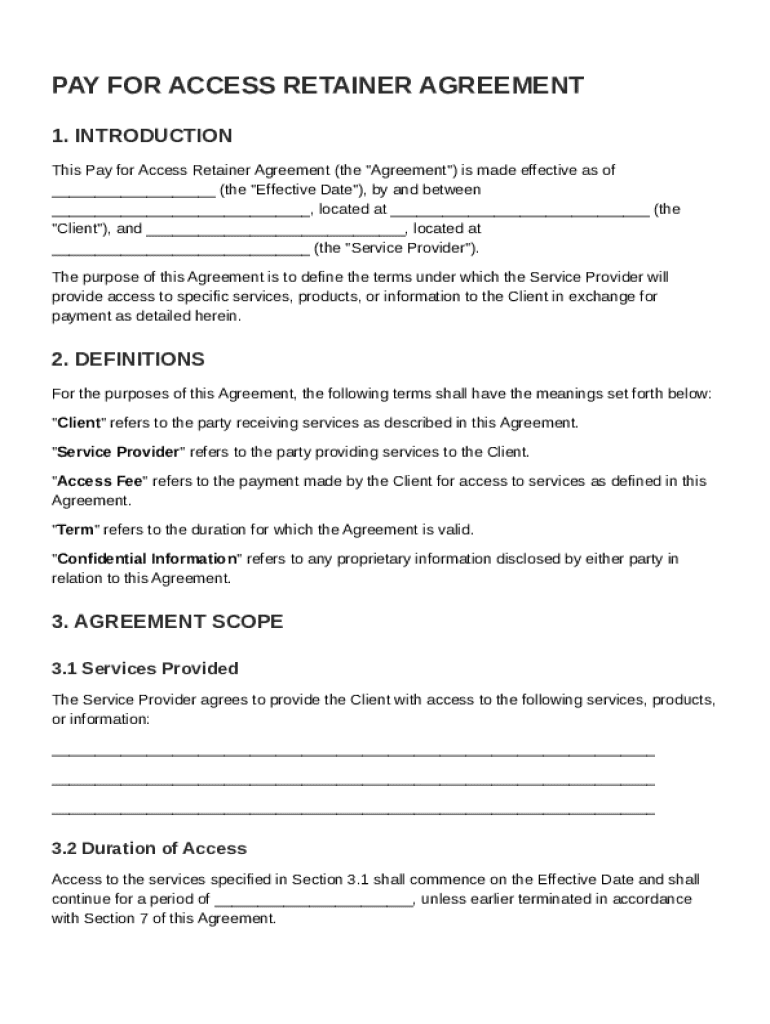
The Pay for Access Retainer Agreement Template serves as a formal arrangement between a client and a service provider. It allows access to specific services, products, or information for a designated fee. This agreement often outlines terms such as service scope, payment, and responsibilities, offering clarity and ensuring mutual understanding between both parties. By clearly defining these aspects, the document mitigates potential disputes. Such a template proves instrumental in maintaining professional relationships and safeguarding interests on both sides.
Key Elements of the Pay for Access Retainer Agreement Template
Understanding the core components of a Pay for Access Retainer Agreement Template is essential for effective utilization:
- Definitions: Clarification of terms to avoid ambiguity.
- Scope of Services: Detailed description of services or products the client will access.
- Payment Terms: Specifies fees, payment schedules, and methods.
- Responsibilities: Duties and obligations for both parties.
- Confidentiality Obligations: Ensures sensitive information is protected.
- Termination Conditions: Outlines the conditions under which either party can terminate the agreement.
- Indemnification Clauses: Provisions to protect parties against potential legal liabilities.
- Governing Law: Specifies which jurisdiction's laws will apply.
These elements ensure the agreement is comprehensive and legally enforceable, providing a solid foundation for the professional relationship.
How to Use the Pay for Access Retainer Agreement Template
Utilizing this template involves a series of straightforward steps designed to facilitate its effective application:
- Download the Template: Secure a copy for personalized editing.
- Review Terms: Carefully read each section to ensure clarity and understanding.
- Customize Content: Modify the template by filling in specific details, such as client names and service descriptions.
- Consult a Legal Expert: Ensure compliance with state and local regulations.
- Finalize and Sign: Both parties should thoroughly review the final document before signing.
- Store a Copy: Maintain a copy in a secure location for future reference.
Following these steps ensures that the agreement accurately reflects the intended terms and offers protection for all involved parties.
Important Terms Related to Pay for Access Retainer Agreement Template
Familiarity with specific legal and business terms is crucial to understanding these agreements fully:
- Retainer Fee: Initial payment for securing services.
- Confidential Information: Data protected under nondisclosure agreements.
- Deliverable: A tangible or intangible product provided upon completion of the contract.
- Force Majeure: Clauses that absolve liabilities under uncontrollable circumstances.
- Arbitration: Alternative dispute resolution method mentioned in agreements to avoid litigation.
These terms define the agreement’s framework and facilitate smoother communication between parties.
Legal Use of the Pay for Access Retainer Agreement Template
Legal compliance varies by region, but several universal considerations apply:
- Validity: Ensure all required signatures are captured, and parties are in agreement.
- Local Laws: Tailor the agreement based on specific state laws, which may affect terms and conditions.
- Contractual Capacity: Verify both parties have the legal capacity to enter a contract.
- Timeframes: Be clear on all deliverable deadlines to avoid legal issues post-signing.
Proper legal usage of this template circumvents conflicts and supports enforceability.
Steps to Complete the Pay for Access Retainer Agreement Template
Filling out the template requires meticulous attention to several key steps:
- Detail Services: Clearly describe the services to be provided.
- Set Payment Terms: Include precise payment amounts, schedules, and methods.
- Insert Duration: Specify the agreement’s active timeframe.
- Establish Obligations: Detail responsibilities and duties for each party.
- Include Termination Clauses: Outline acceptable conditions for ending the agreement.
- Review for Clarity: Ensure all sections are clear and free of vague language.
Completing theses steps guarantees a smooth execution and eventual fulfillment of the agreement.
Who Typically Uses the Pay for Access Retainer Agreement Template
The template enjoys widespread use across several industries, primarily involving:
- Consultants: For services such as advisory or specialized expertise.
- Freelancers: Catering to fields like writing, design, and tech support.
- Legal Advisors: For consistent legal representation over a determined period.
- IT Service Providers: Where ongoing access is essential for maintenance and support.
This template is particularly beneficial for any professional relationship requiring a structured service and payment agreement.

Examples of Using the Pay for Access Retainer Agreement Template
Real-world applications highlight the template’s versatility and effectiveness:
- Consulting Services: A business might retain an expert to have consistent access to high-level advice.
- IT Support: A company might require regular system updates and troubleshooting, provided through a monthly retainer.
- Creative Services: Graphic designers might offer retainer agreements to ensure a dedicated workflow on large projects.
These scenarios exemplify the template’s diverse utility in different fields, showcasing its adaptability and utility in various professional settings.