






Definition and Meaning
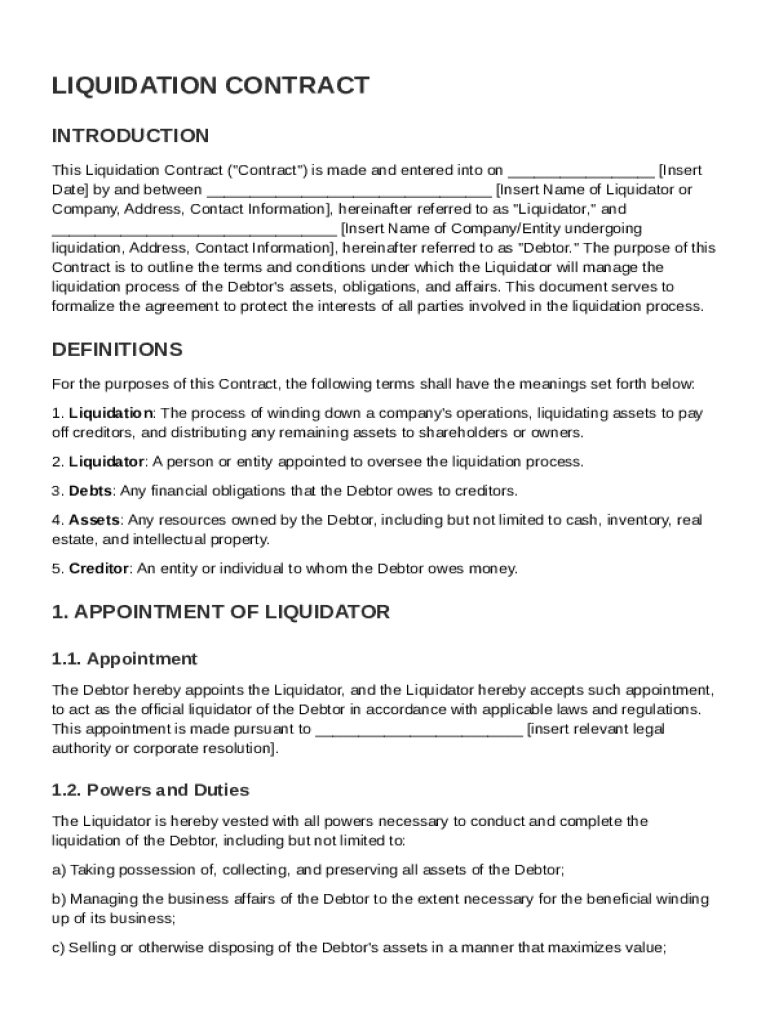
A Liquidation Contract Template is a structured legal document that outlines the agreement between a liquidator and a debtor for managing the liquidation process of the debtor's assets and obligations. This template serves as a guide, offering detailed sections that define key terms and responsibilities, facilitating a clear understanding between involved parties. Liquidation contracts are essential in protecting interests, ensuring fair distribution, and settling debts systematically.
Key Elements of the Liquidation Contract Template
The liquidation contract comprises several crucial elements that dictate the liquidation procedure. Here are some vital components:
- Appointment and Powers of the Liquidator: Details the appointment terms, duties, and powers granted to the liquidator who is responsible for overseeing the liquidation process.
- Asset Valuation and Sale: Specifies guidelines for valuing assets and managing their sale to ensure maximum returns.
- Debt Settlement Procedures: Outlines methods and priorities for settling outstanding obligations.
- Distribution of Proceeds: Describes how sale proceeds should be distributed among creditors, shareholders, and other stakeholders.
- Indemnification Clause: Protects involved parties by outlining conditions under which they are indemnified against potential losses or claims.
- Termination Conditions: Specifies the circumstances under which the contract can be terminated.
- Governing Law: Identifies the legal jurisdiction that governs the contract.
How to Use the Liquidation Contract Template
Using the Liquidation Contract Template involves customizing it to meet the specific needs of the involved parties. Here's a step-by-step guide:
- Review the Template: Start by reviewing the entire template to familiarize yourself with its structure and contents.
- Customize Information: Enter all relevant information, including the debtor's and liquidator's details, asset lists, and any specific terms unique to the contract.
- Clarify Terms and Conditions: Ensure clear definitions of key terms, conditions, and processes outlined in the contract.
- Legal Consultation: Consider consulting with a legal expert to validate the completeness and accuracy of the contract.
- Agreement by Parties: Obtain signatures from all parties involved to indicate their agreement and understanding of the contract.
- Secure and Store: Store the completed contract securely for easy reference throughout the liquidation process.
Why Use a Liquidation Contract Template
The Liquidation Contract Template offers various benefits that streamline the liquidation process:
- Structured Process: Provides a clear, organized procedure, minimizing confusion and disputes.
- Legal Compliance: Ensures that all aspects of the liquidation are conducted per relevant legal requirements.
- Protection of Interests: Secures the rights and interests of debtors, creditors, and shareholders by clearly defining responsibilities and expectations.
- Efficiency: Simplifies the preparation process, allowing for quick adaptation to specific situations.
Important Terms Related to Liquidation Contract Template
Understanding critical terms is vital to effectively using the liquidation contract. Some important terms include:
- Debtor: The individual or entity whose assets are subject to liquidation.
- Creditor: The party owed money by the debtor, which may include banks, suppliers, or investors.
- Assets: The properties, holdings, and rights subject to liquidation, such as inventory, equipment, and real estate.
- Proceeds: The financial return obtained from selling the debtor's assets, used to pay creditors.
- Indemnification: A contractual agreement to compensate for loss or damages incurred during the liquidation process.
Examples of Using the Liquidation Contract Template
To illustrate the contract's practical use, consider these examples:
- Corporate Bankruptcy: A company facing bankruptcy can establish a liquidation contract to systematically dispose of its assets and settle debts with its creditors.
- Partnership Dissolution: When business partners decide to dissolve their partnership, a liquidation contract helps ensure equitable asset distribution and obligation settlement.
- Estate Liquidation: In settling a deceased person's estate, a liquidation contract guides the sale of assets to satisfy outstanding debts and distribute remaining funds to heirs.
State-Specific Rules for the Liquidation Contract Template
Different states in the U.S. may impose specific rules that affect the use of liquidation contracts. Here are some general considerations:
- Filing Requirements: Some states may require the registration of the liquidation agreement with a state office or court.
- Notice Periods: Timeframes for notifying creditors and other stakeholders about the liquidation can vary by state.
- Tax Implications: State taxes on asset sales and distribution can impact how proceeds are managed and calculated.
Steps to Complete the Liquidation Contract Template
Completing a Liquidation Contract Template is a meticulous process that ensures all necessary elements are addressed. Here's how to go about it:
- Gather Information: Compile all relevant data, including a list of assets, debts, and parties involved.
- Identify Terms and Conditions: Clearly define terms such as asset valuation methods and payment priorities.
- Integrate State Laws: Incorporate state-specific legal requirements into the contract.
- Draft the Contract: Modify the template with specific details and terms discussed with all parties.
- Legal Review: Have the draft reviewed by a legal professional to ensure all areas are adequately addressed.
- Finalize and Sign: Ensure all parties sign the contract in the presence of a notary, if required, to make it legally enforceable.
These comprehensive steps will ensure that the Liquidation Contract Template is effectively prepared, promoting smooth and legally compliant liquidation proceedings.