Definition and Meaning of a Third Party Access Agreement
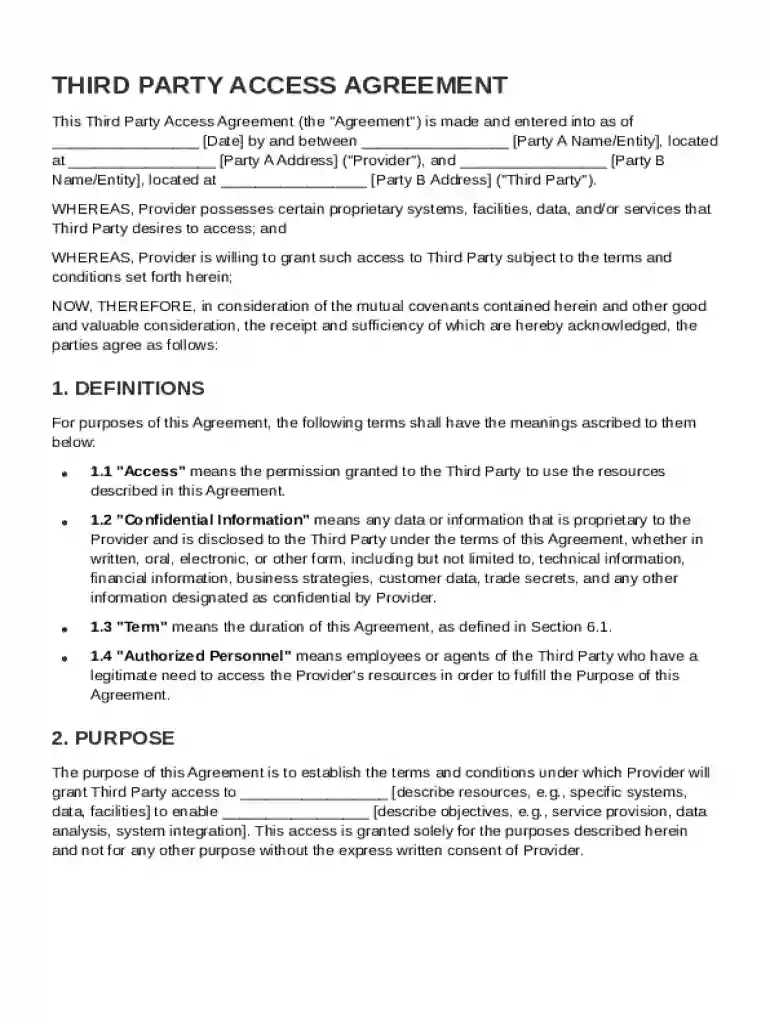
A Third Party Access Agreement (TPAA) is a legal document that outlines the terms and conditions under which a provider allows a third party to access its proprietary systems, data, and services. The agreement defines key terms such as 'Access', 'Confidential Information', and 'Authorized Personnel', ensuring both parties are clear on the scope and limitations of access. It also establishes the obligations of the third party, emphasizing compliance with applicable laws and security policies. The agreement is crucial in maintaining the confidentiality and integrity of sensitive information, protecting the provider from potential risks and liabilities.
Essential Components
- Access Rights: Specifies what systems and data can be accessed by the third party.
- Confidentiality Obligations: Details the requirements for maintaining the confidentiality of sensitive information.
- Authorized Personnel: Defines who within the third party is permitted to access the systems or data.
- Compliance: Emphasizes the need for adherence to relevant laws and security protocols.
- Termination Conditions: Outlines the circumstances under which the agreement may be terminated.
- Indemnification: Details the responsibility of the third party to cover any losses due to breaches or non-compliance.
Key Elements of the Third Party Access Agreement Template
The Third Party Access Agreement Template includes several key elements that are vital for its effectiveness and legality. Understanding these components helps ensure that all necessary details are addressed in the agreement.
Core Elements
- Purpose of Access: Specifies the reason for the third party's access to the provider's systems.
- Fees and Costs: Outlines any fees associated with accessing the systems.
- Limitations on Use: Clarifies what the third party can and cannot do with the accessed information.
- Obligations: Highlights the duties of the third party in maintaining data security and integrity.
- Governing Law: States the jurisdiction under which the agreement is governed.
Supplemental Sections
- Security Measures: Details specific security protocols the third party must follow.
- Audit Rights: Gives the provider the right to audit the third party’s compliance with the agreement.
- Dispute Resolution: Outlines the process for resolving any disagreements related to the agreement.
Steps to Complete the Third Party Access Agreement Template
Completing a Third Party Access Agreement Template requires careful attention to detail to ensure all parties' rights and obligations are clearly defined and legally binding. Here are steps to guide you:
Step-by-Step Process
- Identify Parties: Clearly list the provider granting access and the third party receiving access.
- Define Scope: Specify what data, services, or systems the third party is allowed to access.
- Outline Confidentiality Terms: Establish how confidential information will be handled.
- List Authorized Personnel: Identify individuals within the third party who can access the systems.
- Describe Obligations and Compliance: Detail the responsibilities of the third party, including adhering to security measures.
- Set Termination Clauses: Define the conditions under which the agreement can be terminated.
- Include Governing Law: Indicate the jurisdiction governing the agreement.
- Review and Sign: Ensure both parties review the document for accuracy before signing.
Legal Use of the Third Party Access Agreement Template
The Third Party Access Agreement Template is designed to be legally binding and compliant with applicable laws. This ensures the provider’s systems and data remain secure when accessed by external parties.
Legal Considerations
- Compliance with Laws: Ensure the agreement complies with data protection regulations and industry standards.
- Legally Binding Signatures: Utilize legally binding electronic signatures to formalize the agreement.
- Audit Trails: Maintain documentation of all changes or accesses to the agreement for legal record-keeping purposes.
- Dispute Resolution Mechanism: Include a clause specifying how disputes will be handled to avoid costly litigation.
State-Specific Rules for the Third Party Access Agreement Template
The legal requirements for Third Party Access Agreements can vary between states. It's crucial to familiarize yourself with state-specific rules to ensure compliance.
Variations by State
- Data Privacy Laws: Some states have stricter data privacy laws that must be incorporated into the agreement.
- Security Measures: States like California require detailed security protocols to protect personal information.
- Governing Law Clauses: Choose a governing law that aligns with the state’s legal standards and the specifics of the agreement.
Examples of Using the Third Party Access Agreement Template
A variety of scenarios demonstrate the utility of Third Party Access Agreements in protecting the proprietary systems and data of organizations.
Real-World Scenarios
- Vendor Access: A software company allows a vendor to access its development environment to troubleshoot issues, with terms safeguarding proprietary code.
- Collaborative Research: A university provides a research partner access to specific research data, ensuring compliance with privacy regulations.
- Regulatory Compliance: A bank grants regulatory agencies access for compliance audits, with clauses to protect customer data confidentiality.
Key Terms Related to the Third Party Access Agreement Template
Understanding the terminology used in a Third Party Access Agreement is essential for comprehension and application of the template.
Important Definitions
- Access: The permitted use of systems or data as specified in the agreement.
- Confidential Information: Sensitive data that must be protected from unauthorized disclosure.
- Authorized Personnel: Individuals who are permitted to access the provider’s data or systems.
- Indemnification: The process by which the third party compensates the provider for any losses incurred due to non-compliance with the agreement terms.