






Definition and Meaning
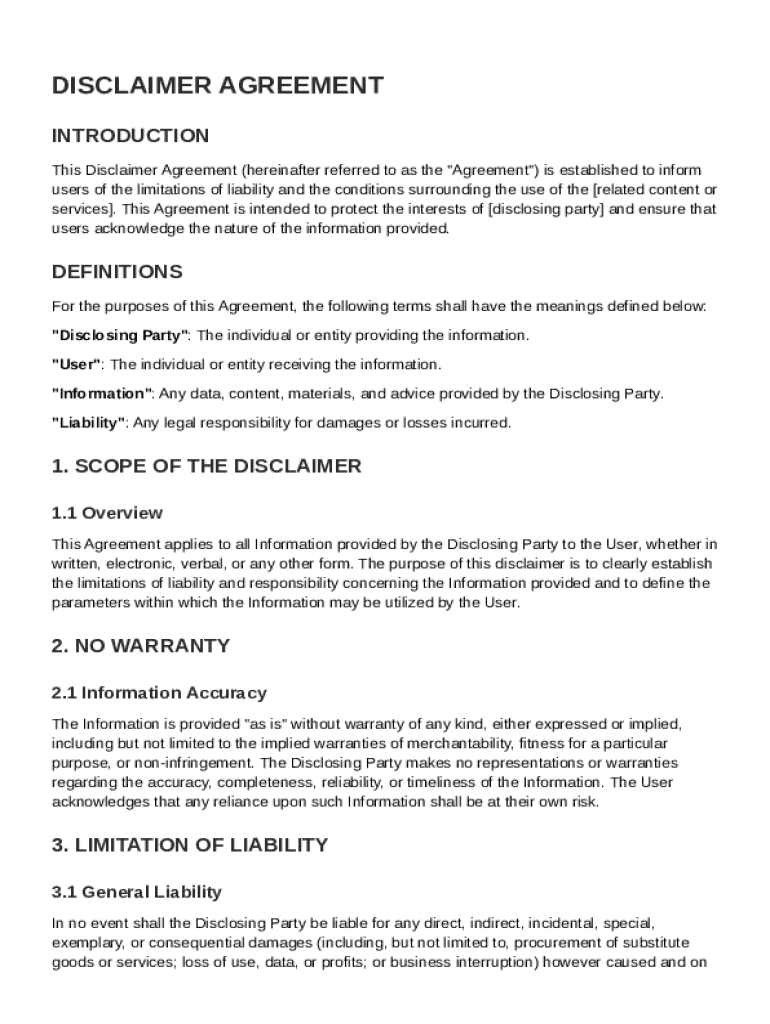
A Disclaimer Agreement Template serves as a formal document that outlines the limitations of liability and terms of use for information provided by the disclosing party to the user. This template is essential in settings where information is shared without warranties, ensuring that users understand they assume all risks associated with its use. Critical elements include clauses for indemnification and governing law, which help define the legal framework and set clear expectations regarding responsibilities.
Key Elements of a Disclaimer Agreement
- Limitation of Liability: Specifies the extent to which the disclosing party is responsible for any damages arising from the use of the information.
- 'As Is' Clause: States that the information is provided without any guarantees, emphasizing the user's responsibility for risk.
- Indemnification Provisions: Outlines scenarios in which the user must indemnify the disclosing party, protecting them from potential third-party claims.
- Governing Law: Establishes the jurisdiction and legal system that will govern any disputes, which is particularly crucial for cross-border transactions.
How to Use the Disclaimer Agreement Template
Utilizing a Disclaimer Agreement Template involves several steps designed to customize the document to fit specific needs while ensuring legal adequacy. Here are the typical steps:
- Identify the Context: Determine the nature of the information exchange and the risks involved, which will guide the customization of clauses.
- Select Relevant Clauses: Choose the appropriate clauses that best describe the stakeholder's responsibilities and liabilities.
- Customize the Template: Tailor the general language to fit specific scenarios and environments in which the agreement will be used.
- Review and Edit: Examine the entire document for legal soundness and clarity, ensuring it is concise and comprehensible.
- Consult Legal Expertise: Before finalization, it's advisable to have the document reviewed by a legal professional to confirm its efficacy and enforceability.
Steps to Complete the Disclaimer Agreement Template
Completing the template requires attention to detail and specificity, which ensures the document effectively protects involved parties:
- Provide Contact Information: Fill in the names, addresses, and other relevant details of both the disclosing party and the user.
- Define Terms: Clearly outline each party's obligations, the term of the agreement, and any specific rules or conditions applicable.
- Insert Special Clauses: Based on business requirements, additional clauses might be necessary, such as those addressing confidentiality or data protection.
- Obtain Signatures: Ensure both parties sign the document, which can be facilitated through electronic signature platforms like DocHub, which offers legally viable options.
- Store and Manage: Organize signed agreements systematically for record-keeping and potential future disputes.
Important Terms Related to Disclaimer Agreement
Understanding these terms enhances comprehension and application:
- Party/Parties: Refers to the individuals or entities engaged in the agreement.
- Disclosing Party: The individual or entity providing the information.
- Indemnity: A guarantee against any loss or damage, often part of standard disclaimer agreements.
- Applicable Law: The legal standards and statutes that govern the agreement.
Legal Use of the Disclaimer Agreement Template
Applying a Disclaimer Agreement Template legally ensures the protection and clarity needed in information exchanges:
- Documentation and Evidence: An executed disclaimer agreement provides documented evidence of mutual understanding regarding risks and liabilities.
- Compliance with State Laws: Adapt the template to meet specific state law requirements to ensure its enforceability.
- Prevention of Legal Disputes: Clarifies expectations, which can preempt misunderstandings and reduce the likelihood of legal conflicts.
- Management of Risk: Helps in identifying potential areas of legal exposure and managing them ahead of time.
Who Typically Uses the Disclaimer Agreement Template
Different individuals and organizations can utilize this template based on their specific operational needs and objectives:
- Businesses Sharing Information: Companies that share proprietary or technical information may rely on these agreements.
- Educational Institutions: When providing research findings or educational material without guarantees.
- Service Providers: As part of their terms and conditions when offering online or offline services to customers.
- Content Creators: Bloggers, vloggers, and other content creators often use disclaimers to mitigate liability when sharing opinions or advice.


State-Specific Rules for the Disclaimer Agreement
Consider variations in state laws which may require specific modifications or inclusions to the template:
- Jurisdiction Clauses: Define which state's laws govern the agreement and where legal proceedings will take place.
- Limitation Details: States might have varying stipulations on what liabilities can be legally disclaimed.
- Customization Requirement: Certain states might require additional clauses to address unique legislative mandates regarding consumer protection or fair trade practices.
Business Types that Benefit Most from Disclaimer Agreement Templates
Several business entities widely use these templates to balance information sharing with liability management:
- Technology Firms: Often distribute software and digital products with potential vulnerabilities that require explicit disclaimers.
- Consultancy Services: Risk is inherent when offering advice, making disclaimers vital to delimit the extent of liability.
- Healthcare Organizations: When providing general health information or telehealth services, disclaimers clarify the non-guarantee nature of such advice.
- E-commerce Platforms: Integral to online businesses where multiple parties interact, often with transactions based on shared information.
Incorporating a Disclaimer Agreement Template into business operations supports sound legal and operational practices, offering both clarity and protection.