
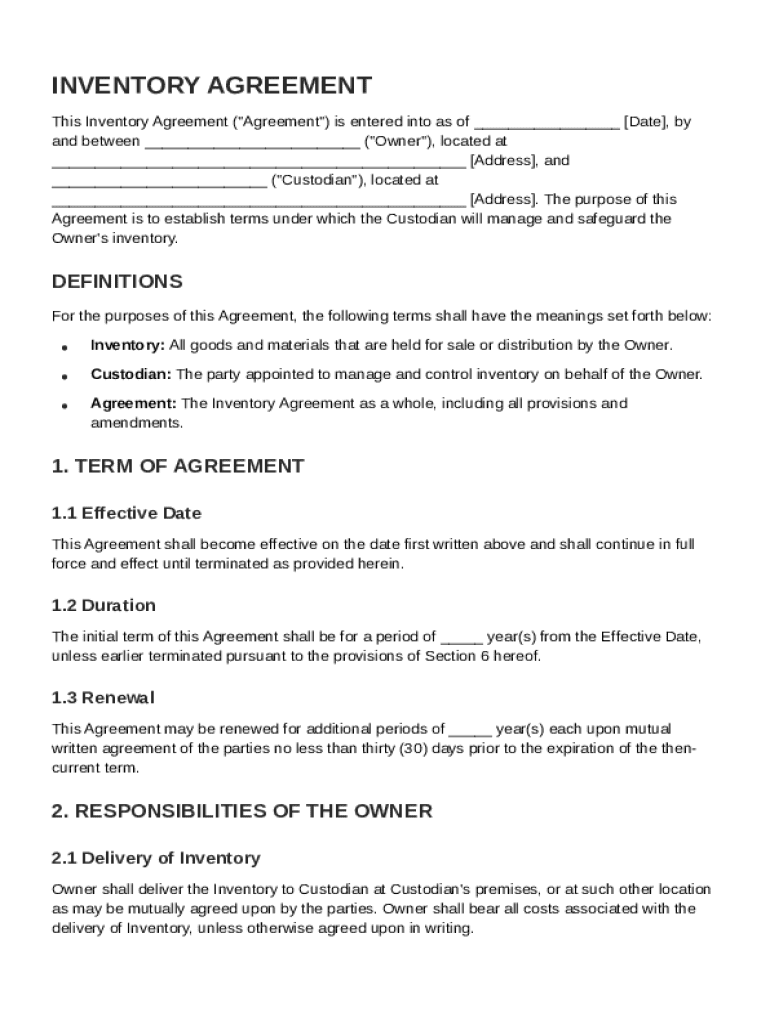







Definition & Meaning
The Inventory Agreement Template is a formal contract between an Owner and a Custodian that outlines the responsibilities and expectations for managing and safeguarding inventory. This document serves as a legal framework to clearly define each party's duties, including delivery, documentation, safeguarding, reporting, and financial arrangements. This template is crucial for ensuring proper record-keeping and accountability, which are essential for protecting the interests of both parties involved.
An Inventory Agreement typically covers the processes for handling inventory, detailing how each item should be managed and reported. It provides guidance on resolving discrepancies and allows for periodic reviews or audits to maintain accuracy. Such agreements are essential in various industries, from retail to manufacturing, where inventory control plays a critical role in operations.
Key Elements of the Inventory Agreement Template
An effective Inventory Agreement Template includes several essential elements that ensure comprehensive coverage and legal clarity. These elements consist of:
- Parties Involved: Clearly identifies the Owner and the Custodian, including their respective roles and contact information.
- Inventory List: A detailed account of all inventory items covered by the agreement, including descriptions, quantities, and values.
- Responsibilities: Outlines the specific duties of each party concerning inventory management, such as monitoring, reporting, and safeguarding items.
- Financial Terms: Specifies payment obligations, invoicing processes, and any other financial arrangements related to inventory handling.
- Audit Rights: Provides the Owner the right to conduct audits and verify inventory records, ensuring compliance by the Custodian.
- Dispute Resolution: Establishes a legal process for resolving any disagreements that may arise in connection with the inventory management.
- Termination Clauses: Details the conditions under which the agreement may be terminated by either party and any associated procedures.
These components ensure that both the Owner and Custodian have a clear understanding of expectations and obligations, thereby minimizing potential conflicts.
How to Use the Inventory Agreement Template
Utilizing the Inventory Agreement Template involves several key steps that both the Owner and Custodian should follow to ensure a legally binding and effective agreement. These steps include:
- Identify the Parties: Clearly state the names and contact details of the Owner and Custodian.
- Complete Inventory Details: Document the inventory items involved, specifying descriptions, quantities, and any unique identifiers.
- Define Responsibilities: Clearly outline the roles and duties concerning inventory management for each party.
- Establish Financial Terms: Agree on compensation, payment schedules, and other financial obligations.
- Include Audit and Dispute Protocols: Detail the processes for audits and dispute resolution to safeguard against future issues.
- Review and Sign: After completing the form, review all details carefully, making adjustments as necessary, and obtain signatures from both parties to finalize the agreement.
These steps are integral to ensuring the agreement is comprehensive and reflects the interests of both the Owner and Custodian.
Why Use the Inventory Agreement Template
The use of an Inventory Agreement Template offers numerous benefits that are pivotal in business operations, particularly in industries reliant on extensive inventory management. Key reasons for its use include:
- Legal Protection: Establishes a formal contract that protects both parties in case of disputes or breaches.
- Clarity and Accountability: Ensures that both parties are aware of their roles and responsibilities, reducing miscommunication.
- Efficiency: Streamlines the process of inventory monitoring and reporting, allowing for smoother operational workflows.
- Conflict Resolution: Provides a clear framework for resolving conflicts efficiently through predefined processes.
- Consistency: Enables standardized practices for inventory management across different teams and locations.
Adopting this template helps maintain order and accountability, preventing issues that could disrupt business operations.
Important Terms Related to Inventory Agreement Template
Understanding key terms related to an Inventory Agreement is crucial for ensuring that all parties are informed and in agreement with the contract. Some pivotal terms include:
- Custodian: The party responsible for safeguarding and managing the inventory on behalf of the Owner.
- Owner: The party that possesses and retains ownership of the inventory items, entrusting them to the Custodian.
- Inventory: A detailed list of goods or assets that are the subject of the agreement.
- Documentation: Refers to the records kept pertaining to inventory management activities, essential for audits and verification.
- Liability: Legal responsibility related to the loss or damage of inventory items while under the Custodian's care.
These terms need to be clearly defined in the template to avoid any misunderstandings or legal issues.
Steps to Complete the Inventory Agreement Template
Completing the Inventory Agreement Template involves a series of structured steps designed to ensure clarity, compliance, and mutual agreement. These steps include:
- Download the Template: Obtain the template from a trusted source such as DocHub.
- Customization: Modify sections to suit specific business needs, including updating terms and conditions.
- Inventory Listing: Enter detailed information about each inventory item, ensuring accuracy and completeness.
- Financial Arrangements: Clearly outline payment terms, methods, and any associated penalties for non-compliance.
- Legal Review: Consult legal professionals if needed, to review terms and ensure compliance with applicable laws.
- Signature Collection: Collect signatures from both parties to validate and finalize the agreement.
By adhering to these steps, both the Owner and Custodian can ensure a thorough completion of the Inventory Agreement, allowing for effective inventory management.
Legal Use of the Inventory Agreement Template
The Inventory Agreement Template serves as a legally binding document when completed correctly and signed by all concerned parties. Its legal validity is based on several factors:
- Conformance to Local Laws: The agreement must comply with relevant laws and regulations applicable in the jurisdiction of both parties.
- Consideration: There must be a clear exchange of value (goods/services vs. payment) that establishes the contract's legitimacy.
- Mutual Consent: Both parties need to demonstrate their willingness and consent to the terms by signing the document.
Ensuring these legal elements are met will help uphold the agreement's enforceability in court.
Examples of Using the Inventory Agreement Template
Practical applications of the Inventory Agreement Template are widespread and varied across industries. Some examples include:
- Retail Operations: A retail chain leasing warehouse space uses the agreement to outline inventory management responsibilities between the owner of the goods and the third-party logistics provider managing the storage facility.
- Manufacturing Companies: Manufacturers can utilize the template to delineate duties between their production facilities and inventory managers to ensure accurate tracking and safe storage of components.
- Corporate Settings: Companies can implement this template to manage office supplies, IT equipment, and other assets between different departments or branches to ensure accountability and transparency.
By employing the Inventory Agreement Template, businesses across various industries can effectively manage their inventory, safeguarding assets and ensuring operational efficiency.




