Definition & Meaning
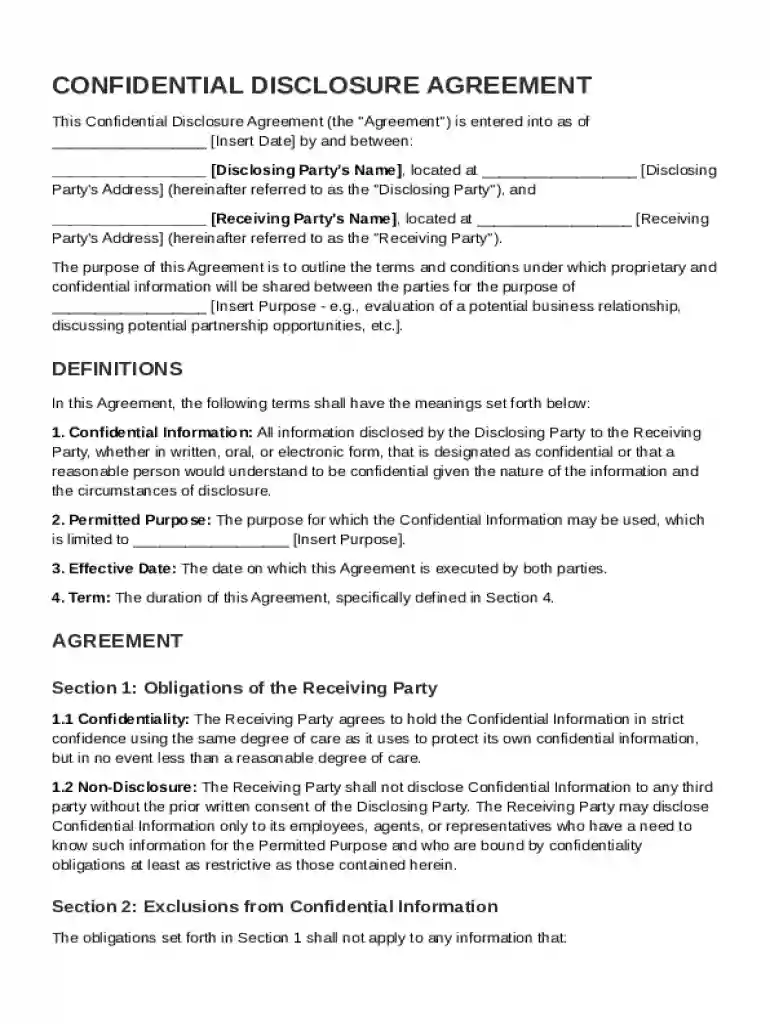
A Confidential Disclosure Agreement (CDA), commonly known as a Non-Disclosure Agreement (NDA), is a legally binding contract established between two or more parties. It primarily outlines the terms and conditions under which confidential information is shared and how it should be protected. The agreement establishes the rights and obligations of the Disclosing Party, who shares proprietary information, and the Receiving Party, who gains access to it. Typically used in business discussions, product development, or any scenario where sensitive information must be shared, a CDA helps maintain confidentiality and prevent unauthorized disclosure.
Key Elements of the Confidential Disclosure Agreement Template
A well-crafted Confidential Disclosure Agreement Template incorporates several key elements to ensure comprehensive protection of confidential information:
- Definition of Confidential Information: Clearly specifies what constitutes confidential information, including trade secrets, business strategies, financial data, and proprietary technologies.
- Scope of the Agreement: Defines the geographical and temporal scope, indicating where and for how long the terms apply.
- Obligations of the Parties: Details the responsibilities of each party in maintaining confidentiality and preventing unauthorized access or dissemination.
- Permitted Use: Enumerates the specific purposes for which the Receiving Party is allowed to use the confidential information.
- Exclusions: Specifies information that is not considered confidential, such as publicly available data or information independently developed by the Receiving Party.
- Term and Termination: Provides the duration of the agreement and conditions under which it may be terminated or renewed.
- Legal Recourse: Outlines the legal actions that can be taken in the event of a breach, including potential damages and injunctive relief.
How to Use the Confidential Disclosure Agreement Template
Using a Confidential Disclosure Agreement Template involves several critical steps to ensure the document is correctly executed and legally enforceable:
- Identify the Parties: Clearly identify the Disclosing Party and Receiving Party, including their legal names and contact information.
- Define Confidential Information: Explicitly outline what information will be considered confidential and subject to the agreement's terms.
- Consult Legal Assistance: Engage a legal professional to review the agreement for compliance with applicable laws and to ensure it adequately protects your interests.
- Customize the Template: Modify any standard clauses to reflect the specific needs and conditions of the parties involved.
- Execution: Both parties should thoroughly read the agreement before signing. Signature lines should include printed names, titles, dates, and places.
Steps to Complete the Confidential Disclosure Agreement Template
Completing a Confidential Disclosure Agreement Template necessitates attention to detail and comprehension of each section:
- Download the Template: Acquire the template from a reliable source, ensuring it is suitable for your jurisdiction.
- Fill in Party Details: Add the complete details of both the Disclosing Party and the Receiving Party.
- Clarify Confidential Information: Provide a clear definition of what constitutes confidential information for the agreement's purposes.
- Set the Duration: Indicate both the duration of confidentiality obligations and the effective date of the agreement.
- Detail Obligations: Clearly outline the requirements and restrictions placed upon the Receiving Party regarding the handling of confidential information.
- Finalize Signatures: Ensure all parties review, agree, and sign, adhering to any required witnessing or notarization procedures.
Important Terms Related to Confidential Disclosure Agreement Template
Understanding the specific terminology used within a Confidential Disclosure Agreement Template is crucial:
- Non-Disclosure Clause: A stipulation within the agreement explicitly stating the Receiving Party's obligation to maintain confidentiality.
- Non-Compete Clause: Occasionally included to restrict the Receiving Party from engaging in activities that directly compete with the Disclosing Party.
- Residuals Clause: Sometimes included to permit the Receiving Party to use non-tangible remnants of confidential information that remain in their independent knowledge.
- Mutual Agreement: A bilateral confidentiality agreement where both parties disclose and safeguard information.
Legal Use of the Confidential Disclosure Agreement Template
Legally executing a Confidential Disclosure Agreement Template requires adherence to defined legal standards to ensure the agreement's enforceability:
- Compliance with Local Laws: The agreement must adhere to all relevant state and federal laws within the U.S. jurisdiction where it is executed.
- Consideration: There must be mutual consideration, meaning both parties receive something of value or benefit from the agreement.
- Capacity: All parties to the agreement must have the legal capacity to contract, meaning they are of sound mind, of legal age, and possess authority to bind their respective entities.
- Good Faith: All parties should engage in negotiations and execution processes honestly and without intent to defraud or deceive.
Examples of Using the Confidential Disclosure Agreement Template
Examples of scenarios where a Confidential Disclosure Agreement Template is applied demonstrate its versatility and necessity:
- Business Partnerships: Two companies entering into a joint venture use a CDA to protect shared proprietary data.
- Investments: Entrepreneurs seeking venture capital share their business plans under a CDA to protect their concepts while engaging potential investors.
- Employment: Employers requiring employees to sign a CDA as part of their employment contract to safeguard sensitive business information during and after employment.
- Research Collaborations: Academic partners sharing unpublished data or methodologies use a CDA to protect the interests of involved researchers and institutions.