
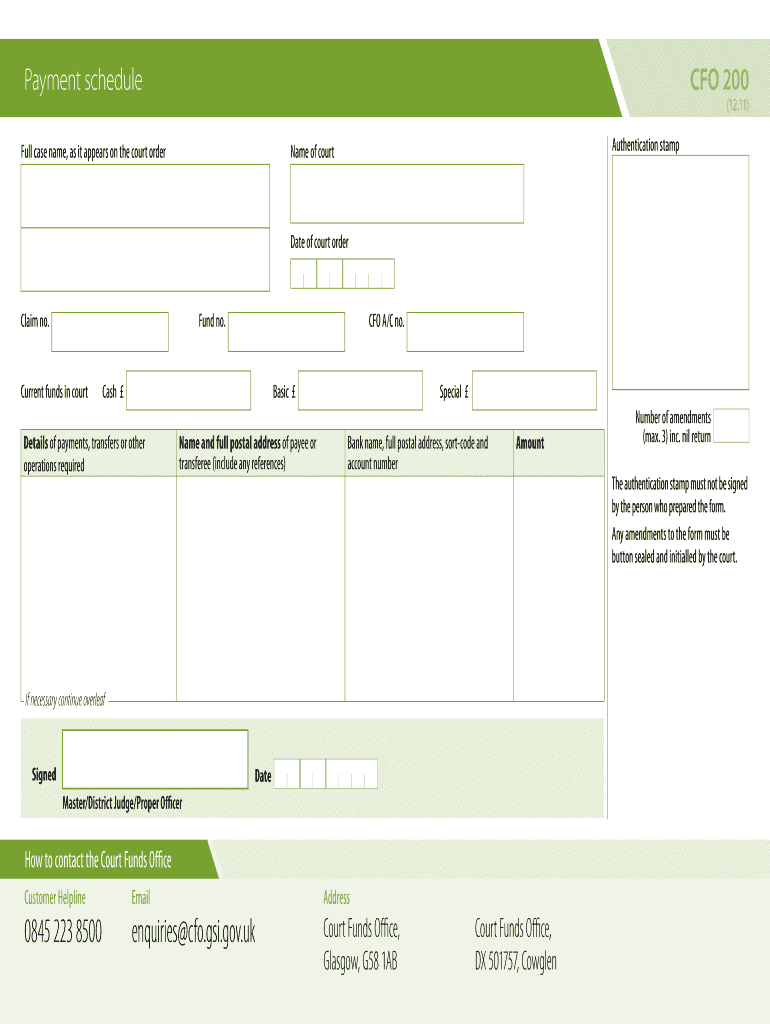







Definition and Purpose of the CFO 203 Form
The CFO 203 form is a specialized document utilized by the Court Funds Office (CFO) in the United States. It is designed to facilitate the processing of payments, transfers, or other financial operations associated with court orders. This form is critical in managing funds efficiently and ensuring compliance with legal requirements. Typically, the CFO 203 form includes sections for essential details such as case information, payment specifications, and contact details for the CFO, ensuring all pertinent information is collected.
The primary users of the CFO 203 form are attorneys, court officials, and individuals involved in legal proceedings that require the management of funds. The form mandates authentication, which verifies the submitter's identity and the legitimacy of the request. Furthermore, any amendments made to this form must be properly sealed and initialed to ensure that all documentation remains valid and traceable. This level of detail and security underscores the importance of accurately completing the CFO 203 form in compliance with court guidelines.
How to Obtain the CFO 203 Form Download
Acquiring the CFO 203 form is a straightforward process. Users can typically find it on official court or government websites, where it may be available for direct download. Here are the steps to obtain the CFO 203 form:
- Visit the Official Court or Government Website: Search for the Court Funds Office or relevant jurisdiction's section.
- Navigate to Forms or Resources: Look for a section dedicated to forms, often labeled "Forms," "Resources," or "Documents."
- Locate the CFO 203 Form: Browse the available forms or use the site's search function to find the CFO 203 form.
- Download the Form: Once located, click the download link to save the form on your device. It’s generally available in PDF format for easy access.
For those who need assistance, contacting the Court Funds Office directly can provide clarification or access support.
Steps to Complete the CFO 203 Form
Completing the CFO 203 form requires careful attention to detail, adhering to the specific fields and requirements outlined in the document. Below are the steps for effectively filling out the form:
- Enter Case Details: Start by providing the case number, court information, and names of involved parties.
- Input Payment Information: Specify the type of payment, such as transfer amounts or fees associated with services rendered.
- Fill in Contact Information: Include your name, address, and phone number to ensure that the Court Funds Office can reach you for any follow-ups.
- Review Required Fields: Ensure that all mandatory fields are completed, including any signature requirements.
- Authenticate the Document: If applicable, sign and date the form as required to authenticate the request.
It's advantageous to double-check all entries before submission to avoid delays or rejections.
Key Elements of the CFO 203 Form
Understanding the critical elements of the CFO 203 form is crucial for successful completion and submission. Important sections of the form include:
- Case Information: Identification of the case and associated parties.
- Payment Details: Types of payments or fund transfers being requested.
- Recipient Information: Requirements for specifying where payments should be directed.
- Signature and Authentication Requirements: Areas designated for signatures and dates to validate the document.
Each section plays a vital role in ensuring that the form serves its intended purpose within the legal framework.
Legal Use of the CFO 203 Form
The CFO 203 form holds significant legal weight and adheres to regulations set forth by the respective court systems. Its lawful use includes:
- Compliance with Court Orders: The form must align with any existing court directives related to fund management.
- Recordkeeping: The completed form functions as an official record of financial transactions, necessary for transparency and accountability.
- Authentication: The form includes authentication processes, ensuring that modifications to the document meet legal standards.
Failure to comply with these legal uses can result in penalties or delays in processing, emphasizing the importance of understanding its legal frameworks.




