
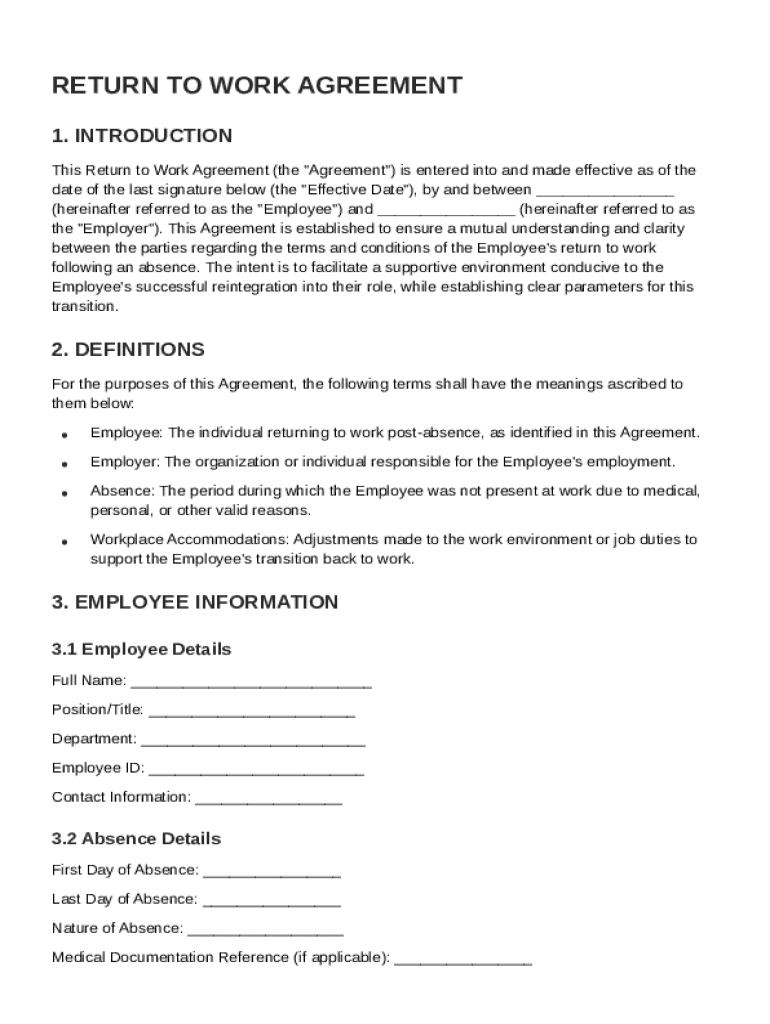







Definition and Importance of a Return to Work Agreement
A Return to Work Agreement outlines the terms and conditions for an employee's reintegration into the workplace following an absence due to illness, injury, or other personal circumstances. This document serves as a formal arrangement between the employee and the employer, ensuring both parties are clear on the expectations and accommodations provided to facilitate a smooth transition back to work.
- Purpose: To clarify responsibilities, accommodations, and obligations.
- Benefits: Promotes understanding and compliance, reducing miscommunication.
- Context: Often used after medical leave, parental leave, or extended personal leave.
Steps to Complete the Return to Work Agreement
Completing a Return to Work Agreement involves several critical steps to ensure all necessary information is captured and agreed upon by both the employer and the employee.
-
Gather Necessary Information:
- Employee details: Full name, job title, and department.
- Absence details: Reason for absence and duration.
-
Define the Return Date:
- Specify the exact date the employee will return to work.
- Include any part-time or phased return schedules if applicable.
-
Outline Job Duties:
- Reassess and modify job duties if necessary to accommodate the employee's current capacity.
-
Document Workplace Accommodations:
- Specify any modifications or support needed, such as flexible hours or ergonomic adjustments.
-
Ensure Compliance with Employment Conditions:
- Reinforce existing conditions of employment, or outline any temporary modifications.
-
Include Confidentiality Clauses:
- Ensure confidentiality of medical or personal information is maintained.
Key Elements of the Return to Work Agreement
The Return to Work Agreement incorporates several key elements to ensure comprehensive coverage of all necessary considerations.
-
Employee and Absence Details: Captures essential information on the employee's profile and the nature of the absence.
-
Return Date: Exact date or any phased return schedule to manage expectations.
-
Duties and Adjustments: Alterations to current job duties or additional support to accommodate the return.
-
Confidentiality and Compliance: Legal assurances regarding the handling of sensitive information and adherence to contract terms.
-
Communication Support: Details any ongoing communication required, including regular check-ins.
-
Modification Clauses: Clauses allowing future adjustments to the agreement as circumstances change.
Important Terms Related to the Return to Work Agreement
Understanding the terminology used within the Return to Work Agreement is crucial for clear communication and mutual understanding.
- Phased Return: A gradual increase in working hours or responsibilities over a set period when an employee returns.
- Reasonable Accommodation: Adjustments made to accommodate the employee's medical or personal needs without causing undue hardship to the business.
- Confidentiality Agreement: A legal framework preventing disclosure of sensitive information without consent.
Legal Use of the Return to Work Agreement
The legal use of a Return to Work Agreement ensures compliance with employment law while protecting both the employer and employee's rights.
- ESIGN Act Compliance: Agreements can be signed electronically, ensuring legal binding status.
- Employer Obligations: Employers must adhere to agreed terms and provide specified accommodations.
- Employee Rights: Employees retain the right to request reasonable adjustments without facing discrimination.
Examples and Scenarios Using the Return to Work Agreement
Utilizing real-world scenarios helps illustrate the practical application and versatility of the Return to Work Agreement.
- Case Study 1: An employee returning after maternity leave might require flexible start and end times during initial weeks.
- Case Study 2: An employee recovering from surgery may initially work from home and gradually increase in-office presence.
- Case Study 3: A staff member experiencing mental health challenges might benefit from role modifications or additional supervision.
State-Specific Rules for Return to Work Agreements
State-specific regulations can influence the structure and enforcement of a Return to Work Agreement.
- Variation in Statutes: Different U.S. states may have unique laws governing employee accommodation and post-absence reintegration.
- Consultation with Legal Experts: Businesses should seek legal advice to ensure compliance with both federal and state laws.
- Templates and Guidance: State labor departments often provide resources or guidelines for drafting compliant agreements.
Who Typically Uses the Return to Work Agreement
The typical users of a Return to Work Agreement extend beyond individual employees and employers.
- HR Departments: HR professionals often draft and manage these agreements to uphold policy consistency.
- Legal Advisors: Legal teams may offer insights or validations on agreement terms, ensuring they meet legal standards.
- Supervisors/Managers: They play a critical role in implementing and monitoring the agreement terms with affected employees.


Conclusion
The Return to Work Agreement Template serves as a vital tool for facilitating the reintegration of employees back into the workplace. Its structured approach ensures both parties are aligned, reducing the risk of misunderstandings and promoting a supportive work environment. By adhering to outlined elements and state-specific rules, organizations can effectively manage transitions and uphold employee rights.


