






Definition & Purpose of the Template
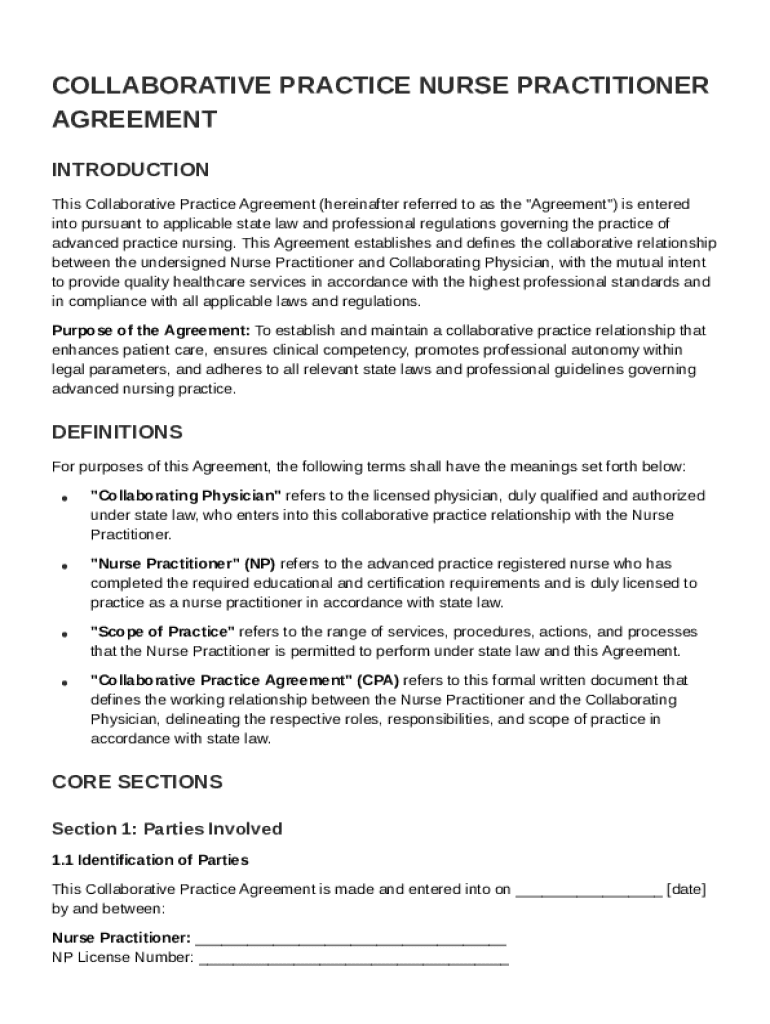
The Collaborative Practice Nurse Practitioner Agreement Template serves as a formal document outlining the partnership between a Nurse Practitioner (NP) and a Collaborating Physician. It details their shared responsibilities in delivering healthcare services while ensuring compliance with state laws and regulations. This agreement emphasizes key goals such as enhancing patient care, maintaining professional autonomy, and improving clinical outcomes. By clearly defining roles, it establishes a framework for collaboration that supports safe and effective practice.
Examples of Agreement Components:
- Roles and Responsibilities: The NP is responsible for primary patient care, while the Physician provides oversight, direction, and support as needed.
- Scope of Practice: Outlines the specific medical duties assigned to the NP within legal and professional boundaries.
- Compliance Requirements: Ensures both parties adhere to state-specific laws and healthcare standards.
Key Elements of the Template
The Collaborative Practice Nurse Practitioner Agreement Template includes several critical sections that detail the expectations, rights, and obligations of each party involved. Understanding these elements is essential for both the NP and the Physician to foster a successful partnership.
Major Components:
- Parties Involved: Identifies the NP and Physician by name and credentials, establishing their professional relationship.
- Liability Insurance: Details the insurance coverage required for both parties to protect against potential claims or legal actions.
- Duration and Termination: Specifies the duration of the agreement and conditions under which it can be terminated by either party.
How to Use the Template Effectively
Utilizing the Collaborative Practice Nurse Practitioner Agreement Template involves several steps to ensure it is correctly filled out and legally binding. It is crucial to adhere to these instructions for the agreement to be valid and enforceable.
Steps to Follow:
- Customize the Template: Adjust specific sections to reflect the unique duties and responsibilities of the NP and Physician.
- Review State Laws: Ensure the agreement complies with local regulations by consulting with a legal expert if necessary.
- Signatures: Both parties must sign the agreement to confirm their acceptance of the terms.
Legal Use of the Template
Ensuring the legality of the Collaborative Practice Nurse Practitioner Agreement Template involves addressing state-specific regulations and maintaining compliance throughout its implementation. This agreement should enhance professional practice without overstepping legal boundaries.
Compliance Steps:
- Consult Legal Counsel: Seek legal advice to verify that the agreement adheres to relevant state laws.
- Regular Updates: Keep the document updated with any regulatory changes affecting NP and Physician practices.
- Conflict Resolution: Establish procedures for resolving disputes, ensuring a cooperative working relationship.
State-Specific Rules & Regulations
The Collaborative Practice Agreement between a Nurse Practitioner and Collaborating Physician must adhere to state-specific rules to be recognized as legally binding. These regulations can vary significantly and influence the scope and autonomy of the NP.
Important Considerations:
- Autonomy Levels: Some states grant full practice authority to NPs, while others require varying degrees of physician oversight.
- Specific Provisions: Include state-mandated clauses or documentation within the agreement.
- Compliance Review: Perform regular audits to ensure adherence to changing state laws.
Examples of Using the Template
Numerous real-world scenarios demonstrate the utility of the Collaborative Practice Nurse Practitioner Agreement Template in supporting diverse healthcare practices. These examples illustrate how the agreement can be adapted to suit specific professional needs.
Use Cases:
- Primary Care Clinics: Where NPs work collaboratively with physicians to offer comprehensive patient care.
- Specialty Practices: Such as cardiology, where specialized guidance from a physician enhances NP-provided services.
- Telehealth Services: NPs providing remote patient care with physician support accessible as needed.
Important Terms Related to the Template
Understanding terminology related to the Collaborative Practice Nurse Practitioner Agreement Template is vital for proper interpretation and application. Clear comprehension of these terms ensures accurate completion and enactment of the agreement.
Key Terms:
- Collaborating Physician: A licensed medical doctor who provides oversight and consultation to the NP.
- Scope of Practice: Defines the procedures and actions permitted for an NP under state regulations.
- Professional Autonomy: The degree of independence an NP has in making clinical decisions.
State-by-State Differences in the Template
The Collaborative Practice Nurse Practitioner Agreement Template must account for significant state-by-state variations that affect implementation. Recognizing these differences ensures that the agreement is relevant and compliant across diverse jurisdictions.
State Considerations:
- Legal Requirements: Different states have unique rules concerning NP independence and physician collaboration.
- Renewal Policies: Some states may require periodic reviews or renewals of the agreement to maintain its validity.
- Scope Limitations: Each state delineates specific healthcare services that NPs can independently perform.
By thoroughly understanding and implementing the Collaborative Practice Nurse Practitioner Agreement Template, healthcare providers can establish effective and compliant professional relationships that prioritize patient care and uphold professional standards.