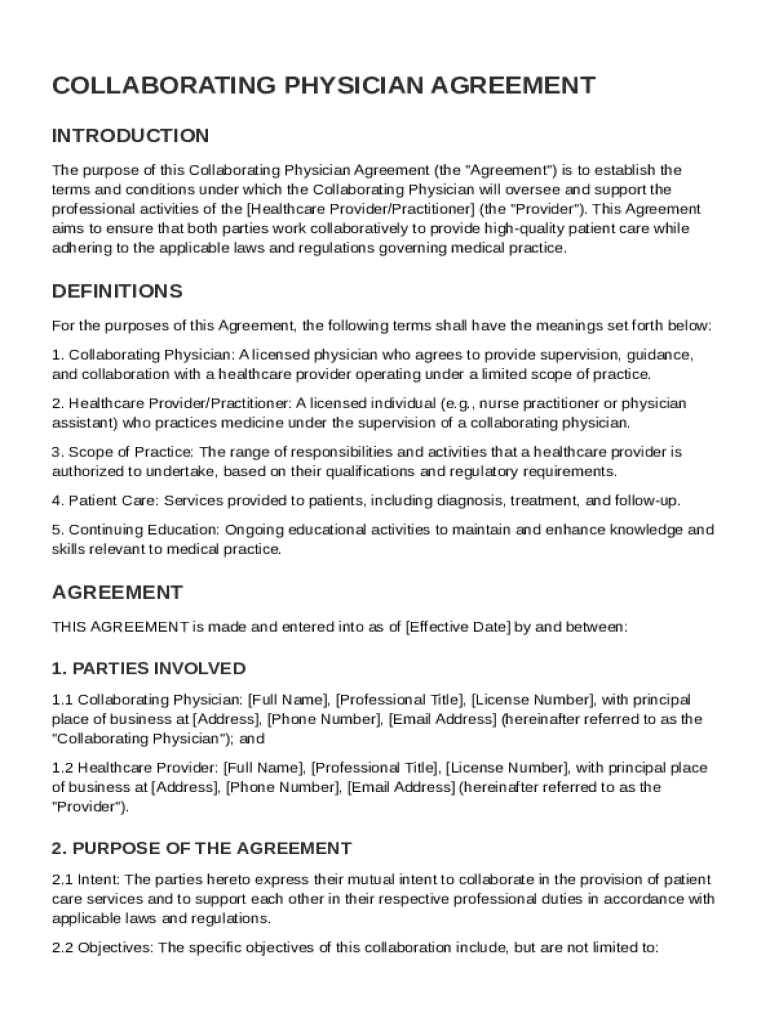







Definition & Meaning
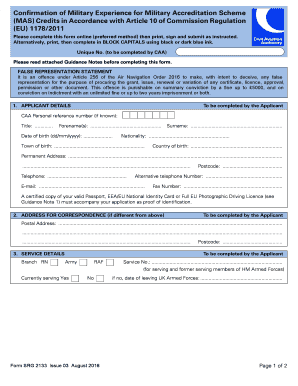
A Collaborating Physician Agreement is a formal contract that establishes a working relationship between a licensed physician and another healthcare provider, typically a nurse practitioner or physician assistant. This agreement outlines the roles and responsibilities of each party involved, ensuring that there is clear oversight, support, and communication in delivering patient care. It also defines specific protocols for collaboration, which may include supervision requirements, methods of communication, and decision-making processes. This document is essential in maintaining professionalism, accountability, and legal compliance in healthcare settings, particularly ensuring that patient care meets quality standards and adheres to regulatory requirements.
Key Elements of the Collaborating Physician Agreement Template
The Collaborating Physician Agreement Template includes several critical elements designed to form a comprehensive and binding contract. Key components typically include:
-
Identification of Parties: Clearly specifying the collaborating physician and the healthcare provider involved, along with their credentials and roles within the collaboration.
-
Scope of Services: Detailing the healthcare services the collaborating provider is authorized to perform under the physician's supervision.
-
Supervision Guidelines: Outlining the extent and nature of the physician’s supervision, roles in patient care, and regular review processes.
-
Communication Protocols: Establishing clear methods and frequency of communication between all parties involved, including consultations and feedback sessions.
-
Compensation Arrangements: Defining how and when compensation will be provided, addressing fees for supervised services and any additional consultancy.
-
Confidentiality and Privacy: Addressing the handling and protection of patient information, ensuring compliance with privacy regulations like HIPAA.
-
Compliance with Legal Regulations: Ensuring that the agreement adheres to state-specific regulations and legal standards.
-
Liability and Indemnification: Specifying the responsibilities of each party concerning liabilities that may arise during the collaboration.
These elements ensure that both parties have a mutual understanding, which fosters a professional and compliant working environment.
Steps to Complete the Collaborating Physician Agreement Template
-
Gather Basic Information: Collect necessary identification details of the physician and the healthcare provider, including licenses and addresses.
-
Define Scope and Responsibilities: Clearly outline the functions, responsibilities, and limitations of the healthcare provider under the agreement.
-
Specify Supervision Details: Write down how the supervision will be conducted, the frequency of oversight, and any specific methods of direct or indirect oversight.
-
Clarify Financial Terms: Determine the compensation structure, how payments will be processed, and conditional terms related to financial arrangements.
-
Address Legal and Regulatory Compliance: Ensure that all involved parties understand and agree to comply with relevant healthcare regulations and guidelines.
-
Establish Confidentiality Obligations: Define how the shared patient information will be protected and used according to privacy laws.
-
Finalize and Review: Conduct a thorough review of the completed agreement, making adjustments as necessary to fit both parties' needs before signing.
By following these steps, both the physician and the healthcare provider can ensure that their relationship is well-documented and complies with applicable legal standards.
State-Specific Rules for the Collaborating Physician Agreement
Regulations surrounding Collaborating Physician Agreements can vary considerably between states, impacting how these documents are drafted and enforced. Notable differences include:
-
Supervision Requirements: Some states require more direct supervision, while others allow more autonomy for healthcare providers.
-
Prescriptive Authority: In certain states, collaborating agreements dictate the extent to which healthcare providers can prescribe medications.
-
Reporting and Record-Keeping: States may have specific mandates concerning the documentation of supervision activities, patient interactions, and ongoing evaluations of the collaborating provider's work.
-
Renewal and Termination: The process and requirements for renewing or terminating the agreement can differ, including notification periods and necessary documentation.
Understanding the particular rules of the state in which the agreement will be used is crucial for compliance and the effective functioning of the collaborative arrangement.
Legal Use of the Collaborating Physician Agreement Template
The legal use of a Collaborating Physician Agreement Template ensures compliance with healthcare laws and regulations while protecting the interests of all parties involved. Legal considerations include:
-
Adhering to State Regulations: Ensuring the template is structured to comply with both state and federal regulations governing healthcare collaborations.
-
Contractual Enforcement: Providing a legally binding document that can be presented in court if disputes arise, thus offering legal protection for both parties.
-
Regulation Compliance: Incorporating language and clauses that reflect regulatory requirements, such as those related to patient safety and confidentiality.
-
Term and Termination Clauses: Legally specifying the duration of the agreement and conditions under which it can be dissolved.
Having a legally sound agreement not only protects legal rights but also fosters trust and reliability in the collaborative working relationship.
Examples of Using the Collaborating Physician Agreement Template
-
Primary Care Settings: In a typical primary care setting, a nurse practitioner uses the agreement to establish the guidelines for collaboration with a family physician. This includes prescribed medications and treatment plans under the doctor's supervision but with autonomy to manage common illnesses.
-
Specialized Clinical Practices: A healthcare provider in a cardiology practice might use the agreement to work under a cardiologist with well-defined protocols for patient evaluations and follow-ups, ensuring specialized care continuity.
-
Rural Health Clinics: In rural settings where immediate physician presence might be limited, these agreements facilitate remote supervision, allowing registered nurses to perform critical tasks under a physician's guidance.
These examples highlight the versatility of the Collaborating Physician Agreement Template in ensuring effective care across various healthcare environments.
Who Typically Uses the Collaborating Physician Agreement Template
This template is commonly used by:
-
Nurse Practitioners: Who require formalized agreements with supervising physicians to define their roles and responsibilities within a healthcare practice.
-
Physician Assistants: Seeking to establish professional expectations and leverage physician support while managing patient care.
-
Healthcare Facilities: Including clinics and hospitals that must document collaborative practice arrangements for compliance and administrative oversight.
-
Legal Advisors: Assisting healthcare professionals in drafting agreements that adhere to legal standards.
The template is designed to cater to these users by formalizing collaborative efforts to enhance healthcare delivery and patient outcomes.


Why Should You Use a Collaborating Physician Agreement Template
Employing a Collaborating Physician Agreement Template offers several benefits:
-
Clarity and Structure: Provides a clear framework that outlines roles, responsibilities, and expectations in a collaborative healthcare environment.
-
Legal Protection: Acts as a formal legal document that can aid in resolving disputes or misunderstandings between collaborating parties.
-
Improved Compliance: Ensures adherence to healthcare regulations and standards, thereby reducing the risk of non-compliance penalties.
-
Enhanced Communication: Facilitates better coordination and communication, improving patient care delivery and collaborative efficiency.
Using this template is advantageous in fostering a transparent, efficient, and compliant healthcare practice, ultimately improving patient services.
By deeply understanding the Collaborating Physician Agreement Template and its breadth of applications across various healthcare settings, professionals can ensure they are both legally protected and operationally efficient in their collaborative healthcare efforts.