



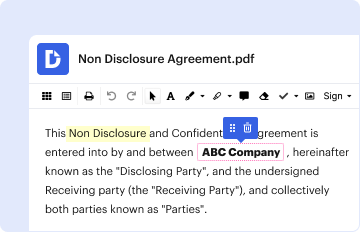
01. Edit your form online
Type text, add images, blackout confidential details, add comments, highlights and more.

Type text, add images, blackout confidential details, add comments, highlights and more.
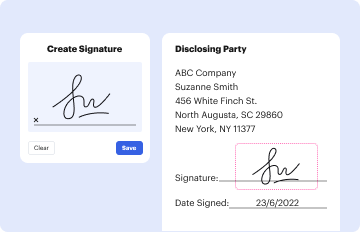
Draw your signature, type it, upload its image, or use your mobile device as a signature pad.
Send it via email, link, or fax. You can also download it, export it or print it out.
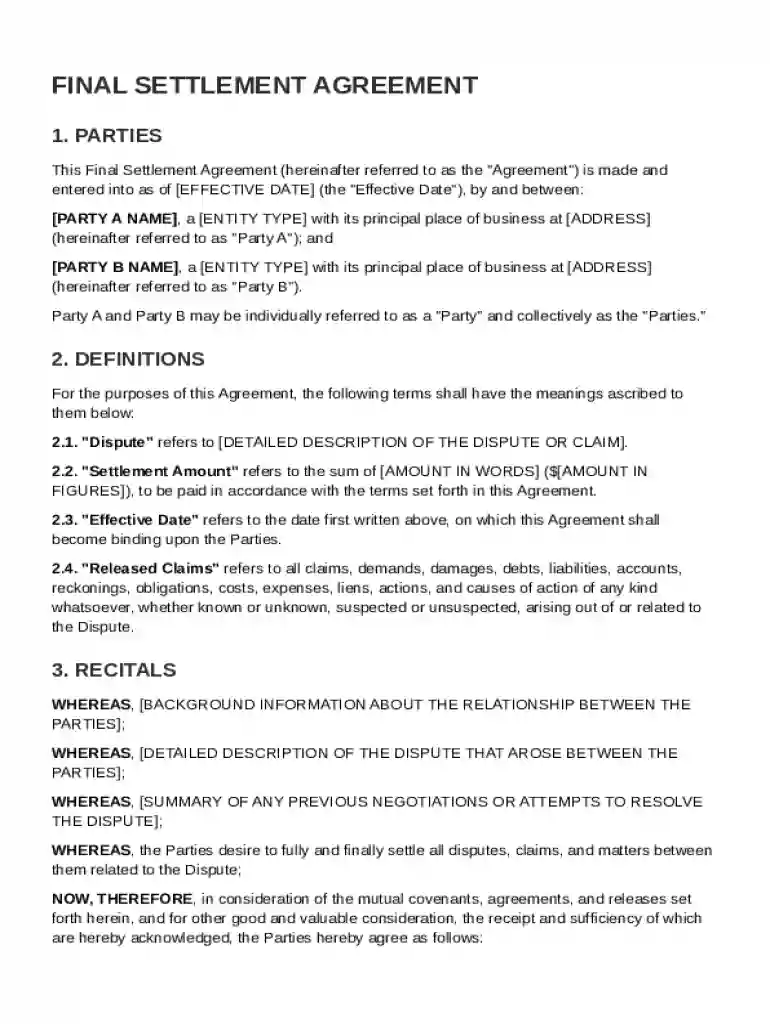
A Final Settlement Agreement Template is a legal document that outlines the terms under which two parties, often referred to as Party A and Party B, agree to resolve their disputes. This agreement typically specifies a Settlement Amount that one party must pay the other. The document involves several critical elements, including mutual releases of claims, confidentiality clauses, and definitions of key terms. Importantly, the agreement stipulates that this settlement does not constitute an admission of liability by either party. It is legally binding, ensuring that both parties adhere to the agreed terms.
Using the Final Settlement Agreement Template involves several steps. First, both parties must thoroughly review the document to ensure all terms are clearly understood and agreed upon. Next, they should complete any necessary fields, such as the names of the parties involved, the settlement amount, and specific terms of the agreement. It's crucial to tailor the template to reflect the unique aspects of the dispute and settlement terms. After completing the document, both parties should provide their signatures to authenticate the agreement. Finally, it's advisable to distribute copies to all parties involved for their records.
Review the Template: Start by reading the entire document to understand its structure and the information required.
Identify the Parties: Clearly specify the names and roles of Party A and Party B within the agreement.
Insert Terms: Add the negotiated terms, including the settlement amount and any specific conditions each party must fulfill.
Include Necessary Definitions: Define any key terms that are essential for the understanding of the agreement.
Add Clauses: Incorporate any additional clauses, such as confidentiality or non-disclosure, that are critical to the agreement.
Review with Legal Counsel: Although not mandatory, having a lawyer review the document can ensure its legality and completeness.
Sign the Agreement: Both parties must sign and date the agreement to make it legally binding.
Distribute Copies: Provide each party with a signed copy of the finalized agreement for their records.
Parties Involved: Clearly detailing Party A and Party B is essential for clarifying the entities engaged in the agreement.
Settlement Amount: This is the monetary compensation agreed upon in resolving the dispute.
Mutual Releases: Both parties agree to release each other from any claims related to the dispute.
Confidentiality Provisions: Specific terms that keep the details of the agreement private between the parties involved.
Governing Law and Jurisdiction: This stipulates the laws and jurisdiction under which the agreement is governed.
No Admission of Liability: A statement clarifying that entering into the agreement does not equate to accepting fault by either party.
Release of Claims: A legal relinquishment of any further legal rights to pursue the settled dispute.
Confidentiality Clause: A provision that restricts parties from disclosing certain information about the agreement.
Governing Law: Specifies which jurisdiction's legal framework will interpret the agreement.
Jurisdiction: The geographical area or legal authority under which the agreement is enforceable.
Non-Disclosure Agreement: Often part of confidentiality provisions to prevent information leakage.
The Final Settlement Agreement Template is mainly used to document the resolution of disputes without the need for litigation, thus avoiding the costs and time associated with court proceedings. It ensures both parties have clear, documented terms under which the resolution is agreed, which prevents future disputes. The legality of the template is upheld as long as it includes essential elements such as mutual consent, adequate consideration (such as monetary compensation), and legal capacity of both parties. Employing an attorney to draft or review the document can further solidify its legal integrity.
Entities or individuals involved in legal disputes commonly use the Final Settlement Agreement Template. This includes businesses engaging in commercial disputes, employees and employers involved in employment disagreements, or individuals seeking resolution in personal conflicts such as divorce or personal injury claims. The template is versatile and can be customized to suit different types of disputes, making it a widespread tool among legal professionals seeking a peaceful settlement between conflicting parties.


Business Disputes: Companies use the template to settle issues such as breach of contract or payment disputes with vendors or clients.
Employment Matters: Employed in wrongful termination cases where an employer and employee agree on terms to avoid litigation.
Personal Injury Cases: Used to establish the terms of compensation without taking the case to court.
Divorce Settlements: Helps parties in a divorce set terms on asset division or alimony without prolonged legal battles.
At DocHub, your data security is our priority. We follow HIPAA, SOC2, GDPR, and other standards, so you can work on your documents with confidence.



Aug 1, 2022 This Release and Settlement Agreement (the Agreement) is made as of the th day of , 2022 (notwithstanding the actual date of.Read more
Aug 29, 2026 State your last working day, list the pending components, attach your computed figure, and quote the settlement timeline that appears in yourRead more
Defendants shall make or cause to be made a one-time, lump sum payment ofthirty-seven million, five hundred thousand dollars ($37,500,000.00)


