






Definition and Meaning
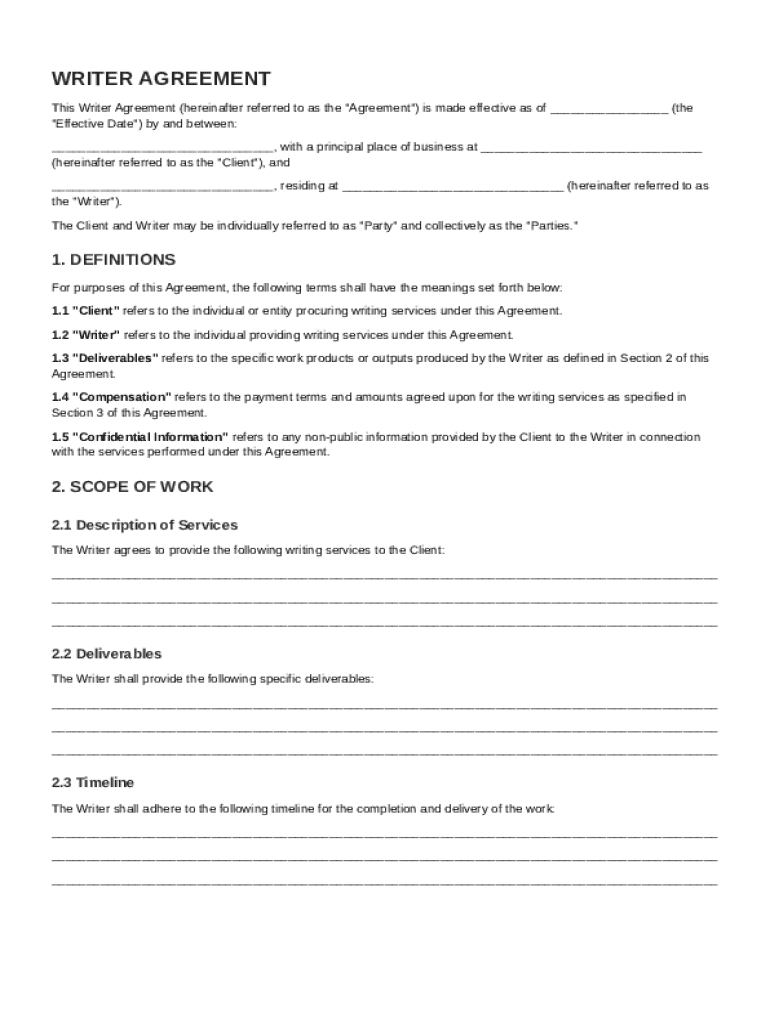
The Writer Agreement Template is a formal document outlining the terms and conditions between a Client and a Writer for the provision of writing services. Its primary purpose is to establish clear expectations regarding the working relationship, deliverables, payment structure, and legal obligations. This agreement delineates boundaries, ensuring both parties are aligned in terms of responsibilities and rights. By having a comprehensive agreement, both the Client and Writer safeguard their interests and create a foundation for a professional relationship.
Key Components
- Scope of Work: Specifies the writing tasks the Writer is expected to complete.
- Compensation Details: Outlines the payment schedule, including fees per project or hourly rates.
- Confidentiality Obligations: Sets rules on handling sensitive information shared between parties.
- Intellectual Property Rights: Determines who owns the work once completed.
Key Elements of the Writer Agreement Template
This template contains several critical components essential for defining the relationship between the Writer and Client. Understanding these elements can assist both parties in navigating their professional interactions effectively.
Core Elements
- Deliverables: Details the expected content delivery format and deadlines, ensuring clarity on what constitutes the final product.
- Revisions and Edits: Provides guidelines for requesting changes and the limits on rounds of revisions, which prevents scope creep.
- Termination Clauses: Defines the conditions under which either party can end the agreement prematurely, offering a safety net for unexpected circumstances.
Important Terms Related to the Writer Agreement Template
Understanding key terms within the Writer Agreement Template can prevent misunderstandings and clarify the expectations.
Essential Terms
- Independent Contractor: This relationship is not one of employment; the Writer operates independently, managing their schedule and resources.
- Governing Law: Indicates the jurisdiction whose laws will govern the agreement, crucial for resolving any legal disputes.
- Dispute Resolution: Outlines how conflicts will be managed, whether through mediation, arbitration, or court proceedings.
How to Use the Writer Agreement Template
Using the Writer Agreement Template effectively involves several steps to ensure it is customized to fit the specific needs of both parties.
Customization Process
- Review and Amend: Begin by reviewing the template and adjusting sections to reflect the agreed-upon terms specific to your project.
- Discuss Terms: Both parties should discuss and agree on key elements like compensation, deadlines, and revision policies.
- Finalize and Sign: Once all amendments are agreed upon, both Client and Writer should sign the document to initiate the contract legally.
Steps to Complete the Writer Agreement Template
Filling out the Writer Agreement Template correctly is crucial for it to serve its purpose effectively.
Step-by-Step Guide
- Input Basic Information: Add the names, addresses, and contact details of both the Client and Writer.
- Define Scope of Work: Clearly outline the writing tasks, including topics, word count, and any specific guidelines.
- Detail Compensation: Specify the payment method, schedule, and any additional costs or bonuses that may arise.
- Set Deadlines: Establish clear timelines for each deliverable to ensure accountability.
- Include Special Clauses: Add any bespoke clauses relevant to your project that aren't covered by standard sections.
Legal Use of the Writer Agreement Template
Ensuring that the Writer Agreement Template aligns with legal standards is vital for enforceability.
Compliance and Legal Considerations
- Adhering to Laws: Make sure the agreement adheres to any local or federal laws that apply to contractual relationships.
- Public Licensing: If using public domain or third-party materials, compliance with licensing agreements must be maintained.
- Contract Modifications: Any changes made after signing must be documented, with mutual consent, and formalized in writing.
Who Typically Uses the Writer Agreement Template
This template is beneficial for a variety of individuals and organizations requiring writing services.


Common Users
- Freelance Writers: Individuals offering writing services to various clients across industries.
- Corporations: Businesses needing to outsource content creation for blogs, articles, or marketing materials.
- Publishing Houses: Organizations working with authors on contractual terms for book or article publications.

Real-World Examples of Using the Writer Agreement Template
Understanding practical applications can illustrate the template's utility across different scenarios.
Practical Use Cases
- Content Agencies: Employ the template to standardize agreements with multiple freelance writers, covering vast content needs efficiently.
- Startups: Use the template to formalize agreements with writers creating website or product description content.
- Blogs: Implement the template when hiring guest writers to contribute pieces on a regular basis, ensuring consistent operations and quality control.
By integrating these key sections, the Writer Agreement Template provides a robust framework for professional collaborations and establishes a shared understanding for all parties involved.