
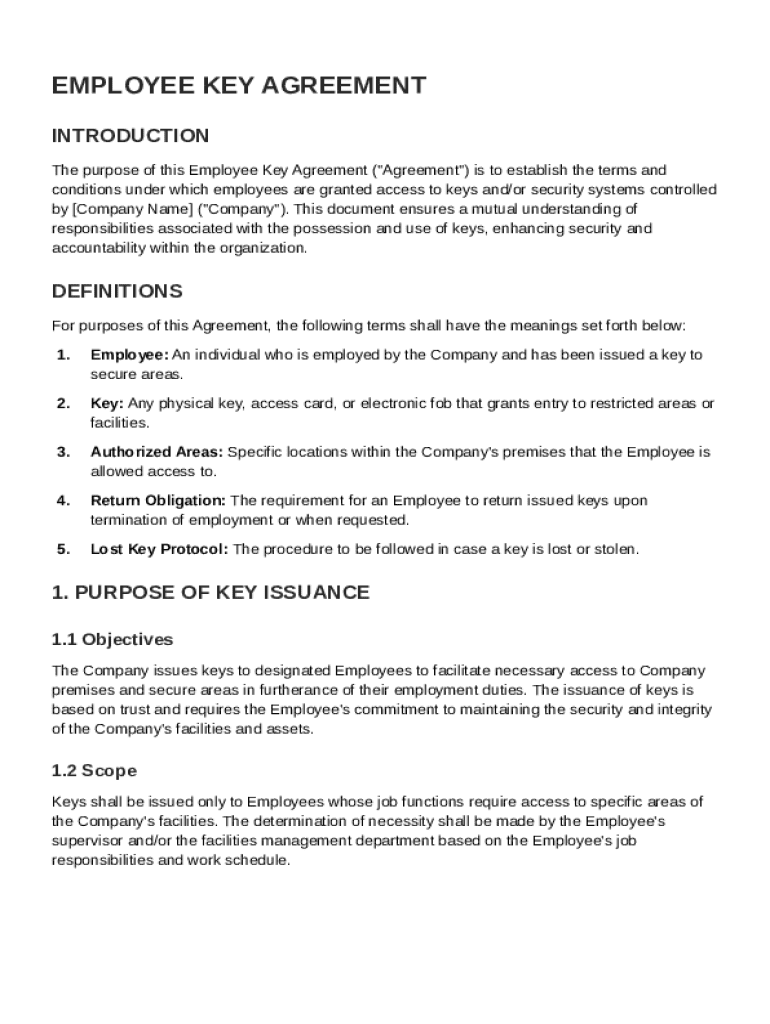







Key Elements of the Employee Key Agreement Template
The Employee Key Agreement Template outlines the essential responsibilities that employees must adhere to when accessing keys and security systems. Key elements include:
- Care and Custody: Employees are responsible for maintaining the condition of the keys and ensuring they are not duplicated or misplaced. This includes storing keys securely when not in use and reporting lost or stolen keys immediately.
- Authorized Use: Clear guidelines specify which areas employees can access with company keys, preventing unauthorized entry and potential security breaches.
- Monitoring and Compliance: Regular audits and monitoring procedures ensure adherence to the agreement, with repercussions clearly stated for any violations.
Practically, the agreement is structured to enhance accountability while minimizing security risks within the organization.
How to Use the Employee Key Agreement Template
To effectively utilize this template, follow these steps:
- Customization: Adapt the template to your organization's specific security policies. This involves defining access levels and identifying employees who require key access.
- Distribution: Share the customized agreement with relevant employees, either digitally via platforms like DocHub or through printed copies.
- Training: Conduct a session to explain the terms and implications of the agreement, ensuring employees understand their responsibilities.
- Acknowledgment: Have each employee sign the agreement, confirming their comprehension and acceptance of the outlined terms.
- Review and Update: Regularly revisit the agreement to incorporate any changes in security protocols or personnel.
By following these steps, companies can streamline the onboarding and compliance process related to key issuance.
Legal Use of the Employee Key Agreement Template
The legal framework of the Employee Key Agreement Template ensures enforceability and protection for both employer and employee. Key considerations include:
- Legally Binding Signature: Utilizing electronic signatures through platforms like DocHub ensures validity under the ESIGN Act.
- Privacy Compliance: Incorporate clauses to uphold employee privacy while allowing necessary monitoring of key use.
- Consequences for Breach: Clearly define repercussions for lost keys or unauthorized access, which may include financial penalties or disciplinary actions.
In a legal context, this template protects organizational security while providing a fair and transparent framework for employees.
Important Terms Related to Employee Key Agreement Template
Understanding specific terminology within the agreement can enhance comprehension and compliance:
- Access Restrictions: Boundaries set on where and when keys can be used.
- Accountability Measures: Systems in place for tracking key assignments and usage.
- Lost Key Protocol: Defined steps for employees to follow if a key is misplaced or stolen.
These terms are critical for ensuring that all parties involved understand the expectations clearly and reduce the potential for disputes.
Steps to Complete the Employee Key Agreement Template
Employees should follow these procedural steps to complete the agreement:
- Review the Document: Thoroughly read the entire agreement to understand all terms and conditions.
- Fill Out Personal Information: Provide necessary details such as name, department, and supervisor.
- Understand Key Obligations: Pay special attention to sections about care, authorized use, and return conditions for the keys.
- Sign the Agreement: Use a legally recognized signature to acknowledge acceptance. Digital platforms like DocHub offer secure signing options.
- Submit to Management: Return the signed agreement to the appropriate department, often HR or security.
Completing the agreement accurately helps mitigate risks and ensures everyone is on the same page regarding key management practices.
Who Typically Uses the Employee Key Agreement Template
This template is predominantly used by organizations that require stringent security measures, such as:
- Corporate Offices: Where access to different departments needs regulation.
- Educational Institutions: University facilities often use such templates to control campus access.
- Healthcare Facilities: To limit access to sensitive areas such as labs and pharmacies.
Any entity with a vested interest in security will find this template useful for maintaining an organized and accountable key distribution system.


State-Specific Rules for the Employee Key Agreement Template
While the template serves as a standardized agreement, state-specific laws may dictate certain modifications:
- Security Deposits: Some states allow employers to require deposits for issued keys.
- Employee Privacy: Regulations concerning an employee's right to privacy might affect monitoring practices.
- Labor Laws: Ensure the agreement aligns with state labor laws regarding confidentiality and security protocols.
Organizations should consult with legal professionals to ensure compliance with local statutes and regulations while using this template.
Examples of Using the Employee Key Agreement Template
Case studies highlight practical applications:
- A Manufacturing Plant: Implemented the template to control access to production areas, significantly reducing unauthorized access incidents.
- Tech Firms: Use the agreement alongside biometric systems to bolster physical security measures.
- Retail Chains: Employ templates to manage access to high-value inventory areas, improving inventory management and loss prevention.
Thus, real-world examples underscore the importance and effectiveness of this agreement in a wide array of industries.




