






Definition and Purpose of the Non-Compete Employee Agreement
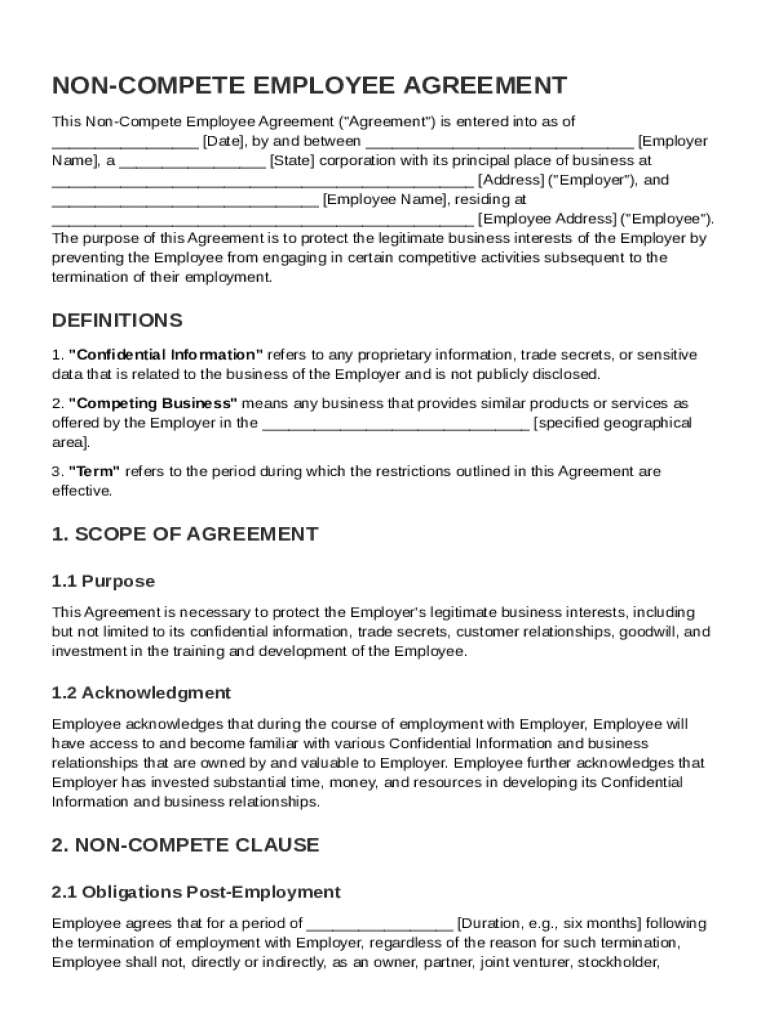
The Non-Compete Employee Agreement is a legal document designed to protect an employer's business interests. It restricts an employee from engaging in competitive activities after their employment ends. This ensures the protection of sensitive business information and maintains the employer's market position.
-
Confidential Information: The agreement often includes clauses that define what constitutes confidential information. This may include customer lists, business strategies, and non-public financial data.
-
Competing Business: It clearly outlines what is considered a competing business. This may vary by industry and the specific role of the employee.
By delineating these terms, the agreement helps prevent former employees from using proprietary knowledge to benefit competitors or start competing ventures.
How to Use the Non-Compete Employee Agreement Template
To effectively utilize the Non-Compete Employee Agreement Template, customization to fit specific business needs is essential.
-
Template Selection: Choose the template that suits the nature of your business and the role of the employee.
-
Customization: Modify the template to include specific job roles, geographic restrictions, and the duration of the non-compete period.
-
Legal Review: Before finalizing, it is advisable to have a legal professional review the document to ensure compliance with state laws and to protect against possible disputes.
The template serves as a starting point, allowing for personalized adjustments to meet unique requirements.
Key Elements of the Non-Compete Employee Agreement
Key elements are essential to ensuring the agreement's enforceability and clarity.
-
Non-Compete Obligations: Specifies the duration and geographical scope of the restrictions.
-
Confidentiality Requirements: Outlines the types of information that must remain confidential.
-
Enforcement: Details the consequences of breaching the agreement, including potential legal action.
These components are critical for setting clear expectations and legal boundaries for post-employment activities.
Important Terms Related to the Non-Compete Employee Agreement
Certain terms are pivotal to understanding and executing the agreement effectively.
Restrictive Covenants
-
Duration: Refers to how long the non-compete restrictions apply after employment ends.
-
Geographical Limits: Specifies the geographic area where the employee is prohibited from competing.
Enforceability
- Legal Provisions: Discusses how the agreement complies with applicable laws to ensure it can be enforced in court.
Understanding these terms is crucial to drafting an agreement that withstands legal scrutiny and meets business objectives.
Steps to Complete the Non-Compete Employee Agreement Template
Completing the template involves several vital steps:
-
Input Details: Fill in essential employee and company information.
-
Specify Restrictions: Clearly define the scope of non-compete obligations, including timeframes and locations.
-
Review Clauses: Ensure that all clauses align with legal standards and company policies.
-
Finalize and Sign: Once both parties agree on terms, obtain signatures to legally bind the agreement.
A structured approach ensures that the agreement is comprehensive and legally sound.
State-Specific Rules for the Non-Compete Employee Agreement
Laws governing non-compete agreements vary from state to state, affecting their enforceability.
-
California: Generally prohibits non-compete clauses except in specific circumstances, such as the sale of a business.
-
Texas: Allows non-compete agreements if they are reasonable in scope and necessary to protect legitimate business interests.
Employers should tailor agreements to comply with local laws to avoid legal disputes and ensure enforceability.
Examples of Using the Non-Compete Employee Agreement Template
Illustrating practical applications enhances understanding:
-
Technology Companies: Use agreements to protect proprietary software and client data.
-
Sales Organizations: Prevent former employees from taking client lists to competitors.
These examples demonstrate the broad applicability and importance of customizing agreements to specific business contexts.
Legal Use of the Non-Compete Employee Agreement Template
This agreement must be utilized within legal boundaries to be effective and enforceable.
Compliance
-
Federal and State Laws: Ensure alignment with both federal and state employment laws.
-
Legal Consultation: Regularly review and update agreements with legal advice to reflect changes in regulations or business needs.
Employers must prioritize legal compliance to uphold the agreement's validity and avoid potential consequences.