






Definition and Meaning
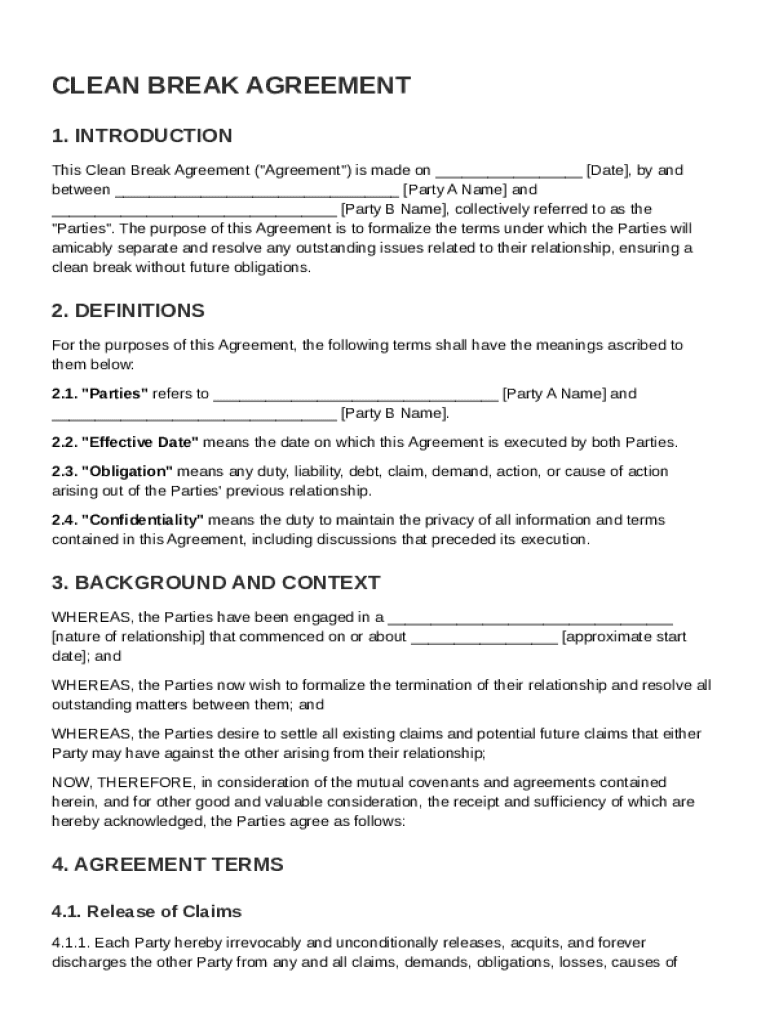
A Clean Break Agreement is a legally binding document designed to formalize the resolution of all financial matters between two parties following their decision to separate. This agreement is particularly useful in situations such as divorces or business partnerships where both parties wish to sever their financial ties completely. The goal is to clearly outline the terms under which both parties will release each other from any future claims or obligations related to their previous relationship. By documenting this settlement formally, both parties are assured that no additional financial claims can be made in the future.
Components of a Clean Break Agreement
- Release of Claims: This clause ensures neither party can hold the other accountable for any previous obligations that were not explicitly outlined in the agreement.
- Division of Assets and Liabilities: Clearly itemizes how all shared assets and debts will be divided between the parties.
- Confidentiality Provisions: Both parties commit to maintaining the confidentiality of the agreement's terms.
- Non-Disparagement Clause: Each party agrees not to publicly denigrate the other, thereby preserving both parties' reputations post-separation.
How to Use the Clean Break Agreement Template
To effectively use the Clean Break Agreement Template, users should start by gathering all relevant financial documents and information related to the separation. This can include property deeds, loan agreements, and bank statements. By having a clear picture of shared assets and liabilities, agreements can be tailored to the specific needs of the parties involved.
- Download the Template: Ensure compatibility with the document editing software of your choice, such as DocHub, and easily accessible for both parties.
- Customize the Sections: Modify the sections of the template to suit the unique circumstances of your separation. Consider consulting with a legal expert to ensure all necessary clauses are included, and the agreement meets legal standards.
- Complete the Agreement: Fill in the required information, ensuring all fields are accurately completed to reflect the agreed-upon terms.
- Review and Adjust: Both parties should review and suggest any changes. It’s recommended to involve legal advisors for an additional layer of security and legality.
Steps to Complete the Clean Break Agreement Template
Completing the Clean Break Agreement Template involves several methodical steps, ensuring that all parties participate equally and diligently:
- Gather Financial Data: Collect detailed information on shared assets, liabilities, and income.
- Open the Template: Utilize a reliable platform like DocHub to open and edit the document.
- Input Personal Details: Begin by entering both parties’ personal information and pertinent identification details.
- Detail the Agreement Terms: Specify the terms surrounding division of assets, liabilities, and any ongoing financial arrangements.
- Include Essential Clauses: Ensure the addition of clauses like confidentiality and non-disparagement.
- Review and Sign: Both parties should carefully review each component, making necessary amendments before signing the document electronically or in person.
- Legal Consultation: It's wise to have the document reviewed by a legal professional to confirm its conformance with applicable laws.
Important Terms Related to Clean Break Agreement Template
Understanding the terminology within a Clean Break Agreement is crucial:
- Amicable Separation: Refers to a peaceful and mutually agreed-upon parting.
- Assets and Liabilities: Tangible and intangible items of value and debts held by the involved parties.
- Confidentiality: A stipulation ensuring that details of the agreement remain private.
- Non-Disparagement: The prohibition on publicly casting the other party in a negative light post-separation.
- Indemnity: Protects an involved party from losses or damages after the agreement.
Key Elements of the Clean Break Agreement Template
A Clean Break Agreement must include several key elements to be effective:
- Comprehensive Identification: All parties involved must be clearly identified within the document.
- Detailed Financial Breakdown: A thorough examination and allocation of all assets and liabilities.
- Legal Provisions: Include applicable legal terms that protect both parties’ interests.
- Signatures of Agreement: Proper execution requires the signatures of all parties; consider electronic signature platforms such as DocHub.
- Witness Information: Sometimes necessary to provide legitimacy, the document may need to be witnessed and signed by an impartial party.
Who Typically Uses the Clean Break Agreement Template
The Clean Break Agreement template is commonly used by:
- Divorcing Couples: Seeking to finalize the division of marital assets without future claims.
- Business Partners: Looking to dissolve a partnership while ensuring no lingering financial obligations.
- Co-owners of Properties: Needing a clear cut-off point regarding ownership responsibilities.
- Families with Shared Assets: A means to formally resolve potential financial disputes in situations such as estate settlements.


Legal Use of the Clean Break Agreement Template
Legal usage of the Clean Break Agreement Template ensures that the document is enforceable within the legal jurisdictions where it is applied, particularly within the United States:
- Adherence to State Laws: Each state may have specific requirements or interpretations, so it’s essential to draft the document in compliance with local laws.
- Consultation with Legal Advisors: This remains critical to ensure that the agreement does not conflict with statutory obligations or rights.
- Certainty in Language: Use unambiguous terms and legally recognized language to avoid misinterpretations.
State-Specific Rules for the Clean Break Agreement Template
Various U.S. states may have unique regulations that influence how Clean Break Agreements are interpreted or enforced:
- Community Property States: States like California and Texas may have specific asset division rules, impacting the agreement terms.
- Equitable Distribution States: In these states, such as New York, the document must reflect an equitable rather than equal division, catering to fairness principles.
- Local Notarization or Witnessing Requirements: Some jurisdictions require the agreement to be notarized for validation.
Careful consideration of these elements ensures the Clean Break Agreement is comprehensively tailored to facilitate a fair and final separation of financial ties.