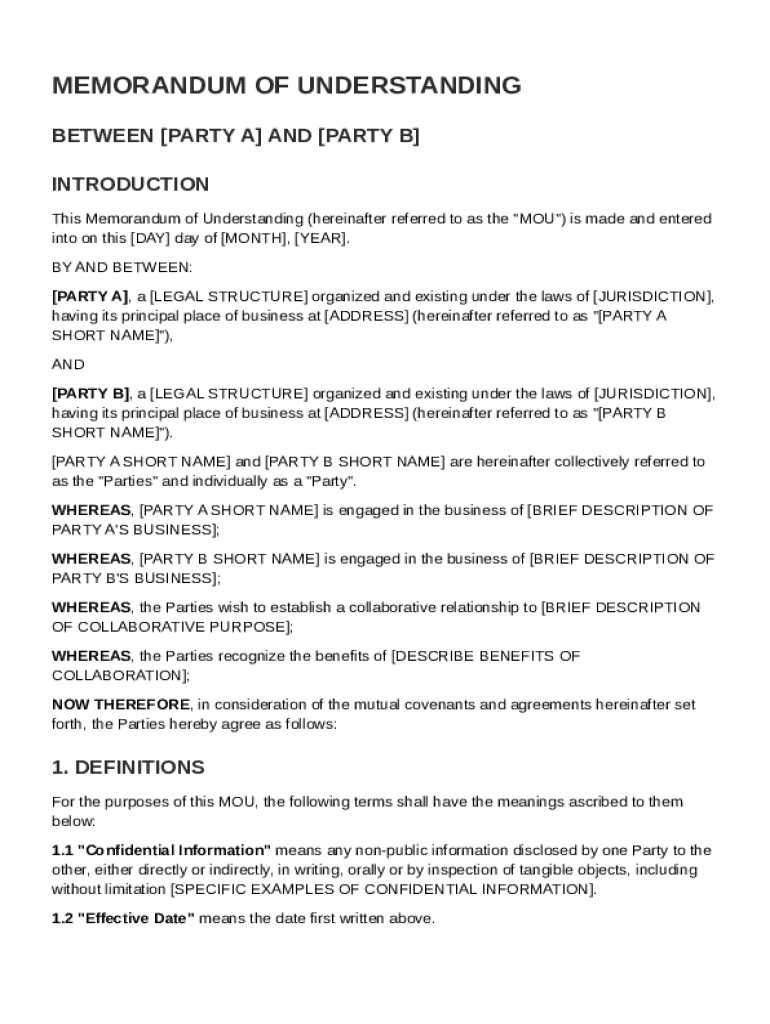







Definition & Meaning
A Memorandum of Understanding (MOU) Agreement Template is a formal document that outlines the intentions and preliminary terms between two or more parties entering into a collaboration. Unlike a contract, an MOU is not legally binding but serves as a blueprint for potential agreements, highlighting mutual goals and responsibilities. MOUs are often used to clarify joint objectives before finalizing a legally binding contract, ensuring that all parties have a clear understanding of their roles and expectations. They facilitate initial agreements in sectors such as business partnerships, joint ventures, and cross-border collaborations.
Key Elements of the Memorandum of Understanding Agreement Template
The effectiveness of an MOU hinges on its clearly defined elements, which ensure all parties are aligned on various aspects of the proposed collaboration. Key elements include:
- Purpose and Scope: A clear description of the partnership's objectives and the extent of collaboration.
- Parties Involved: Identification of all parties to the MOU, often including details about their roles and contributions.
- Roles and Responsibilities: Specific duties and obligations each party will undertake, promoting accountability and transparency.
- Confidentiality Clauses: Provisions to safeguard sensitive information shared between parties.
- Financial Terms: General financial arrangements like budget contributions, profit-sharing, and cost allocations, if applicable.
- Duration and Termination: The timeline of the agreement and conditions under which it may be dissolved.
How to Use the Memorandum of Understanding Agreement Template
Using an MOU template involves a few broad steps designed to tailor it to the specific needs of the parties involved. Here’s a general guide:
- Review the Template: Assess the template's components and structure to ensure it matches your needs.
- Customizing Content: Fill in the relevant details, such as party names, objectives, and roles.
- Consultation: Engage with legal or industry experts to verify terms, especially in complex agreements.
- Iterate and Review: Share drafts with involved parties for feedback and refinements.
- Finalize and Sign: Once finalized, sign the MOU to signify agreement to the outlined terms.
Steps to Complete the Memorandum of Understanding Agreement Template
Completing an MOU Agreement Template requires careful attention to each section, ensuring accuracy and clarity. Here’s a step-by-step process to follow:
- Identify the Purpose: Clearly articulate what the MOU intends to achieve.
- List the Parties: Include the full legal names of all entities or individuals involved.
- Define Roles: Specify each party's contributions and responsibilities.
- Outline Objectives: Detail the specific goals each party hopes to achieve.
- Incorporate Terms: Draft any necessary legal and financial terms pertinent to all parties.
- Add Confidentiality Clauses: Ensure that any sensitive data shared during the partnership is protected.
- Set Timelines: Determine and agree on a timeline for achieving the MOU’s objectives.
- Review and Finalize: Review the document with all parties for approval before signing.
Who Typically Uses the Memorandum of Understanding Agreement Template
Various entities and individuals utilize MOUs to frame initial partnership terms without entering into legally binding commitments:
- Businesses: Companies looking to form strategic alliances or joint ventures.
- Nonprofits: Organizations partnering to share resources or pursue common social goals.
- Government Agencies: Collaboration between different government departments or with private entities.
- Educational Institutions: Partnerships for research purposes or academic exchange programs.
MOUs are particularly useful when outlining collaborative intentions without immediate legal obligations.


Important Terms Related to Memorandum of Understanding Agreement Template
Understanding specific terms often used within an MOU is crucial for avoiding ambiguity:
- Bilateral Agreement: Involves two parties.
- Multilateral Agreement: Involves more than two parties.
- Non-Disclosure Agreement (NDA): Protects confidential information shared during negotiations.
- Indemnification: A clause where one party agrees to compensate for any loss incurred by another.
These terms facilitate a better understanding of the intricacies involved in crafting an MOU that meets all parties' objectives.
Legal Use of the Memorandum of Understanding Agreement Template
While an MOU itself is not legally binding, it can still have legal implications:
- Preliminary Understanding: Acts as a precursor to a legally binding agreement.
- Enforcement Potential: Certain provisions, particularly those related to confidentiality and specific commitments, may hold legal weight.
- Dispute Resolution: MOUs often include mechanisms for resolving any disputes that may arise during the collaboration.
Knowing the legal ramifications helps parties draft MOUs that protect their interests while fostering a cooperative relationship.
Examples of Using the Memorandum of Understanding Agreement Template
Real-world scenarios where MOUs find application include:
- Corporate Partnerships: Businesses establishing initial terms for a joint marketing venture.
- Academic Collaborations: Universities outlining terms for student exchange programs.
- International Relations: Countries setting initial agreements on trade tariffs or environmental protocols.
These examples illustrate the diverse applicability of MOUs in different sectors, emphasizing their role in forming a consensus before executing a formal contract.