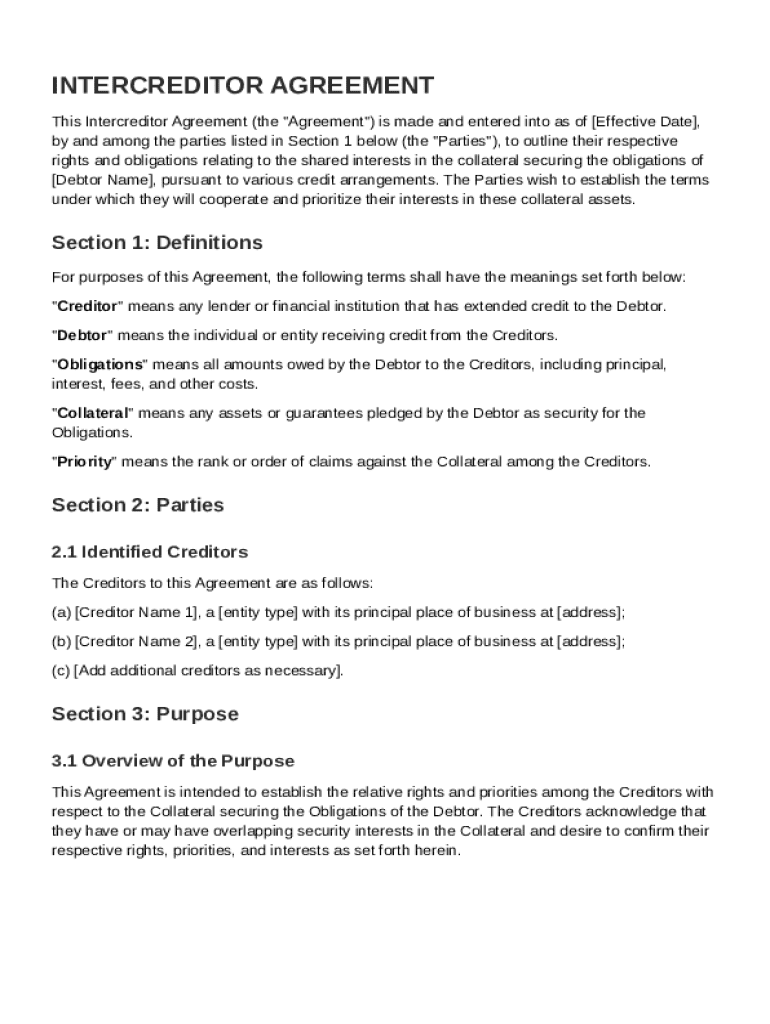







Definition and Meaning
The "Intercreditor Agreement Template" is a standardized document that outlines the rights, obligations, and priorities of various creditors in relation to shared collateral securing the debts of a debtor. This template serves as a foundational guide for drafting an intercreditor agreement that involves multiple creditors. It establishes critical definitions, such as what constitutes shared collateral and the hierarchy of claims, and lays out procedures for managing collateral, including the appointment of a collateral agent. By utilizing this template, creditors can ensure that there is a mutual understanding and cooperation in enforcing their respective interests, especially during a debtor’s default.
Key Elements of the Intercreditor Agreement Template
An effective Intercreditor Agreement Template includes several essential elements that ensure clarity and enforceability:
- Definitions: Establishes key terms used throughout the agreement, such as "Obligations," "Collateral," and "Lien Priority."
- Priority of Claims: Outlines the hierarchy of creditor claims against the shared collateral, specifying which party gets paid first during debt recovery.
- Collateral Management: Details procedures and responsibilities for managing the collateral, including the appointment of a collateral agent.
- Default Procedures: Describes creditor rights and actions upon a debtor’s default, ensuring an orderly process for collateral liquidation.
- Termination Conditions: Defines circumstances under which the agreement may be terminated, such as full repayment of debts or mutual consent.
How to Use the Intercreditor Agreement Template
Using the Intercreditor Agreement Template involves several steps to tailor the document to specific situations:
- Customize Definitions: Modify sections to reflect the specific terms and definitions pertinent to your transaction.
- Assign Priority: Clearly outline the order of claim priorities among the creditors involved.
- Detail Collateral Management: Specify how the collateral will be managed, including roles and responsibilities.
- Draft Default Procedures: Elaborate on specific creditor rights and actions in cases of default.
- Set Termination Terms: Establish the specific conditions under which the agreement can be terminated.
Legal Use of the Intercreditor Agreement Template
In the United States, intercreditor agreements must comply with federal and state laws governing secured transactions. The template serves as a preliminary framework to ensure all legal requirements are considered:
- Regulatory Compliance: Adheres to the Uniform Commercial Code (UCC), which governs secured transactions.
- Enforceability: Ensures the document's provisions are enforceable under U.S. law.
- Customization for State Laws: Allows for modifications to align with varying state-specific legal requirements.
Important Terms Related to the Intercreditor Agreement Template
Certain terminology is integral to understanding and effectively using the Intercreditor Agreement Template:
- Lien: A legal right or interest that a creditor has in the debtor’s property, granted until the debt obligation is satisfied.
- Subordination: The act of placing one creditor’s claim below another’s claim in terms of access to the debtor's assets.
- Collateral Agent: An entity appointed to represent the collective interests of multiple creditors concerning the management of collateral.
Examples of Using the Intercreditor Agreement Template
Real-world applications of the Intercreditor Agreement Template involve various business scenarios:
- Commercial Real Estate: Used to manage creditor rights in real estate projects financed by multiple lenders.
- Corporate Financing: Provides structure in transactions where companies borrow from numerous sources with shared collateral.
- Merger and Acquisition Deals: Helps align creditor interests in transactions involving significant asset transfers.
Who Typically Uses the Intercreditor Agreement Template
The Intercreditor Agreement Template is beneficial for various parties involved in secured transactions:
- Banks and Financial Institutions: Utilize the template to ensure a structured agreement for syndicated loans.
- Corporate Legal Teams: Employ the template to facilitate the drafting of agreements that involve complex financing arrangements.
- Investment Entities: Depend on the template to manage risk in joint investments with shared collateral interests.


Versions or Alternatives to the Intercreditor Agreement Template
While the Intercreditor Agreement Template is extensively used, there are alternative documents that may suit different needs:
- Subordination Agreement: Focuses specifically on the order of payment priorities without addressing other collateral management aspects.
- Participation Agreement: Suitable when creditors are participating in a single loan rather than multiple loans with shared collateral.
- Guaranty Agreement: Involves a guarantor providing assurance for debt repayment without involving collateral prioritization.