




01. Edit your aoa diabetic eye exam report online
Type text, add images, blackout confidential details, add comments, highlights and more.

Type text, add images, blackout confidential details, add comments, highlights and more.

Draw your signature, type it, upload its image, or use your mobile device as a signature pad.

Send aoa diabetic eye exam report pdf via email, link, or fax. You can also download it, export it or print it out.
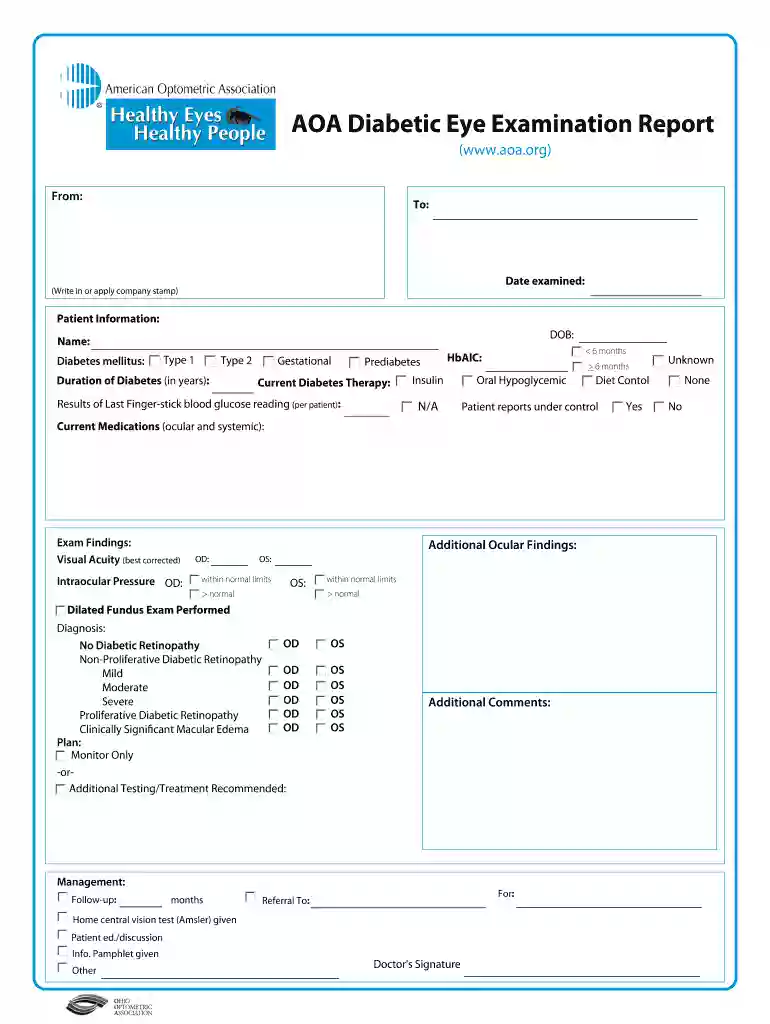
The AOA diabetic exam report is a specialized document used by eye care professionals to record essential information related to a patient's diabetic eye examination. This report is critical in diagnosing and monitoring diabetic retinopathy, a common complication of diabetes that can lead to significant vision impairment if left unaddressed. It captures various data points, including patient demographics, diabetes management details, current medications, and the findings from the eye exam.
The report typically includes specific metrics such as visual acuity results, intraocular pressure measurements, and detailed observations from the examination. A clear diagnosis section indicates the presence or absence of diabetic retinopathy, aiding healthcare providers in making informed decisions about treatment options and necessary follow-ups. This report serves a dual purpose: it enhances patient care by providing physicians with comprehensive information while also offering documentation for insurance and legal purposes.
Effectively utilizing the AOA diabetic exam report requires understanding its structure and the information it encompasses. Eye care professionals should follow these steps:
Patient Data Collection: Gather patient's personal information, including their medical history, blood sugar levels, and current medications. This foundation sets the stage for the report.
Conduct the Examination: Perform a thorough eye examination focusing on identifying signs of diabetic retinopathy. Use standardized testing methods to ensure consistent results.
Document Findings: As you perform the examination, document all findings meticulously. Include visual acuity scores, intraocular pressure, and any other relevant observations in the specified sections of the report.
Assign a Diagnosis: Based on the findings, determine if the patient has diabetic retinopathy. Clearly document this in the diagnosis section of the report, ensuring it aligns with the clinical findings.
Develop a Management Plan: Conclude by outlining a management plan that may involve follow-up appointments, referrals to specialists, or additional testing. This plan should be detailed in the report for future reference.
Acquiring the AOA diabetic exam report typically involves the following steps:
Request from Your Eye Care Provider: Patients should contact their optometrist or ophthalmologist to request the report, especially after their eye examination focused on diabetes-related issues.
Accessing Through Patient Portals: Many healthcare providers use digital patient management systems. Patients may be able to access their reports directly through these online portals after logging in.
Filing for Insurance or Documentation: In some situations, such as when insurance claims are necessary or medical records are needed for legal purposes, the report can be formally requested in writing, ensuring that all personal identifiers are included for confidentiality and accuracy.
Printed Copies: For those who need physical documents, practitioners can provide printed copies of the report upon request during follow-up visits or after the examination.
Understanding the key elements of the AOA diabetic exam report is essential for accurate completion and interpretation. Important components include:
The practical application of the AOA diabetic exam report can be observed in several scenarios within patient care:
The legal aspects surrounding the AOA diabetic exam report are significant for both patient and provider. This report serves as a formal medical document that may be referenced in legal scenarios, such as:
With DocHub, you can rapidly sign your aoa diabetic eye exam report printable or any other paperwork on iOS, even without installing additional applications. You can access your DocHub account from any internet-connected browser and complete and sign your document in any way you like with just a few clicks.
If you use Chrome, there are two easy methods to edit your diabetic eye exam report online. First, visit the DocHub website, add your file, and edit it using our toolbar. You can also install our Chrome extension and edit any document by dragging and dropping it in your web browser window.
At DocHub, your data security is our priority. We follow HIPAA, SOC2, GDPR, and other standards, so you can work on your documents with confidence.




The Manual is divided into sections stating Medi-Cal program requirements and regulatory/contractual standards to support you in providing high quality andRead more
Jun 13, 2024 How often you get an eye exam depends on age, symptoms and existing vision problems. Heres what doctors recommend for good eye health.
by SL Jones 2007 Cited by 4 Background: The purpose of this study was to revise a former American Optometric Association (AOA) Diabetic Eye Examination Report form and create aRead more


