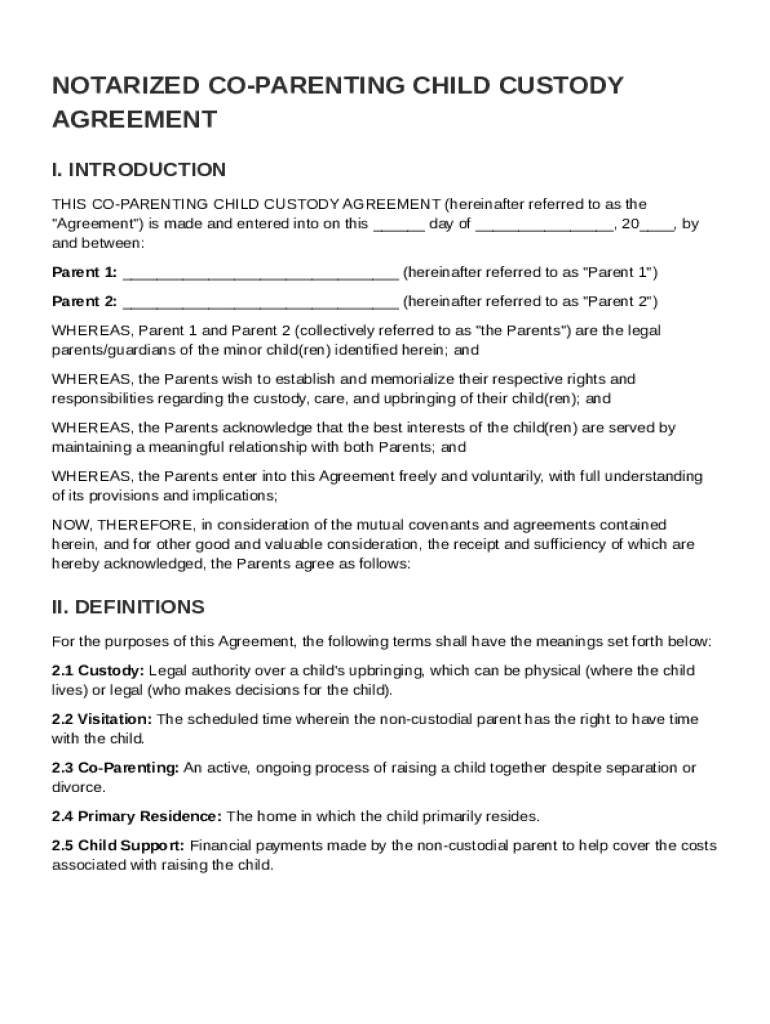







Definition & Meaning
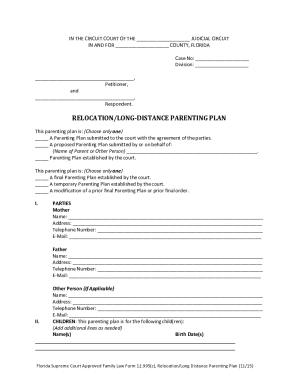
A Notarized Co-Parenting Child Custody Agreement Template is a legal document that outlines the terms agreed upon by two parents regarding the custody and care of their minor child or children. This document serves to formalize arrangements in matters of both legal and physical custody, visitation schedules, child support, and parental responsibilities. The notarization process adds an extra layer of legal credibility, ensuring the agreement is recognized in legal proceedings and that both parties adhere to the outlined terms.
Key Elements of the Notarized Co-Parenting Child Custody Agreement Template
The template encompasses several critical components, each addressing distinct facets of co-parenting responsibilities. Key elements typically include:
- Legal and Physical Custody: Defines which parent(s) have the authority to make legal decisions and where the child will reside primarily.
- Visitation Schedule: Details the specific times when the non-custodial parent will spend time with their child.
- Child Support: Outlines the financial obligations of each parent to support their child's upbringing.
- Decision-Making Responsibilities: Establishes how parents will collaborate on major health, education, and welfare decisions.
- Dispute Resolution: Offers a method for resolving disagreements outside of court, often suggesting mediation.
- Provisions for Modifications: Sets conditions under which the agreement can be updated as circumstances change.
Steps to Complete the Notarized Co-Parenting Child Custody Agreement Template
- Gather Personal Information: Both parents should collect essential details, including each parent's full name, address, and contact information.
- Define Custody Arrangements: Clearly state whether custody is joint, or if one parent holds sole custody, and specify the living arrangements for the child.
- Create a Visitation Plan: Outline a detailed visitation schedule that includes holidays, weekends, and special occasions.
- Establish Child Support Terms: Determine the amount and frequency of child support payments, referencing state guidelines if necessary.
- Detail Decision-Making Processes: Specify how major decisions about the child's life will be made jointly.
- Include Dispute Resolution Terms: Agree on a mediation process or other methods to address disputes that may arise.
- Notarize the Agreement: Both parents must sign the document in the presence of a notary public to make it legally binding.
Why You Should Notarize the Co-Parenting Child Custody Agreement Template
Notarizing the agreement ensures it holds up in legal contexts by providing evidence that both parties agreed to the terms freely and with informed consent. The notarization adds an extra layer of verification, reducing the risk of future legal disputes. It can also assure third parties, such as schools or medical providers, of the agreement's authenticity and enforceability.
Legal Use of the Notarized Co-Parenting Child Custody Agreement Template
This legal document is crucial in setting clear guidelines that both parents agree to follow, which can help avoid misunderstandings and conflicts. It is recognized in court as a binding agreement, guiding judges in decisions about child custody and support. It also provides a framework for altering terms if all parties consent and legal procedures are followed, making it a flexible, long-term solution for co-parenting arrangements.
State-Specific Rules for the Notarized Co-Parenting Child Custody Agreement Template
State laws can vary regarding child custody arrangements, so it's important for parents to check local regulations to ensure their agreement complies with state-specific requirements. Some states might have provisions around how custody and support must be addressed, and what additional forms may be required. Familiarizing oneself with these rules can prevent legal complications and ensure a smoother legal process.
Who Typically Uses the Notarized Co-Parenting Child Custody Agreement Template
This template is commonly utilized by divorced or separated parents wishing to establish a clear, formalized understanding of their parental rights and responsibilities. It’s particularly beneficial for parents who are looking to avoid court disputes and prefer a mutually agreed upon arrangement that can be adjusted as needed. Courts, attorneys, and mediators often recommend it to ensure all aspects of co-parenting are formally documented.


Examples of Using the Notarized Co-Parenting Child Custody Agreement Template
Consider a case where parents in Texas are unable to agree on holiday visitation. By using the template, they can outline a comprehensive schedule in advance, detailing time spent with each parent during holidays. Another example includes parents in California who agree on a new child support arrangement; they update their existing agreement using the template to reflect these terms, ensuring continued compliance with state guidelines on child support payments.