01. Edit your form online
Type text, add images, blackout confidential details, add comments, highlights and more.

Type text, add images, blackout confidential details, add comments, highlights and more.

Draw your signature, type it, upload its image, or use your mobile device as a signature pad.

Send it via email, link, or fax. You can also download it, export it or print it out.
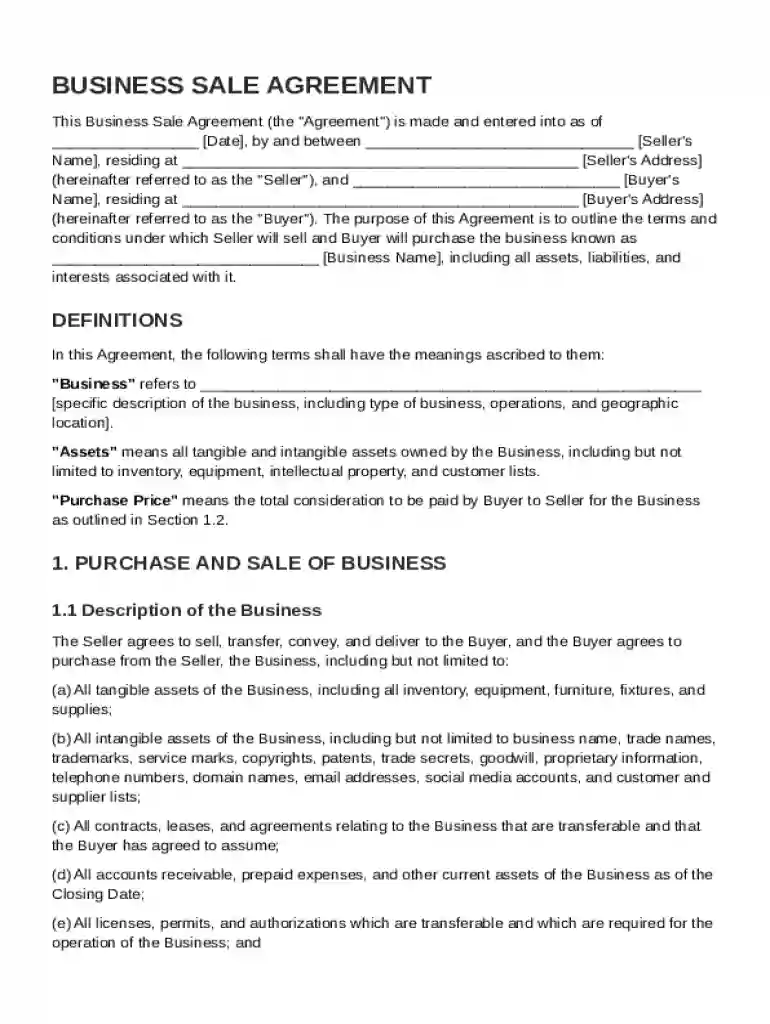
A Business Sell Agreement template is a legal document that outlines the terms under which a business is transferred from a seller to a buyer. This document is crucial as it sets clear terms for the transaction, which helps prevent disputes and misunderstandings. Key elements typically include the purchase price, payment terms, representations and warranties of both parties, conditions required before closing, and indemnification clauses. The agreement serves as the foundation for a legally binding contract that provides protections and establishes obligations for both parties involved.
Using a Business Sell Agreement template streamlines the process of drafting your agreement by providing a structured format. Before using it, familiarize yourself with the various sections and ensure all details specific to your transaction are ready. Insert specifics such as the name of the buyer and seller, a description of the business, and purchase details. Review each section carefully to ensure it reflects the intent of both parties. Engage a legal professional to review the completed document for compliance with local laws and completeness.
This template is commonly used by business owners looking to sell their companies, potential buyers, business brokers, and legal professionals facilitating the transaction. It is especially useful for small to medium-sized enterprises where a structured legal document ensures all crucial transaction aspects are covered.


It’s essential to use the Business Sell Agreement in a manner that complies with relevant U.S. laws. This involves aligning the document with state regulations regarding business sales and ensuring it includes all necessary legal provisions to make it enforceable. Both parties must sign the agreement for it to be considered legally binding, and any modifications must also be documented and mutually agreed upon.
Legal requirements for business sale agreements can vary between states. While the template acts as a general framework, state-specific elements, such as tax liabilities, notification requirements, and transfer procedures, must be incorporated. Consulting with a legal expert familiar with the state laws where the business operates ensures the agreement’s enforceability.
At DocHub, your data security is our priority. We follow HIPAA, SOC2, GDPR, and other standards, so you can work on your documents with confidence.